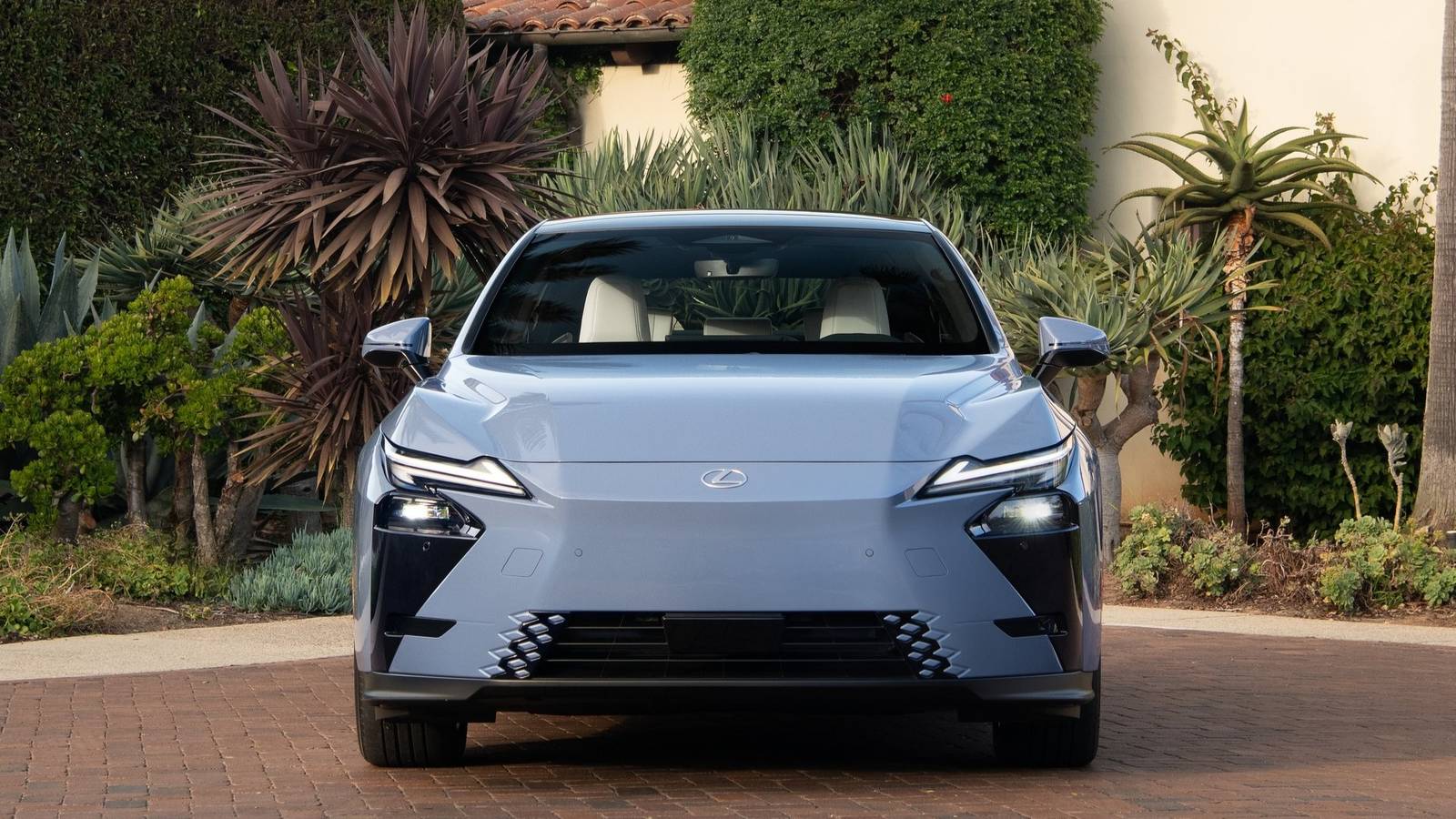
Buying an electric car has traditionally meant paying more upfront in exchange for lower running costs down the road.That's been one of the biggest hurdles for shoppers considering the switch, especially when similarly equipped hybrid models often carry a lower sticker price.That long-standing formula may finally be starting to change.
One luxury automaker has flipped expectations on their head by pricing an all-electric sedan below its hybrid counterpart, signaling that the economics of EVs could be entering a very different phase.In order to give you the most up-to-date and accurate information possible, the data used to compile this article was sourced from various manufacturer websites, including the EPA.Related Think a long-range EV is out of your budget? Look at these sub-$40k SUVs Long range and affordable pricing no longer have to be mutually exclusive.
Posts By Tyler Dupont The new electric Lexus ES is actually cheaper than the hybrid model A shift away from what we've come to expect Close For quite a long time now, we've had to accept that the transition into an electric car means shelling out more money up front.As EVs have much lower running costs, the idea is that you make up the premium that you paid over time compared to a hybrid or ICE car.However, Lexus has just broken the mold with their new and improved ES.
The fully electric model actually comes in at a lower price despite offering essentially all of the same equipment as the hybrid variant.The EV is thousands cheaper than the Hybrid Model Starting MSRP ES 350e Premium $48,795 ES 350h Premium $51,095 ES 500e Premium $51,795 ES 350h Premium+ $55,895 ES 350e Luxury $57,195 ES 500e Luxury $60,195 The trim ladder above might be a little confusing, but the gist of it is that 350h models are hybrids while 350e and 500e models are fully electric.As you can obviously tell, the entry-level 350e Premium starts $2,300 less than the cheapest hybrid model, the 350h Premium.
Despite the difference in price, the two models actually come essentially identically equipped besides their powertrains.While this might not seem like a big deal, it sets a new precedent in the automotive world.It shows that, for some automakers, producing electric vehicles is actually becoming cheaper than building hybrids.
With higher starting prices being a big reason why people still avoid going fully electric, this could be a game changer.Which trim should you get? We think spending the extra cash and getting the 350e Luxury.While the higher output offered by the 500e is tempting, we think most buyers will be satisfied with the lower trim.
The Luxury trim also comes with a ton of high-end features that we think buyers in this segment are looking for, including semi-aniline leather upholstery, a heads-up display, heated and ventilated front seats, and one of the best sound systems you can get in a car.While we're not saying that $57,195 is cheap, it is still a lot more affordable than its rivals.For comparison, the BMW i5 starts at $68,550 and the Mercedes-Benz EQE at $66,300.
Related Toyota's best-selling vehicle is no longer the RAV4—it's not an SUV at all The brand’s biggest success story in 2026 (so far) isn’t riding on SUV demand.Posts 2 By Tyler Dupont The new ES remains devoted to comfort above all else It delivers a sleek and modern interior Close While other automakers, especially those developing luxury EVs, have aimed for a combination of performance and comfort, Lexus has stuck to its guns with the new ES.By this, of course, we mean that performance remains secondary to luxury.
To this end, the Japanese automaker has upgraded the cabin of their mid-size luxury sedan with tons of plush materials and high-tech features, whether you opt for the hybrid or the EV.A spacious interior with newfound flair Front row headroom 38.2 inches Front row legroom 41.8 inches Second row headroom 37.6 inches Second row legroom 40.7 inches Cargo capacity 18.3 cubic feet In terms of interior space, the ES remains as spacious as ever.Even the tallest of passengers will find themselves quite comfortable, whether they find themselves in the front row or the back.
There is plenty of legroom and headroom regardless.The EV variant of the ES also comes with a much larger cargo area than the hybrid model, offering over 18 cubes of space where the hybrid only manages 13.3 cubic feet.We're quite impressed with the direction that Lexus has taken with the interior design of the new ES.
Traditionally, the brand has been a little too reserved for our tastes, and a lot of the design elements that defined them have become outdated.Their updated midsize sedan looks to fix that, with an evolved design language that is far more visually interesting than the outgoing model.High-end materials are also used throughout, from semi-aniline leather upholstery to bamboo trim on the door panels.
Packed with sensible technology Every ES, whether fully-electric or hybrid, comes with a standard 14-inch infotainment screen that sits on top of the dashboard.Graphics are crisp, and the system is pretty easy to navigate.While a lot of things are controlled via this massive touchscreen, there are some buttons for the climate control system under the screen.
Don't be fooled by their looks either, they actual physical buttons.Everything you'd expect to be standard in a car of this class is included, such as wireless smartphone mirroring and ambient interior lighting.A ten-speaker sound system is the standard setup, but there is also an optional 17-speaker Mark Levinson system, which we think is one of the best car audio systems on the market.
Related You don’t need an EV to beat gas prices: This $25k hybrid will save you thousands Big fuel savings start with a surprisingly small purchase price.Posts By Tyler Dupont Lexus' mid-size EV is down on power and range compared to the competition It can't all be good news, we suppose While the Lexus ES EV is a lot cheaper than its rivals from BMW, Audi, and Mercedes, there is a major caveat.In typical Lexus fashion, the ES falls behind its rivals by quite a lot when it comes to performance, with acceleration and handling not being the priority in the ES.
Even more unfortunately, Lexus has opted for a fairly small battery pack in the ES, meaning that range is lower than what you'd expect as well.Slow but steady Horsepower: 224-HP (single motor); 338-HP (dual motor) Drivetrain: FWD or AWD 0-60 MPH: 6.6 seconds (ES 350e); 4.9 seconds (ES 500e) The base 350e sends 224 horsepower to the front wheels of the ES, which comes pretty close to the 244 horses you get in the hybrid model.Despite the hybrid having more power, the instant torque you get from electric motors means the EV is quicker.
The 500e sends 338 horsepower to all four wheels via a pretty intricate torque vectoring system, and it gets up to 60 miles per hour in a decent hustle.Neither are exceptionally quick by EV standards, though.Subscribe to our newsletter for EV pricing insights Looking for deeper analysis on EV vs hybrid pricing and what it means for buyers? Subscribe to our newsletter for expert breakdowns of pricing shifts, trim comparisons, range and efficiency tradeoffs, plus broader automotive trends and buying context.
Get Updates By subscribing, you agree to receive newsletter and marketing emails, and accept our Terms of Use and Privacy Policy.You can unsubscribe anytime.While it might seem a little gloomy for the ES after reading its performance figures, it's important to remember what the ES represents.
It is quite a bit cheaper than its rivals, and it focuses on delivering a smooth and comfortable driving experience, rather than trying to balance performance into the mix.An ES buyer has always essentially been happy to forgo speed because of its lower price point, and we don't think that has changed with this new model.Underwhelming but not unusable Model Combined efficiency Range ES 350e 127 MPGe 307 miles ES 500e 114 MPGe 276 miles This is unfortunately where things do start to get a little disappointing.
Where luxury EVs in this segment have started moving on to large innovative battery packs, Lexus has stuck with a 74.7-kWh battery.This means that even the most efficient ES EV is only rated for 307 miles on a full charge, much less than what some rivals are offering.It can also only charge at 150 kW at a DC charging station, meaning its charge times will be noticeably longer.
Lexus delivers a reasonable EV that out-prices its hybrid variant Overall, the ES is a pretty solid electric vehicle for the money.It does have its flaws, with its range and performance being below par, but ultimately it feels like a strong evolution over the outgoing model, and a step in the right direction for the brand.What is more impressive is the precedent set by its pricing.
Despite coming identically equipped, the electric ES is cheaper than the hybrid model.If more automakers begin to reach the point where building EVs is cheaper than building hybrids, it could have a collosal impact on the automotive world.
Read More