CloudTech is part of the TechForge Publications seriesView AllAI NewsDeveloperIoT NewsMarketing TechTechHQTech Wire AsiaTelecomsView AllAI NewsDeveloperIoT NewsMarketing TechTechHQTech Wire AsiaTelecomsTechForge SearchNewsCategoriesCloud in ActionCloud MigrationCloud ROI & CostInternal Change ManagementMissteps & LessonsSME & Startup CloudEditorial DeskAnnouncements & AnalysisForecasts & TrendsMigrations: Behind the ScenesTechEx EventsFeaturesInterviewsPodcastsSponsored ContentVideosWebinarsFuture of CloudAI & CloudCloud EthicsEdge & Distributed CloudOpen CloudQuantum & CloudServerless ArchitectureSustainable CloudIndustry PerspectivesEducation & ResearchFinanceHealthcare & Life SciencesLegal & HRMedia, Gaming & CreativePublic SectorRetail & ConsumerMarket IntelligenceCloud StartupsEarnings & Market ShareEvent CoverageMergers & AcquisitionsVendor Roadmaps & LeadershipSecurity, Privacy & TrustCloud CybersecurityCyber Security & Cloud ExpoEncryption & Data PrivacyGovernance, Risk & ComplianceIdentity & AccessStrategy & Decision-MakingChoosing a Cloud StrategyFinOps & BudgetsLock-In & ExitMulti- & Hybrid CloudProcurement & ContractsSkills & HiringTechnology StackBig VendorsContainers & KubernetesDatabases & Data PlatformsInfrastructure as CodeObservability & MonitoringXaaS ModelsEventsResourcesOn-demand WebinarsExclusive VideosPodcastsAll ResourcesMoreAdvertiseAbout UsContact Us SearchNewsCategoriesCloud in ActionCloud MigrationCloud ROI & CostInternal Change ManagementMissteps & LessonsSME & Startup CloudEditorial DeskAnnouncements & AnalysisForecasts & TrendsMigrations: Behind the ScenesTechEx EventsFeaturesInterviewsPodcastsSponsored ContentVideosWebinarsFuture of CloudAI & CloudCloud EthicsEdge & Distributed CloudOpen CloudQuantum & CloudServerless ArchitectureSustainable CloudIndustry PerspectivesEducation & ResearchFinanceHealthcare & Life SciencesLegal & HRMedia, Gaming & CreativePublic SectorRetail & ConsumerMarket IntelligenceCloud StartupsEarnings & Market ShareEvent CoverageMergers & AcquisitionsVendor Roadmaps & LeadershipSecurity, Privacy & TrustCloud CybersecurityCyber Security & Cloud ExpoEncryption & Data PrivacyGovernance, Risk & ComplianceIdentity & AccessStrategy & Decision-MakingChoosing a Cloud StrategyFinOps & BudgetsLock-In & ExitMulti- & Hybrid CloudProcurement & ContractsSkills & HiringTechnology StackBig VendorsContainers & KubernetesDatabases & Data PlatformsInfrastructure as CodeObservability & MonitoringXaaS ModelsEventsResourcesOn-demand WebinarsExclusive VideosPodcastsAll ResourcesMoreAdvertiseAbout UsContact Us Subscribe Subscribe SearchNewsCategoriesCloud in ActionCloud MigrationCloud ROI & CostInternal Change ManagementMissteps & LessonsSME & Startup CloudEditorial DeskAnnouncements & AnalysisForecasts & TrendsMigrations: Behind the ScenesTechEx EventsFeaturesInterviewsPodcastsSponsored ContentVideosWebinarsFuture of CloudAI & CloudCloud EthicsEdge & Distributed CloudOpen CloudQuantum & CloudServerless ArchitectureSustainable CloudIndustry PerspectivesEducation & ResearchFinanceHealthcare & Life SciencesLegal & HRMedia, Gaming & CreativePublic SectorRetail & ConsumerMarket IntelligenceCloud StartupsEarnings & Market ShareEvent CoverageMergers & AcquisitionsVendor Roadmaps & LeadershipSecurity, Privacy & TrustCloud CybersecurityCyber Security & Cloud ExpoEncryption & Data PrivacyGovernance, Risk & ComplianceIdentity & AccessStrategy & Decision-MakingChoosing a Cloud StrategyFinOps & BudgetsLock-In & ExitMulti- & Hybrid CloudProcurement & ContractsSkills & HiringTechnology StackBig VendorsContainers & KubernetesDatabases & Data PlatformsInfrastructure as CodeObservability & MonitoringXaaS ModelsEventsResourcesOn-demand WebinarsExclusive VideosPodcastsAll ResourcesMoreAdvertiseAbout UsContact Us Hamburger Toggle Menu FinanceSpaceX, data centres in space, and commercial viabilityJoe Green22nd April 2026 Share this story: Tags:orbiting data centresspacespacexCategories::FinanceAhead of a possible IPO, SpaceX’s S-1 filing may dampen the markets’ enthusiasm for the latest buzzword among data centre operators – DCs in orbit.The contents of S-1 filings are required to detail risk factors by US securities legislation to inform investors truthfully of any potential issues at a company seeking stock exchange listing, but also protect the company from future lawsuits that claim potential investors were misled.Seen by Reuters, the company’s S-1 stated: “Our initiatives to develop orbital AI compute and in-orbit, lunar, and interplanetary industrialization are in early stages, involve significant technical complexity and unproven technologies, and may not achieve commercial viability.” Elon Musk has described building data centres in Earth orbit as “a no-brainer”, claiming space would be the cheapest place to host AI-focused data centres in the next two to three years.SpaceX wants to target its listing at a valuation of around $1.75 trillion.Rockets and hardware fuelled by funding roundsChinese company Orbital Chenguang announced the completion of a pre-A1 finding round of $8.4 billion two days ago, with a November 2025 briefing from the company stating, “[DCs’] further growth faces major obstacles, including heavy land use, soaring energy consumption and limits on atmospheric cooling.” Orbital Chenguang is one of a large consortium of Chinese companies hoping to commercialise the space industry.China’s most recent Five Year Plan SHALAR proposed gigawatt-scale space-based computing infrastructure.Amid a slew of similar announcements that have dotted the pages of both investment and technology journals, the confusingly-named Orbital company based on the US West Coast announced last week that it intends to launch and operate “small scale orbital compute” by this time next year, with servers in the skies powered by solar energy.
Nvidia’s Space-1 Vera Rubin Module, announced in March, is designed for larger-scale space-based inference.Company CEO Jensen Huang said: “Space computing, the final frontier, has arrived…boldly taking intelligence where it’s never gone before.”The heated debateBut despite the science-fiction rhetoric, the SpaceX S-1 filing’s citing of complexity and “unproven technologies” is one of the more realistic renditions of what is involved in sighting data centres of any size in orbit.Speaking to npr.org, Olivier de Week, professor of astronautics at MIT, described the solar panels capable of powering a gigawatt data centre as “feasible, but not next year and certainly not in three years.” To place the size of a necessary solar array in context, the international space station’s (ISS) solar panels cover the area of half a football pitch, and provide 100 kilowatts of power, according to npr.org.
A gigawatt of power would need panels 10,000 bigger – 5,000 football pitches.There are also problems, as yet largely unsolved outside the marketing-driven pronouncements of those with skin in the game, with the effects of solar radiation on delicate electronics as a whole, and on computing chips and storage specifically.Even the tiniest amount of stray gamma radiation can disastrously bit-flip binary systems.Perhaps the most obvious but often misinterpreted aspect of data centres sited in space concerns the physical laws around conduction, convection, and heat radiation.Most people know that space is cold (a fraction of a degree above zero degrees Kelvin), but assume that therefore, placing hot data centres in space means the cooling issue is automatically solved.However, those assumptions are based on operating DCs in an atmosphere, where the movement of air or liquid cools equipment.
In the vacuum of space, there’s no medium available to take excess heat away other than radiating it away in the infrared spectrum.The ISS uses a number of extending radiator fins of around 75 feet in length to help it maintain its operating temperature using this method.The solar arrays, their associated infrastructure, and an orbital data centre itself would require huge numbers of similar devices, all of which would have to be positioned out of the sun’s rays to be effective.It’s a load of costThese factors dictate that the required amount of equipment needed to operate a data centre in space would be very large, and therefore costly to launch from the Earth’s surface.Pricing per kilogram of space-bound payload ranges from SpaceX’s Falcon Heavy $1,400 per kg to NASA estimates of $2,940 per kg, with overall costs falling as spacecraft are reused.
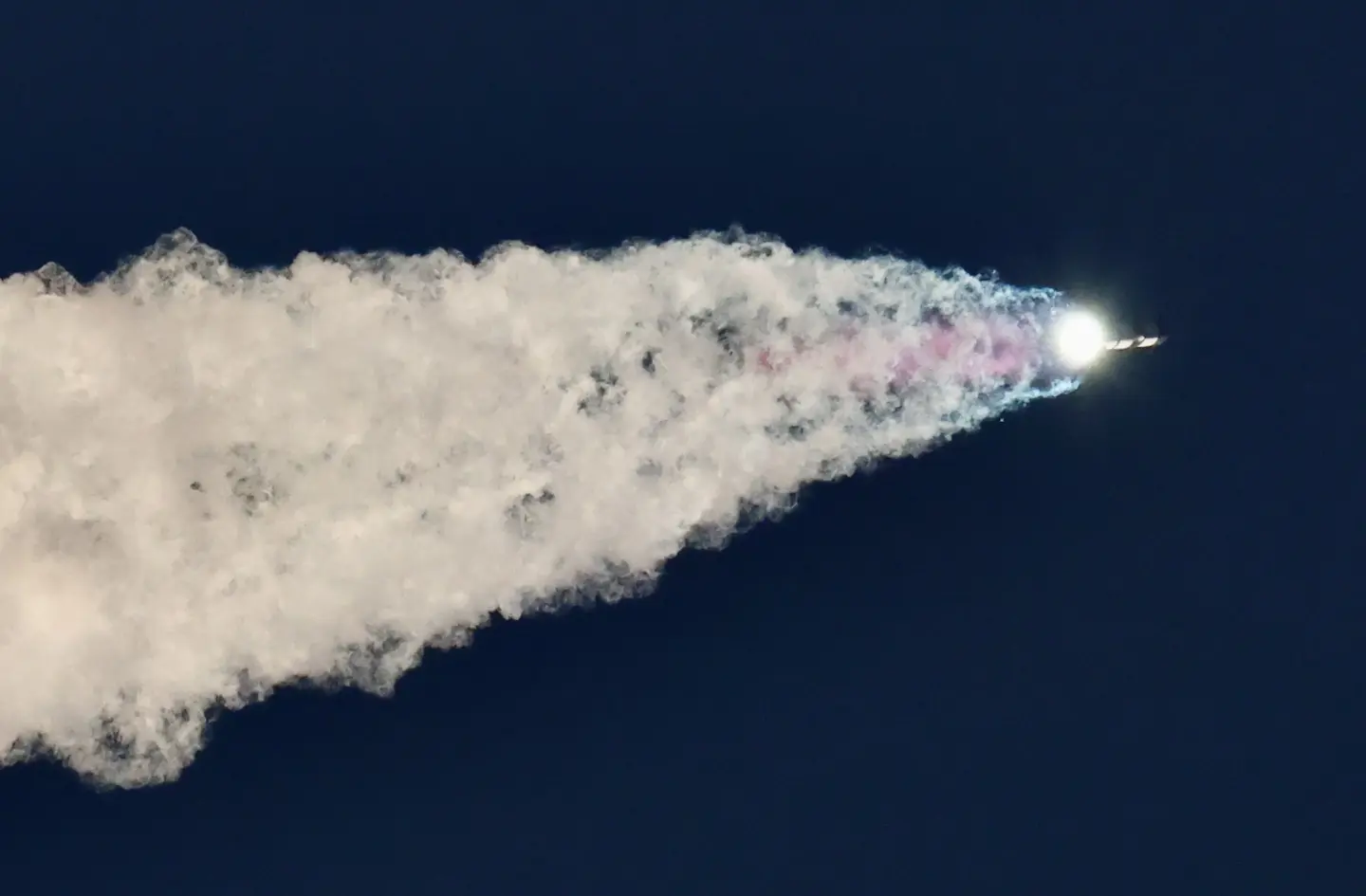
SpaceX is positioning its Starship rocket as the answer to high launch costs, but is suffering from explosive delays and is yet to launch successfully.These are the types of figures and facts behind the SpaceX S-1 filing’s “may not achieve commercial viability”, at least in Elon Musk’s stated timeframe.While the cost of maintaining a data centre outside Earth’s atmosphere (replacing components, switching out hardware, upgrades, and so on) are far from negligible, these too add to the overall cost of such a project.In terms of pure cost the total financial burden on operators will be enormous, regardless of whether the AI services such facilities are to run can be made to be profitable.Legislatively-mandated statements of financial honesty paint a different picture from those created by the marketing functions of companies seeking startup funding, in the case of smaller, tertiary space industry companies, or large hardware/infrastructure providers.
Science-fiction may turn into science fact in generations to come, but data centre operators and constructors have bigger problems right here on Earth’s surface.Want to learn more about Cloud Computing from industry leaders? Check out Cyber Security & Cloud Expo taking place in Amsterdam, California, and London.The comprehensive event is part of TechEx and co-located with other leading technology events.Click here for more information.CloudTech News is powered by TechForge Media.
Explore other upcoming enterprise technology events and webinars here.About the Author Joe GreenEditor Joe is a technology journalist with more than 25 years’ experience in the sector.He has particular specialisations in open-source, data privacy, systems administration, and software development.Related Amazon expands Anthropic partnership with $25 billion investment21st April 2026 EU awards €180 million sovereign cloud contract to four providers20th April 2026 AI data centre power demand shapes cloud growth16th April 2026 Uber expands use of AWS chips for AI workloads9th April 2026 Amazon expands Anthropic partnership with $25 billion investment21st April 2026 EU awards €180 million sovereign cloud contract to four providers20th April 2026 AI data centre power demand shapes cloud growth16th April 2026 Uber expands use of AWS chips for AI workloads9th April 2026 Join our CommunitySubscribe now to get all our premium content and latest tech news delivered straight to your inbox Click here Popular Cloud ROI & Cost, Interviews, Sponsored Content, Sustainable CloudRipple effect: Xylem’s sustainable water solutions for Europe’s data centres 20465 view(s)Cloud Computing, XaaS ModelsConcern over cloud storage security remains says Spiceworks – but good news for OneDrive 12609 view(s)Big Vendors, Cloud Computing, Cloud Cybersecurity, Market Intelligence, Security, Privacy & Trust10 real-life cloud security failures and what we can learn from them 6129 view(s)Big Vendors, Cloud Computing, Market Intelligence5 of the best: cloud technology training platforms 6020 view(s)Cloud ROI & Cost, Interviews, Sponsored Content, Sustainable CloudRipple effect: Xylem’s sustainable water solutions for Europe’s data centres 20465 view(s)Cloud Computing, XaaS ModelsConcern over cloud storage security remains says Spiceworks – but good news for OneDrive 12609 view(s)Big Vendors, Cloud Computing, Cloud Cybersecurity, Market Intelligence, Security, Privacy & Trust10 real-life cloud security failures and what we can learn from them 6129 view(s)Big Vendors, Cloud Computing, Market Intelligence5 of the best: cloud technology training platforms 6020 view(s) See all Latest View All Latest AI & Cloud16th April 2026AI data centre power demand shapes cloud growth AI & Cloud9th April 2026Uber expands use of AWS chips for AI workloads AI & Cloud8th April 2026Tanium introduces autonomy driven by AI and security innovation AI & Cloud16th April 2026AI data centre power demand shapes cloud growth AI & Cloud9th April 2026Uber expands use of AWS chips for AI workloads AI & Cloud8th April 2026Tanium introduces autonomy driven by AI and security innovation SubscribeAll our premium content and latest tech news delivered straight to your inbox Subscribe ExploreAbout UsContact UsNewsletterPrivacy PolicyCookie PolicyAbout UsContact UsNewsletterPrivacy PolicyCookie PolicyReach Our AudienceAdvertisePost a Press ReleaseContact UsAdvertisePost a Press ReleaseContact UsCategoriesCloud in ActionEditorial DeskFeaturesFuture of CloudIndustry PerspectivesMarket IntelligenceSecurity, Privacy & TrustTechnology StackStrategy & Decision-MakingAll CategoriesCloud in ActionEditorial DeskFeaturesFuture of CloudIndustry PerspectivesMarket IntelligenceSecurity, Privacy & TrustTechnology StackStrategy & Decision-MakingAll CategoriesOther PublicationsExplore AllAI NewsDeveloperIoT NewsMarketing TechTechHQTech Wire AsiaTelecomsExplore AllAI NewsDeveloperIoT NewsMarketing TechTechHQTech Wire AsiaTelecomsCloudTech News is part of TechForge SubscribeAll our premium content and latest tech news delivered straight to your inbox
Read More