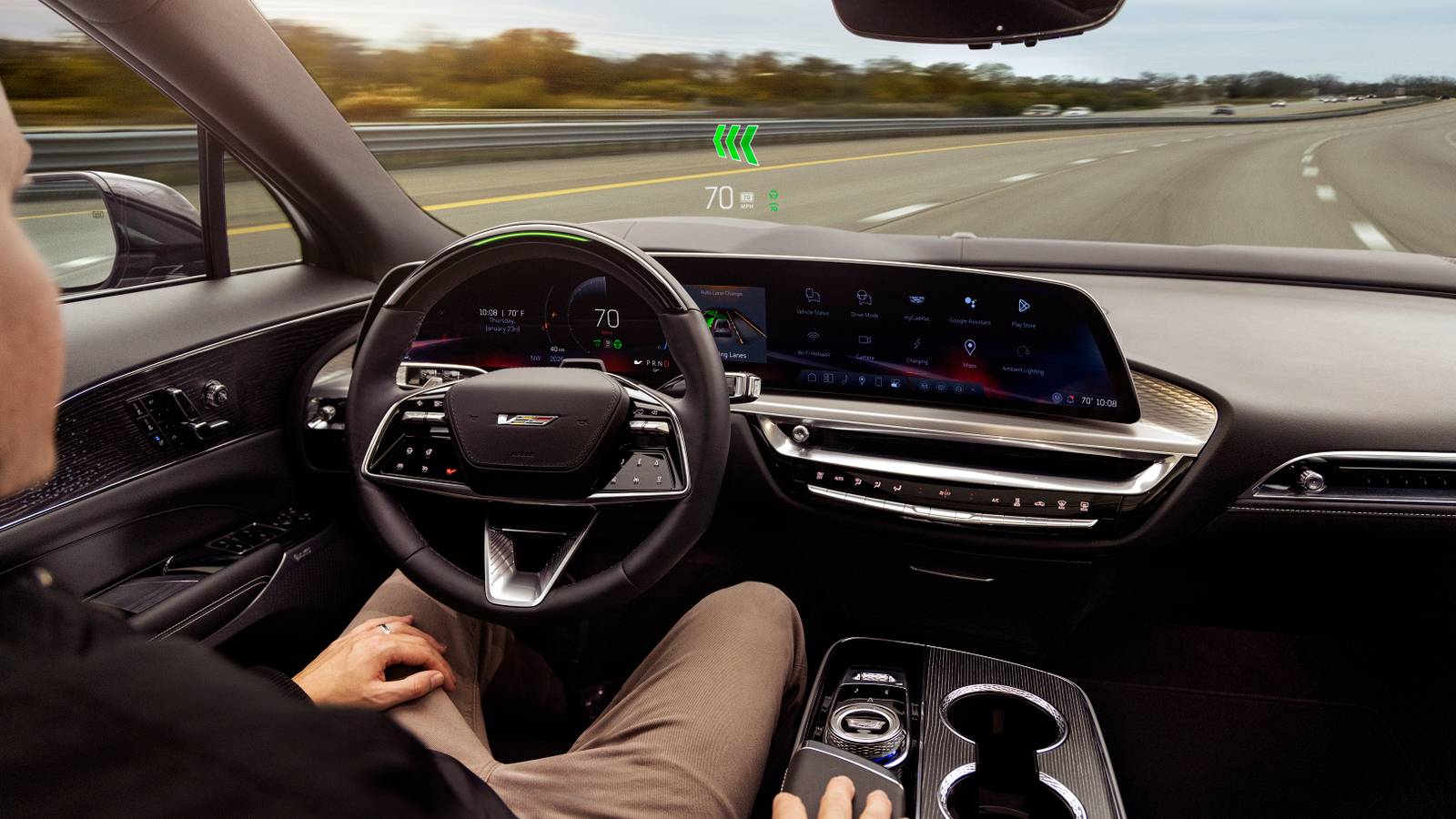
GM has sold hands-free highway driving capability under the Super Cruise name since 2017, marketing it as one of the most capable systems on the road.New GM buyers get three years of Super Cruise with select vehicles, but once that trial ends, most don't pay to renew the feature each month.Only 30 to 40% choose to keep it, according to a company announcement GM made in April 2026.
While Super Cruise has benefits when it comes to handling the tedious stretches of a long commute or road trip, whether it’s worth paying for after the free trial comes down to where and how often you drive.Super Cruise and its capabilities stay with the vehicle, so the hands-free highway driving feature transfers to the next owner with an active subscription.Those looking at a pre-owned GM vehicle can also use the information below to decide whether Super Cruise is worth paying for each month.
How and where Super Cruise works Map coverage and price tag Super Cruise is now available on more than 20 models across Chevrolet, GMC, Cadillac, and Buick, along with GM's truck lineup.According to the automaker, customers have logged more than a billion hands-free miles on the system as of April 2026, with nearly 750,000 vehicles currently on the road with Super Cruise functionality.A hands-free highway driving system, Super Cruise can handle steering, acceleration, and braking on compatible highways, relying on LiDAR map data, real-time GPS, cameras, and radar sensors to keep the vehicle centered in its lane.
For drivers, that means they can take their hands off the wheel on long highway stretches, reducing the fatigue of constant steering corrections during a commute or road trip.The LiDAR data comes from GM's dedicated mapping fleet, not the vehicle a customer drives.GM's Super Cruise documentation describes the system as using a “LiDAR-scanned map database," built in advance by a separate fleet of specially equipped vehicles that scan roads ahead of time and create the map, similar to how Google Street View cars work.
Those finished maps then download automatically to the customer's Super Cruise-equipped car, which carries no LiDAR sensor itself.From there, the customer's Super Cruise-equipped vehicle uses front and rear radar, a front camera, surround-vision cameras, a lane-sensing camera, and GPS to match its real-time position to the map, accurate down to the lane.A separate driver attention camera, located on top of the steering column, tracks the driver's head and eye position to make sure their eyes stay on the road.
Because the system depends entirely on this pre-built map data, it only works on roads GM has already scanned and cleared for use, a network GM says now covers more than 600,000 miles of North American highways and some non-divided secondary roads with clear lane markings and speed limits above 45 mph (the automaker has said that coverage will eventually expand to 750,000 miles).New buyers get three years included with an eligible vehicle, then pay $25 a month or a discounted annual rate.GM reports that more than half of Super Cruise owners use it weekly, and close to 85% use it at least once a month, so owners who renew seem to find plenty of opportunities to use the system.
Related Cars are starting to fix their own recalls overnight—here's how it works No phone call to the dealership, no appointment to schedule, and no waiting room involved.Posts By Carl Anthony Who should pay for Super Cruise (and who should skip it) Highway miles make the subscription worth it Close Super Cruise makes the most sense for drivers who spend a lot of time on the interstate, whether that means a long commute, frequent road trips, or regular multi-state driving.Because the system only works on mapped highways, its value scales directly with how many highway miles someone drives.
A GM owner logging 15,000 or more highway miles a year, for example, can easily justify the $25 monthly fee, or $300 for the year.By contrast, someone who drives most often on lower-speed roads through a smaller township may see almost no benefit from the system, since Super Cruise simply won't engage outside its mapped highway network.Likewise, if most of a year's driving happens in stop-and-go traffic, or on routes Super Cruise doesn't cover, the subscription has little value.
Drivers who mainly want the reassurance of lane centering and adaptive cruise, rather than hands-off highway driving, don't need a Super Cruise subscription, since GM vehicles already come standard with that type of driver-assist technology.For shoppers who want an electric vehicle with Super Cruise, the Chevy Equinox EV offers one accessible entry point.Buyers need the LT2 or RS trim plus the $3,000 OnStar Super Cruise extension, bringing the total MSRP to around $46,595.
Consumer Reports gave Super Cruise a score of 75 out of 100 in its active driving assistance testing, behind Ford's BlueCruise system but ahead of Tesla's, and praised its infrared head-position monitoring for keeping drivers engaged without being intrusive.The tradeoff is a sparse dashboard.Consumer Reports rated Super Cruise's ease of use at four out of 10, behind BlueCruise's six out of 10, because the instrument cluster gives drivers little more than a small steering-wheel icon to go on.
How Super Cruise stacks up against the competition Ford's BlueCruise is the closest direct rival, beating Super Cruise on the Consumer Reports' scorecard, 84 out of 100 versus 75.BlueCruise's infrared eye-tracking gives drivers more warning before disengaging and scored higher for ease of use.Its tradeoff is coverage.
BlueCruise works on about 130,000 miles of mapped "Blue Zones," less than Super Cruise's network.Subscribe for Clear Super Cruise buying guidance Subscribing to our newsletter gives deeper coverage of Super Cruise - map-coverage breakdowns, subscription-value analysis, owner-use insights and comparisons to rivals - so you can weigh whether the monthly cost makes sense for your driving habits.Get Updates By subscribing, you agree to receive newsletter and marketing emails, and accept our Terms of Use and Privacy Policy.
You can unsubscribe anytime.The BlueCruise trial lasts just three months from the date the Ford vehicle is purchased, after which it runs $49.99 a month or $495 a year.Tesla's Autopilot ranked lowest of the three at 61 out of 100 on the Consumer Reports' scorecard, with the publication citing a lack of effective driver monitoring.
Full Self-Driving (Supervised) costs $99 a month and adds more capability, including city-street driving that neither Super Cruise nor BlueCruise attempts.However, Full Self-Driving is a hands-on system, not a hands-off one like Super Cruise and BlueCruise.At the end of the day, GM buyers who spend their time on the highway will benefit the most from the monthly Super Cruise subscription.
For someone who does not have a long commute and uses their vehicle for short trips and quick errands, the value just isn’t there, since Super Cruise adds little beyond what adaptive cruise control and lane-keeping assist already provide.
Read More