Topics Latest AI Amazon Apps Biotech & Health Climate Cloud Computing Commerce Crypto Enterprise EVs Fintech Fundraising Gadgets Gaming Google Government & Policy Hardware Instagram Layoffs Media & Entertainment Meta Microsoft Privacy Robotics Security Social Space Startups TikTok Transportation Venture Latest AI Amazon Apps Biotech & Health Climate Cloud Computing Commerce Crypto Enterprise EVs Fintech Fundraising Gadgets Gaming Google Government & Policy Hardware Instagram Layoffs Media & Entertainment Meta Microsoft Privacy Robotics Security Social Space Startups TikTok Transportation Venture More from TechCrunch Staff Events Startup Battlefield StrictlyVC Newsletters Podcasts Videos Partner Content TechCrunch Brand Studio Crunchboard Contact Us I’ve had screen time limits on my iPhone for years, allowing me 30 minutes on social media each day.How many times have I dismissed the limit notification and continued watching mindless Reels? I’d be horrified to find out.It turns out that all along, what I needed was a $59 hunk of grey plastic (self-discipline would have been more affordable, but it was out of stock).
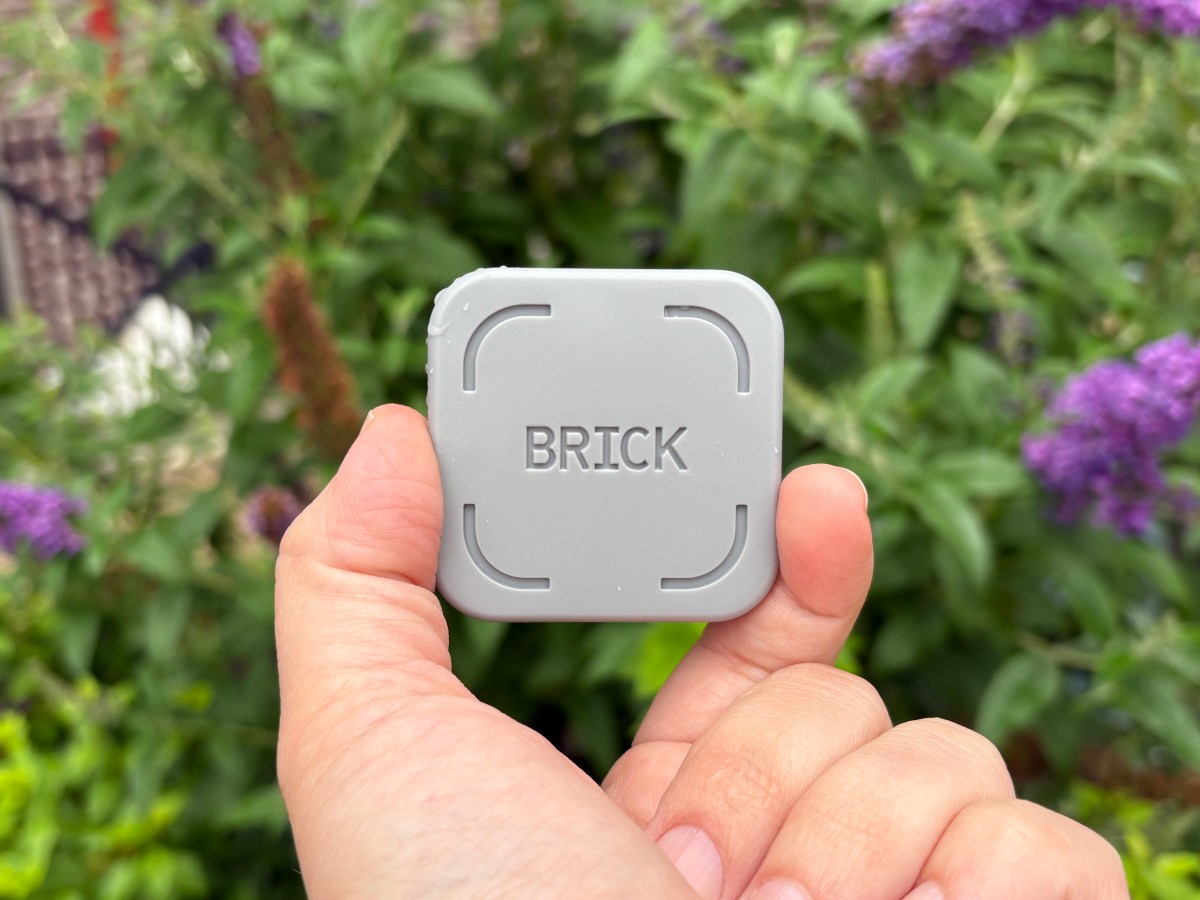
The Brick — a magnetic, matchbox-sized gadget — has accomplished what no screen time app has ever achieved.It actually got me to use my phone less and improve my sleep habits.Brick stands apart from your standard screen time app because it takes things a step further into the physical world.
The gadget is a branded, NFC-enabled square that only lets you deactivate your custom screen time limits if you tap your phone to the Brick, just like you’re buying something at a tap-to-pay kiosk.Apparently, if I have to physically get up and tap my phone to the Brick to go on Instagram, I will not go on Instagram.“Brick was born from a personal need: our phones were getting in the way of living,” co-founder Zach Nasgowitz told TechCrunch via email.
“We searched for solutions to this problem in our lives, but we found that nothing was quite right, so we decided to build something for ourselves that would solve this problem.” I used Brick to help me with my sleep hygiene, and I am embarrassed to admit that it’s working even better than I could have hoped.Like many other millennials — especially those of us whose jobs are so connected to the internet — I have a bad habit of getting into bed at night and scrolling mindlessly on my phone, making it harder to sleep.Even worse, sometimes when I wake up, I end up staying in bed on my phone, and I start the day feeling groggy.
I created a “Sleep” mode on the Brick app, which turns on each night at 10:30 p.m..Then, my phone automatically blocks all apps except for messaging apps (I want to be reachable, just in case) and audio apps (I sometimes listen to podcasts or audiobooks to help me sleep).When I wake up, I can’t waste time on my phone unless I get out of bed, walk downstairs, and tap my phone to the Brick.
(If you want to leave your phone out of your bedroom altogether, but use podcasts as a sleep aid, I’d suggest the Dreamie alarm clock.) It’s embarrassing that I needed a $59 piece of plastic to make a lifestyle change, but without the Brick, it would be too easy for me to fall back into old habits.I’ve been testing a Brick that the company sent me to review, and it’s been so effective that I’m going to buy one so that I can keep using it (we return or give away our review units for ethical reasons).If you really wanted to, you could even try to DIY something like a Brick by using an NFC tag and Apple Shortcuts.
“Software-only solutions like Screen Time and Digital Wellbeing are easy to bypass, and what actually works is adding friction,” Brick co-founder TJ Driver told TechCrunch via email.“This has allowed physical technology to come into play to create real separation that a software prompt can’t replicate.By requiring you to physically return to the device to unblock your apps, the decision to reconnect becomes an intentional one rather than an unconscious reflex.” Users are provided a small number of “emergency unbricks,” just in case you’re out when your phone bricks and you really need a specific app, like Google Maps or Uber, to get home safely.
But I find it easier to just lump those apps into my sleep mode for the rare occasion that I’m out late, so I don’t need to waste an emergency unbrick.It doesn’t affect my sleep to know that I can open the Uber app.I do not doomscroll on Uber.
“Rather than constantly relying on willpower, it can be more effective to design your environment so that you don’t have to always be taxing your willpower or brain,” Driver said.“Things like Brick help people choose how they want their phone to best serve them for a given moment or task, and then design their digital environment so that they don’t have to think about it anymore.” This emphasis on personalization and agency is what has made the product work for so many customers.“One user had wanted a dumb phone for years, but couldn’t give up his primary texting app, KakaoTalk, for communicating with his wife and friends based in Korea,” said Nasgowitz.
“He shared that, ‘Brick has turned my phone into what I always wanted – a phone that can text, call, take some photos, and use Kakao.It’s perfect.’” People are getting more interested in switching to “dumb phones” as they become more disillusioned with Big Tech.But flip phones aren’t made for our current lifestyles, where we scan our phones instead of printing out concert tickets, use our phones to pay subway fares, and have jobs that require us to use specific two-factor authentication apps.
(Some companies, like Dumb Co and Commodore, are trying to remedy this by hacking flip phones to load apps like authenticators and WhatsApp, or by creating new hardware altogether.) If you’re nervous about making a more extreme change like getting a flip phone, the Brick is a happy medium — it works, but it’s not as drastic an intervention.You can make your phone as dumb as you want, whenever you want.“When you zoom out and think about the screen time movement as a whole, it isn’t about rejecting technology,” Driver said.
“It’s about reclaiming agency and being intentional again.” Topics brick, Gadgets, Reviews When you purchase through links in our articles, we may earn a small commission.This doesn’t affect our editorial independence.Amanda Silberling Senior Writer Amanda Silberling is a senior writer at TechCrunch covering the intersection of technology and culture.
She has also written for publications like Polygon, MTV, the Kenyon Review, NPR, and Business Insider.She is the co-host of Wow If True, a podcast about internet culture, with science fiction author Isabel J.Kim.
Prior to joining TechCrunch, she worked as a grassroots organizer, museum educator, and film festival coordinator.She holds a B.A.in English from the University of Pennsylvania and served as a Princeton in Asia Fellow in Laos. You can contact or verify outreach from Amanda by emailing [email protected] or via encrypted message at @amanda.100 on Signal.
View Bio X LinkedIn Facebook Instagram youTube Mastodon Threads Bluesky TechCrunchStaffContact UsAdvertiseCrunchboard JobsSite Map Terms of ServicePrivacy PolicyRSS Terms of UseCode of Conduct SpaceX IPOAnthropicCursorSnapFable 5Tech LayoffsChatGPT TechCrunchStaffContact UsAdvertiseCrunchboard JobsSite MapTerms of ServicePrivacy PolicyRSS Terms of UseCode of ConductSpaceX IPOAnthropicCursorSnapFable 5Tech LayoffsChatGPT
Read More