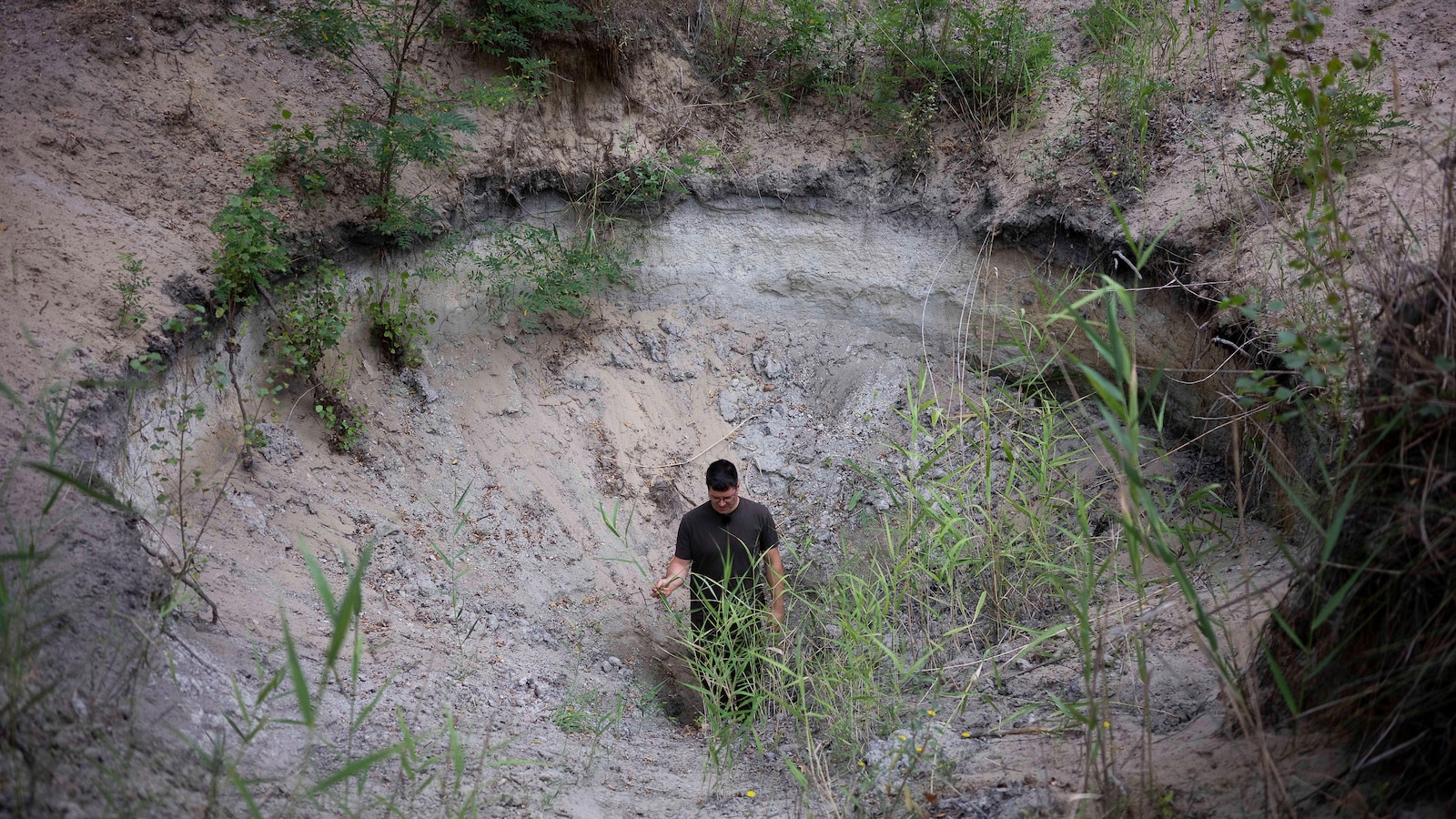
KISKUNMAJSA, Hungary -- Oszkár Nagyapáti climbed to the bottom of a sandy pit on his land on the Great Hungarian Plain and dug into the soil with his hand, looking for a sign of groundwater that in recent years has been in accelerating retreat.“It’s much worse, and it’s getting worse year after year,” he said as cloudy liquid slowly seeped into the hole.”Where did so much water go? It’s unbelievable.”Now a group of farmers and other volunteers, led by Nagyapáti, are trying to save the region and their lands from total desiccation using a resource for which Hungary is famous: thermal water.
“I was thinking about what could be done, how could we bring the water back or somehow create water in the landscape," Nagyapáti told The Associated Press."There was a point when I felt that enough is enough.We really have to put an end to this.
And that's where we started our project to flood some areas to keep the water in the plain.”Along with the group of volunteer “water guardians,” Nagyapáti began negotiating with authorities and a local thermal spa last year, hoping to redirect the spa's overflow water — which would usually pour unused into a canal — onto their lands.The thermal water is drawn from very deep underground.According to the water guardians' plan, the water, cooled and purified, would be used to flood a 2½-hectare (6-acre) low-lying field — a way of mimicking the natural cycle of flooding that channelizing the rivers had ended.A 2024 study by Hungary’s Eötvös Loránd University showed that unusually dry layers of surface-level air in the region had prevented any arriving storm fronts from producing precipitation.Instead, the fronts would pass through without rain, and result in high winds that dried out the topsoil even further.The water guardians hoped that by artificially flooding certain areas, they wouldn't only raise the groundwater level but also create a microclimate through surface evaporation that could increase humidity, reduce temperatures and dust and have a positive impact on nearby vegetation.
Popular ReadsMan doing target practice in backyard accused of fatally shooting woman blocks awayDec 26, 7:43 PMTexas teen missing since Christmas Eve believed to be in 'imminent danger': SheriffDec 28, 4:19 PMRob Reiner's son arrested for murder in stabbing death of famed director, wifeDec 15, 6:39 PMFollowing another hot, dry summer this year, the water guardians blocked a series of sluices along a canal, and the repurposed water from the spa began slowly gathering in the low-lying field.After a couple of months, the field had nearly been filled.Standing beside the area in early December, Nagyapáti said that the shallow marsh that had formed "may seem very small to look at it, but it brings us immense happiness here in the desert.”He said the added water will have a “huge impact” within a roughly 4-kilometer (2½-mile) radius, "not only on the vegetation, but also on the water balance of the soil.
We hope that the groundwater level will also rise.”Persistent droughts in the Great Hungarian Plain have threatened desertification, a process where vegetation recedes because of high heat and low rainfall.Weather-damaged crops have dealt significant blows to the country’s overall gross domestic product, prompting Prime Minister Viktor Orbán to announce this year the creation of a “drought task force” to deal with the problem.After the water guardians' first attempt to mitigate the growing problem in their area, they said they experienced noticeable improvements in the groundwater level, as well as an increase of flora and fauna near the flood site.The group, which has grown to more than 30 volunteers, would like to expand the project to include another flooded field, and hopes their efforts could inspire similar action by others to conserve the most precious resource.
“This initiative can serve as an example for everyone, we need more and more efforts like this," Nagyapáti said."We retained water from the spa, but retaining any kind of water, whether in a village or a town, is a tremendous opportunity for water replenishment.”___The Associated Press’ climate and environmental coverage receives financial support from multiple private foundations.AP is solely responsible for all content.
Find AP’s standards for working with philanthropies, a list of supporters and funded coverage areas at AP.org.