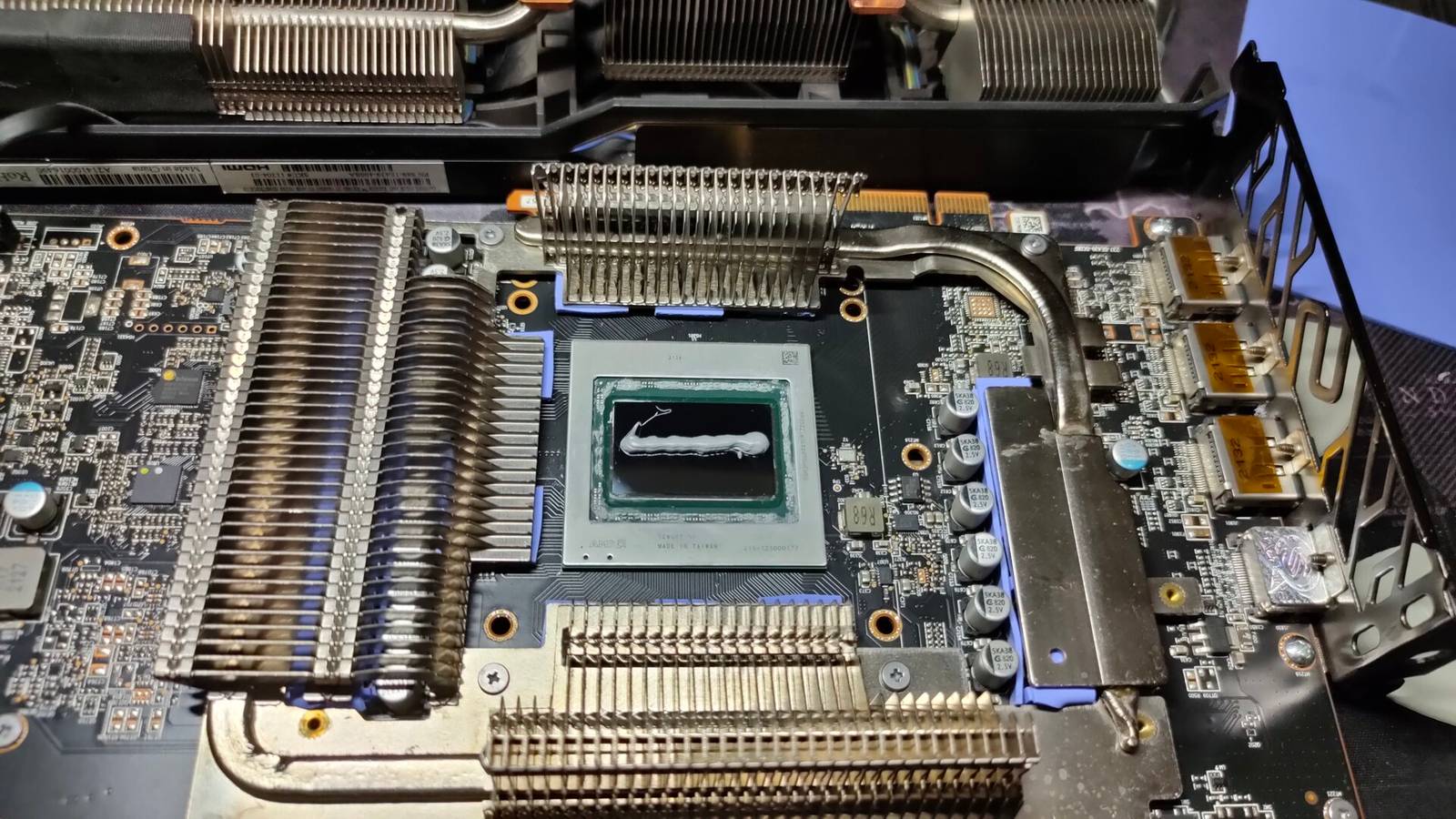
Thermal paste seems to be awfully simple on the surface, and yet, it somehow generates endless arguments.Dot sizes, application patterns, curing times, replacement schedules, and whether one wrong drop can destroy your entire PC ...I've seen it all.
Let's settle it and figure out which of these thermal paste myths actually make the slightest sense.All thermal paste conducts electricity Liquid metal is the exception, not the rule Close Thermal paste often looks metallic, so I understand why you'd assume that one stray blob will short out the motherboard.Luckily, that's not at all the case.
Most ordinary thermal pastes are electrically non-conductive.Getting a little around the edge of the CPU might make a mess, but it generally shouldn't kill anything.Liquid metal is where you actually need to be more careful, because it conducts electricity, spreads easily, and will rapidly destroy aluminum components.
Applying that requires way more precision.With that said, not every tube of thermal paste is a huge threat (99% aren't).Check the manufacturer's specifications and know which type you're dealing with.
Thermal Grizzly Kryonaut Thermal Paste $9 $12 Save $3 Time to restock your thermal paste? Can't go wrong with Thermal Grizzly.$9 at Amazon Expand Collapse More thermal paste always means better cooling Paste needs to fill gaps instead of creating a thick barrier Covering your entire PC in thermal paste won't magically make it run super cool.Thermal paste helps by filling the microscopic imperfections between the CPU and the cooler.
Those two surfaces might look perfectly smooth, but they're really not, and the paste pushes air out of the tiny gaps that would otherwise interfere with heat transfer.Adding more paste doesn't keep improving that connection forever.Once those imperfections are mostly taken care of, a thick layer just leaves more material between the CPU and the cooler than you'd ever really need.
Slightly overdoing it with a non-conductive paste usually won't cause disaster, but it does make a mess and it doesn't bring any actual cooling benefits, so ...don't bother.Related I moved these 6 devices to my router's 5GHz band, and my Wi-Fi finally stopped buffering Your Wi-Fi router has a fast and a slow lane: Move these 6 devices to 5GHz Posts By Monica J.
White The pea-sized dot is the only correct application method CPU shape and paste viscosity both matter If I had a penny for every time I've seen arguments about the application method for thermal paste, I'd have a bunch of pennies.Maybe even a couple of dollars.The pea-sized dot is popular because it's quick, easy, and usually works well, but it's not like there's some sacred method that we're all supposed to use.
Modern CPUs come in different sizes and shapes, and a small dot that covers one heat spreader nicely might leave the edges of a larger one looking pretty bare.The paste itself matters, too, especially viscosity-wise.A thin compound may spread very easily under cooler pressure, while a thicker one may need a larger amount or a different pattern.
Dots, lines, crosses, and multiple smaller dots all can work, just do what gives you the best coverage.You have to spread the paste manually Cooler pressure can do the spreading for you You don't have to go shopping for a tiny spatula to spread thermal paste into every corner.Once you tighten the cooler down correctly, its mounting pressure spreads the paste across the heat spreader for you.
That's exactly why simple dot and line methods even work in the first place.Manual spreading isn't wrong, especially with thick compounds, but it's just not mandatory.Plus, doing it badly can actually leave you with an uneven layer or uncovered spots.
Pre-applied thermal paste is always garbage The paste already on your cooler is usually ready to use Some builders scrape off pre-applied thermal paste before the cooler has even left the box, convinced that anything applied at the factory must be cheap and useless.But in reality, the included paste is normally applied in a controlled amount and is perfectly capable of cooling the processor the cooler was designed for.Many tests show that premium aftermarket paste isn't all that much better.
You might shave off a few degrees, but that's about it.Thermal paste needs time to cure Many modern compounds work at full strength immediately The idea that every thermal paste needs days or weeks to settle in comes from older compounds that could improve slightly after repeated heating and cooling cycles.That advice has stuck around long after many manufacturers moved to formulas that require no cooling period at all.
These days, the temps you see right after installation are what you're going to get.Some changes are bound to happen (based on workload, or even room temperature), but that's not thermal paste curing; that's just normal usage.Thermal paste must be replaced every year It's not as simple as that While you definitely should clean your PC once every few months, you don't have to also replace your thermal paste that frequently.
A good application can remain effective for several years, and replacing perfectly functional paste won't fix a problem you didn't know you had.(That's because you just didn't have said problem, period.) New thermal paste won't fix everything, but it's often worth trying For one final myth, let me say this: re-applying thermal paste isn't going to magically take 15 degrees off of your CPU temperature.It might help, though, and if done well, there's very little harm in trying it.
Remember to clean your entire PC while you're at it; it's the cheapest upgrade you can get.Compressed Air Duster Color Black Battery 240 minutes on lowest settings Thermal paste is one thing, but staying on top of the dust levels in your PC is arguably even more important.This electric compressed air duster can help you with that.
$24 at Amazon Expand Collapse
Read More