Intel's N100 and similar ultra-low-power CPUs used to be the go-to recommendation for homelab beginners who wanted a PC that sips power while still seamlessly handling numerous basic self-hosted services.Add How-To Geek on Google Add as Preferred Source Follow on Google Discover However, with prices rising throughout the year and other alternatives offering considerably more hardware for the money, I don't think machines powered by the Intel N100 and similar CPUs are the homelab bargain they used to be.The Intel N100 became popular because it was a cheap, low-power chip Everything you need for your first homelab Close Before I can talk about why the Intel N100 isn't excellent value, let's first briefly go over what the CPU and similar chips in the lineup actually are.
It's a low-power processor that's popular in ultra-budget laptops, mini PCs, and motherboards, and it quickly became the foundation for cheap, low-power DIY NAS and homelab builds.It's a very basic low-power chip.It has only 4 E (efficiency) cores that boost up to 3.40GHz and no P (performance) cores or Hyper-Threading.
However, because it came out in 2023, it's still a relatively modern architecture that can handle basic workloads, especially when you throw it into a headless server without a GUI.The CPU has a TDP of only 6W, supports up to 16GB of single-channel DDR4/DDR5/LPDDR5 memory, and has 9 PCIe 3.0 lanes, which can hold it back if you want to add fast NVMe SSDs.The Intel N100 also has a dedicated Quick Sync Video engine for hardware-accelerated transcoding, further adding to its value for homelabbers building a Plex or Jellyfin media server.
It's worth pointing out that the N100 launched alongside the slightly higher-clocked N200.In 2025, Intel followed up with the N150 and N250, updated versions that offer somewhat better performance but retain many of the same core specs and limitations.While these are all distinct processors, they share many of the same limitations, so the drawbacks I'm discussing in this article really apply to all four.
Intel N100-powered mini PCs aren't as cheap as they used to be Entry-level hardware shouldn't cost a premium There are several reasons why homelabbers bought the Intel N100, but ultimately, it all boils down to the CPU being incredibly affordable for the performance it offers.Even with its official 16GB single-channel RAM limit, the N100 can run a hefty Docker stack with Plex, Home Assistant, AdGuard Home, and other lightweight services.Mini PCs and motherboards that came equipped with the N100 were cheap to buy and, thanks to their incredible power efficiency, very cheap to run.
With a TDP of only 6W, the CPU itself is incredibly efficient.With such a low draw, a complete mini PC averaging around 8W to 12W at the wall under load would cost roughly $10 to $20 per year to run.It's a drop in the bucket compared to many other alternatives.
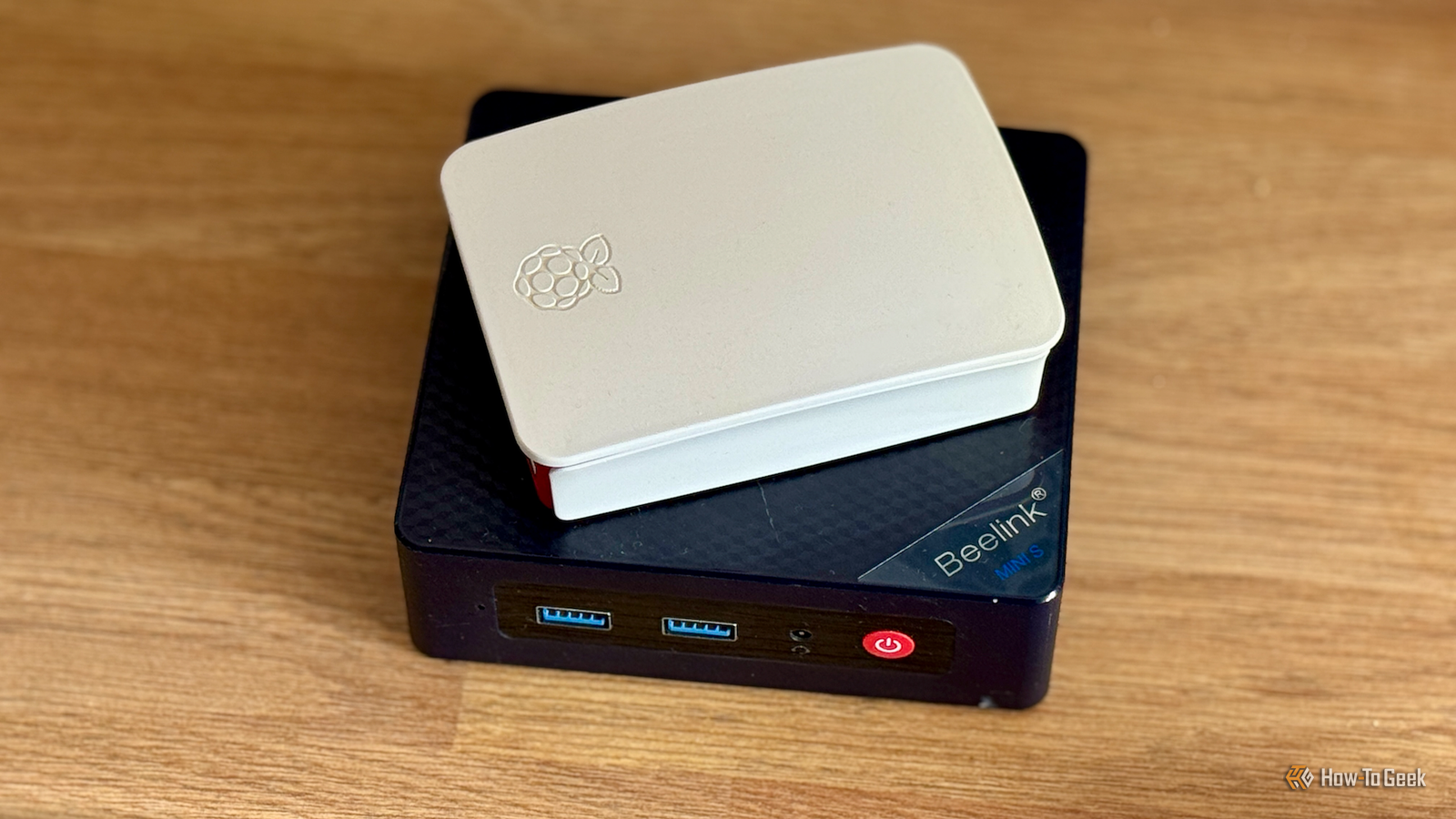
Unfortunately, N100-powered mini PCs have become progressively more expensive over the past year, to the point that they're really hard to recommend at current prices.Looking at the price history of the Beelink MINI S12 mini PC with 16GB of DDR4 RAM and a 500GB SSD, it cost just $159 in spring 2025.This was incredible value, and it was an easy go-to recommendation for anyone getting into homelabbing for the first time.
But as the RAM-pocalypse happened and component prices climbed, the mini PC gradually became more expensive, reaching its highest recorded price of a whopping $409 in April 2026.It has since dropped to $339, but that's still way too expensive to recommend.The Beelink S12 is just one example.
The cheapest N100-powered mini PC I could find on Amazon is this Azeyou model, and it costs an eye-watering $300.At these kinds of prices, I'd feel much more comfortable recommending a Core 3 304-powered mini PC, like this BOSGAME E6 ECO, which is currently listed for $379.It's a much newer and more capable machine that'll handle a wider range of homelab workloads, and the chip even has a dedicated 15-TOPS NPU for supported AI tasks.
Granted, much of the N100's price increase can be chalked up to rising RAM and SSD prices, but it doesn't change the fact that you probably shouldn't pay more than $200 for a new N100 mini PC, even in today's market.Related I ditched my gaming PC for work after trying this low-power mini PC Turns out, writing articles doesn't actually require 16 threads.Posts 1 By Ismar Hrnjicevic Your old office PC or laptop is the better first cheap homelab Way more hardware for way less money While you could grab a mini PC or entry-level NAS for your first server, the cheapest and often best solution is to use whatever hardware you have lying around.
Before I upgraded to a mini PC, my first server was an old laptop with a 7th-gen Intel Core i5 whose screen I'd broken.Granted, it wasn't nearly as powerful as an Intel N100, as its two cores and 4GB of RAM held it back, but it was still enough to run over a dozen Docker containers before I felt the need to upgrade.If you've got an old gaming PC or office PC, such as a Dell OptiPlex, HP ProDesk, or Lenovo ThinkCentre, it could be all you need for a basic home server.
If you don't have anything at home, just look up what's being sold on Facebook Marketplace or eBay.You'd be surprised what you can find for just $50.Even if the CPU is considerably slower and the motherboard uses DDR3 RAM, it's honestly all you need to get started.
Just throw in a small SATA SSD if it doesn't already have one to store your OS and apps, and it'll be plenty fast for everyday self-hosted apps and other homelab tasks.It'll draw more power than the N100, sure, but it's also going to cost a fraction of the price.The N100's efficiency just can't make up for the discrepancy.
The best part is that a proper tower gives you more room to work with and upgradeable RAM.If there's room for a RAM upgrade, you could probably run several VMs on it.The N100 still makes sense when the price is right The Intel N100 isn't a bad chip by any means.
It's a capable, efficient processor that can handle most homelab workloads a beginner would throw at it, but the mini PCs and motherboards built around it have simply become too expensive to recommend as an entry point into the hobby.At current prices, you're much better off repurposing an old desktop or office PC, or just spending a little more on a considerably more powerful Intel Core 3 304 mini PC.The N100 itself isn't the problem, but until prices come down, the value just isn't there.
And if you get lucky and find an N100-powered machine on the used market for under $100, it could be the bargain of the century, especially if you care about noise and power draw.Related The $50 PC that's quietly replacing Raspberry Pis in homelabs Rising Pi prices make the used PC market worth a closer look.Posts 48 By Patrick Campanale
Read More