Up Next In 2000, S Club 7 asked the world to reach for the stars – and this non-profit wants humanity to finally do just that.Alpha Centauri is our rather cool-sounding cosmic neighbour, a three-star system just 4.37 light-years away.If that sounds small, it’s not.
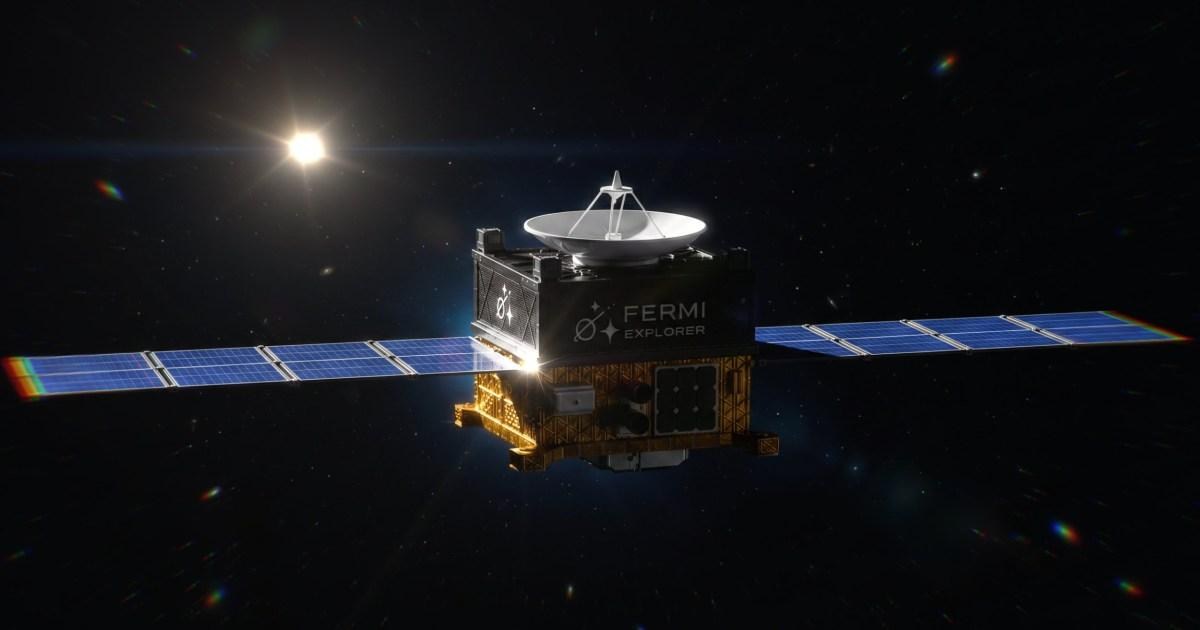
Alpha Centauri is 25trillion miles from Earth, so it would take you roughly 45million years by car to get to.It would also take 80,000 years by spacecraft, an interstellar trip that The Fermi Explorer Mission will do in 2029, the non-profit tells Metro.Philip Johnston, the CEO of Starcloud, a deep-tech company that wants AI data centres in space, helped co-found the mission in stealth last year.
HIs team plans to launch a probe to visit the star system in 2029, kicking off its 80,000-year-long journey to becoming the first human-made object to visit another star system.‘Why should we go to another star? Everyone has their own reasons,’ Johnston says.‘For some, it is the human spirit of exploration and adventure.
For others, they view this as one of the most significant moments in the life of the universe.’ What is Alpha Centauri? And is it even worth going? We’ve had three interstellar visitors – drifters from other star systems – enter our cosmic backyard since 2017, the latest being 3I/ATLAS in 2025.Humans have yet to do any interstellar visiting of our own.Nasa has sent out spacecraft, such as the Voyager probes, into interstellar space, but none aimed at any particular star.
But if it were to point to one, the nearest star system would be the most obvious place to go.Alpha Centauri has long inspired sci-fi filmmakers (and Johnston) of a lush alien world with three suns.The trio includes Alpha Centauri A and B, which circle one another every 80 years.
A faint red dwarf, Proxima Centauri, is then doing laps around them.The system is home to the car-shaped robots, the Transformers, and the Na’vi, the 10-foot-tall blue aliens of the Avatar film series.In real life, astronomers and space officials have long dreamt of sending a probe to explore Alpha Centauri, on the off chance life could be there.
‘Our solar system has one star, so the view from a planet there could be spectacularly different,’ says Johnston.‘You might have two suns in the sky.We still know very little about the planets themselves.’ The probe would set its coordinates to Alpha Centauri A, which is slightly larger than the sun, and the slightly smaller Alpha Centauri B.
Will any astronauts be on board? No humans will be aboard the fridge-sized probe, but it will contain samples of human DNA – you never know who might be there to greet it, Johnston says.After all, the mission is named after the physicist Enrico Fermi.He was behind the Fermi Paradox, or the contradiction between the high likelihood of aliens existing and the lack of evidence for that existence.
Despite having a long, long journey ahead of it, the Fermi Explorer won’t be nuclear powered.Instead, the non-profit is designing a ‘flight-proven electric propulsion system’ that will rely on solar power, according to its website.The 155kg probe will cost an estimated £11,000,000.
Its 1kg payload will, at the least, include the Voyager Golden Record, which contains the sounds of Earth, recorded greetings and a mix of music.Once up in the cosmos, it will do a ‘perihelion pump’, skirting past the sun to use its gravity as a slingshot, a feasibility study said.The spacecraft will remain functional for the first 12 years of the mission before becoming a celestial time capsule.
If all goes well, the probe will cruise at 24km/s for 79,800 years, according to the mission’s plan posted on the open software platform GitHub.Still, the team doesn’t expect their probe to be the first to Alpha Centauri.A lot can happen in a few years, let alone tens of thousands, and rockets may be advanced enough that one launched in the future will easily overtake the Fermi Explorer.
If a future generation makes a propulsion system even 20% faster than the Fermi Explorer, it would get there 15,000 years before it.(The mission’s website politely asks scientists not born yet to kindly let them at least get ‘close’ first.) ‘We will be both the first to leave and the last to arrive at Alpha Centauri,’ Johnston adds.Trending Now Dog walker 'distressed' after seeing man put carrot up his bum at nature reserve UK 3 days ago By Ryan Prosser Mum found dead in hot tub by her teenage children pictured for first time Newborn baby girl dies with seven arrested for murder in Sheffield flat Mum denied £1,800 refund after 'horrendous' ordeal at UK holiday park The science fiction Alpha Centauri has inspired remains just that – science fiction – but Johnston sees it as a blueprint of what humanity will achieve.
His next stop will be Andromeda, our nearest galaxy two million light-years away.‘A later mission of the Fermi Explorer Mission will be to send a spacecraft to Andromeda,’ Johnston adds.‘We estimate that with today’s technology and around £73million, we could send a spacecraft that arrives at Andromeda in about one billion years, and this will be our next mission after the Alpha Centauri mission.’ Get in touch with our news team by emailing us at [email protected].
For more stories like this, check our news page.MORE: Solar storms could expose holiday-makers to ‘a month’s worth of radiation in one hour’ MORE: Inside Elon Musk’s vision for SpaceX’s new $100,000,000,000 spaceport MORE: Lunar eclipse coming to UK will turn moon dark red – and you won’t need glasses Comments Add as preferred source News Updates Stay on top of the headlines with daily email updates.This site is protected by reCAPTCHA and the Google Privacy Policy and Terms of Service apply.
Your information will be used in line with our Privacy Policy HomeNewsTech Related topics Space Solar storms could expose holiday-makers to 'a month's worth of radiation in one hour' Tech 2 days ago By Josh Milton Bizarre 'jellyfish spotted on Mars' in resurfaced Nasa images Tech August 17, 2026 By Josh Milton
Read More