Back in 2016, Vietnam abandoned plans to build its first nuclear power plant, with the government viewing the market conditions surrounding electricity demand as being no longer conducive to the project.In late 2024, Vietnam reversed that earlier reversal, and is now aiming to complete a pair of nuclear power plants, the Ninh Tuan 1 and 2, by 2030.Rosatom is contracted for the Ninh Tuan 1.
Meanwhile, the Russian state corporation is steadily growing its presence in India, a market that it has been operating in for nearly 40 years.Nuclear agreements between Russia and India surround the same plant model destined for Vietnam, as well as small modular reactors (SMRs).Notably, Rosatom has separately made moves to bolster its additive manufacturing (AM) capabilities in both Vietnam and India.
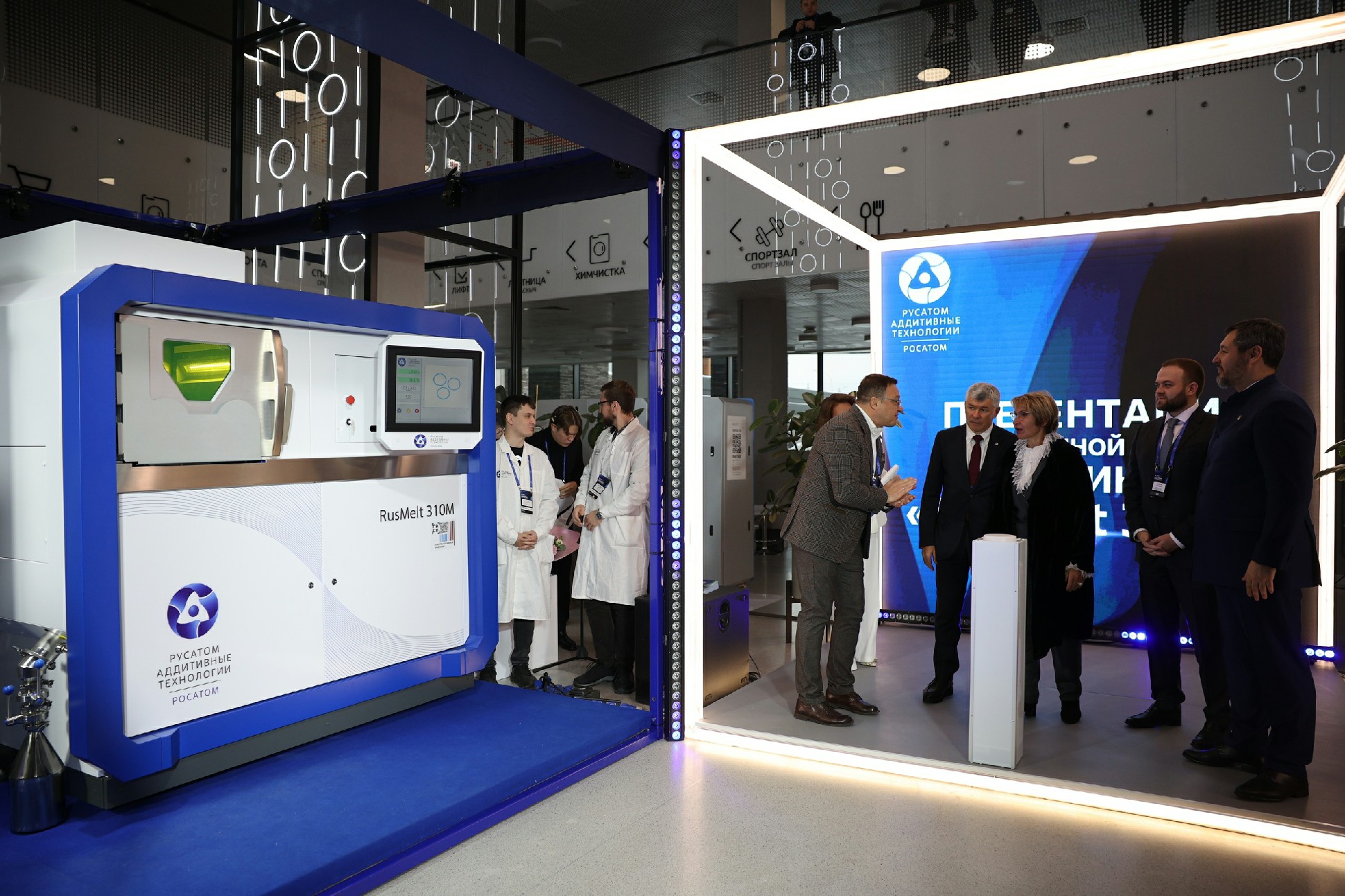
In the former, representatives of Rosatom’s Fuel Division and Vietnam National Industry-Energy Group (Petrovietnam) recently signed an agreement to cooperate on building an AM technology center, at a state summit between Putin and Vietnam’s President To Lam.As for India, earlier this year, Rosatom for the first time sold a RusBeam 2800 electron beam printer into the Indian market.This followed an agreement reached between Rosatom and Indian state-owned corporation HMT Limited to co-manufacture 3D printing equipment in India.
More recently, in a decision directly tied to its AM strategy, Rosatom announced it will start making scanners sold under its Smart Scan brand locally in India, which will give the products ‘Make in India‘ status and significantly reduce equipment costs for Indian buyers.Additionally, at a recent event in India held by INNOPROM, a Russian industrial exhibition organizer, there was a joint panel including representatives from both nations called “Additive Manufacturing: A New Vector of Russian-Indian Partnership.” All of this follows news from last year that Rosatom had received regulatory approval to print components for SMRs, which Russia is planning to deploy both on land and in ships, including a new generation of nuclear-powered icebreakers.The year prior, Rosatom executed its first-ever installation of a 3D printed component in one of its facilities: a pump impeller used at a Siberian facility related to its fuel division.
Thus, after using industrial policy to achieve a long-term buildout of Rosatom’s AM capabilities domestically, Russia has taken a step that’s most natural in the world of international trade by extending that same strategy beyond its borders.The twist in this context is that, since Trump returned to office, the US has been pressuring India to stop buying Russian oil, and the deals between Rosatom and India aptly sum up the attitudes of Russia and India with regard to US pressure.The US isn’t happy about the arms-for-oil deals that Vietnam and Russia have been engaged in to evade US sanctions, but Vietnam may be too important to US trade for the latter to do much about it.
Aside from any potential geopolitical implications, even more important are the signals being sent about the significance of AM to nuclear technology.As someone who believes strongly in the business case for AM in energy applications, I’ve viewed nuclear as one of the promising areas for market penetration, but, judging at least from the AM-related news cycle, there seems to have been less AM activity in nuclear than one might expect at a time when interest in nuclear has seen a momentous resurgence.On the other hand, the US is no longer at the cutting-edge of nuclear technology; China and Russia are.
The US has brought two nuclear reactors online in the 2020s, compared to the 20-25 that China has built this decade.China’s progress is of course heavily dependent on long-term cooperation with Rosatom, suggesting that what Rosatom is doing with AM for nuclear is one of those select but strategically critical areas where we have to look to Russia, not the US, to stay apprised of the most advanced activity going on in a given technological field.Given the fact that Rosatom apparently feels the need to co-locate AM capacity with its nuclear reactor buildouts, AM for nuclear may already be a major success story.
It just won’t show up on your radar if you limit the geographic scope of the markets you pay attention to.Images courtesy of Rosatom Subscribe to Our Email Newsletter Stay up-to-date on all the latest news from the 3D printing industry and receive information and offers from third party vendors.Print Services Upload your 3D Models and get them printed quickly and efficiently.
Powered by FacFox Powered by 3D Systems Powered by Craftcloud Powered by First Mold Powered by Xometry 3DPrinting Business Directory 3DPrinting Business Directory
Read More