Despite the name, the UGREEN NASync DXP6800 Ultra is not among the most powerful NAS that UGREEN sells (far from it), but it does represent the pinnacle of what most of us might realistically ever need.It’s a great product, but unless you already know UGREEN’s excellent line of more affordable options aren’t capable enough, your money may be better spent on a slightly weaker NAS.UGREEN NASync DXP6800 Ultra 8 Brand UGREEN CPU Intel Core 5 120U The UGREEN NASync DXP6800 Ultra NAS has six bays that hold up to 208TB of storage — and a Core 5 120U that can handle even demanding network tasks.
Pros & Cons Better performance than the competition Bundled with excellent UGREEN apps Hardware is intuitive for first-time NAS buyers Only a marginal improvement over the DXP6800 Pro See at Amazon $1450 at Ugreen Expand Collapse See Our Process How We Test and Review Products at How-To Geek We go hands-on with every product to ensure it's worth your time and money.Posts By Justin Duino Price and availability The UGREEN NASync DXP6800 Ultra is the cheaper of two “Ultra” additions to UGREEN’s DXP NASync series.The 6-bay DXP6800 Ultra comes in at $1,449.99, while the 8-bay DXP8800 Ultra costs $1,779.99.
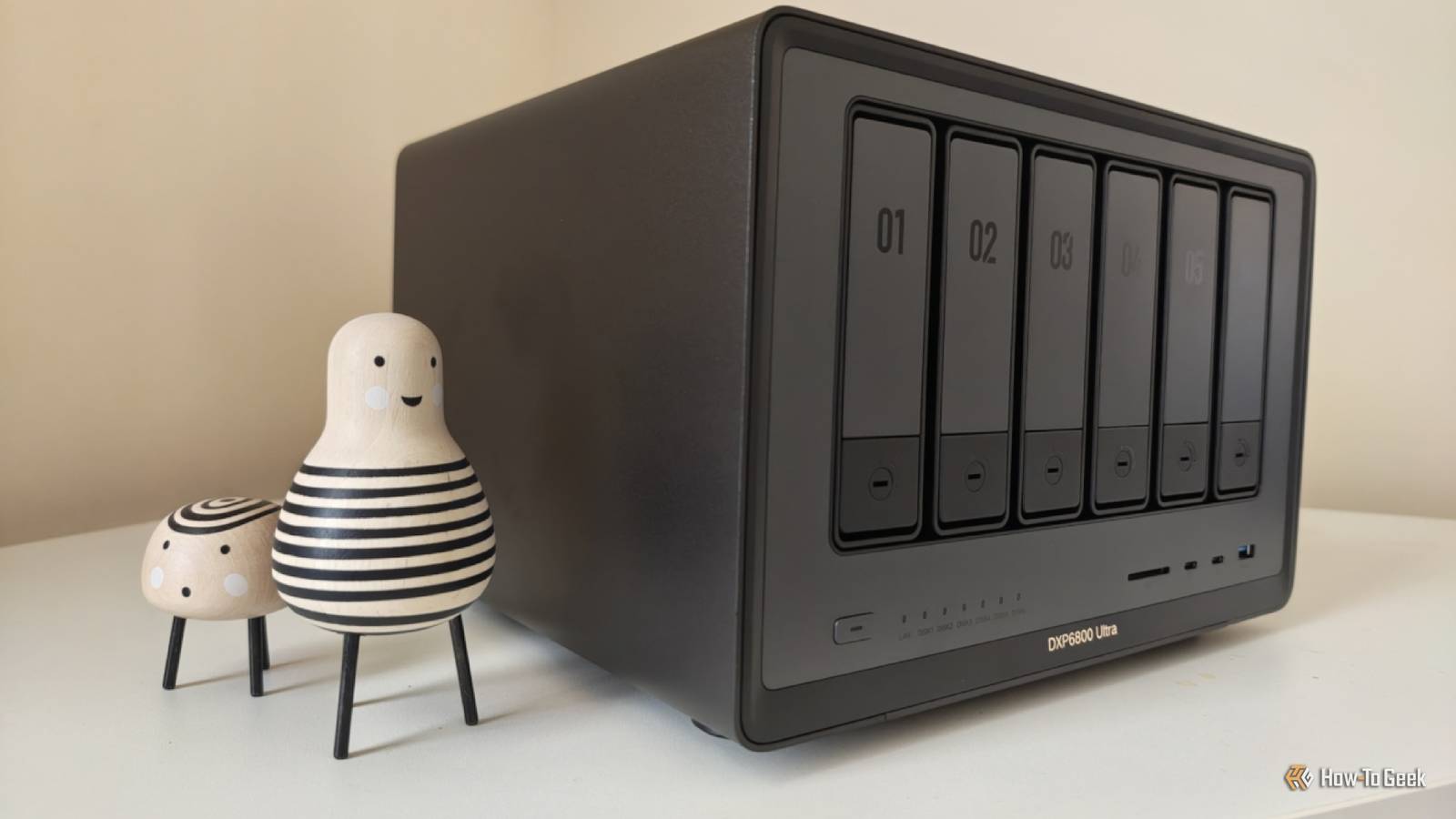
Both are available directly from UGREEN and Amazon.Specifications Brand UGREEN CPU Intel Core 5 120U Memory 8GB (expandable up to 96GB) Drive Bays 6 Ports Two USB-C Thunderbolt, three USB A, two Ethernet, SD card slot OS UGOS Dimensions 294 × 258 × 189 mm Storage 128GB built-in, expandable up to 208TB LAN Ports Two 10GbE ports Expand Collapse A near identical NAS to what came before Design-wise, that's a good thing Close The DXP6800 Ultra is a follow-up to 2024’s DXP6800 Pro.In most ways, it is an identical unit.
You still have six SATA bays, two NVMe slots, two 10GbE network ports, two Thunderbolt 4 USB-C ports, and 8GB of expandable DDR5 RAM.So what has changed? The Intel i5 1235u has been swapped out for the Intel Core 5 120U.These are both efficient 10-core, 12-thread laptop CPUs pulling around 15 watts.
The newer chip has a slightly higher clock speed of 1.4 GHz compared to 1.3, and it turbos up to 5GHz instead of 4.4GHz.If this sounds like a small change, that’s because it is, and it’s one that only those who push the Pro to its limits may notice.The bigger change is the increase to the maximum amount of RAM.
The DXP6800 Pro tops out at 64GB, whereas the DXP6800 Ultra can go up to 96GB.This is another change you won’t notice unless you’ve stretched the Pro as far as it can go.Compared to most of UGREEN’s lineup, much of what you’re paying extra for is the fact that this is a six-bay NAS.
Each additional bay allows not only for more capacity, but more redundancy.My review unit came with a 2TB hard drive for each of its six SATA drives.In my RAID 5 setup, five of those drives are available for storage, and one is for duplicating data.
One hard drive can fail, and my NAS will still continue to run as normal.The number of bays aside, this unit looks otherwise identical to the four-bay DXP4800 Pro that I recently purchased.That’s not a bad thing.
Bays are easy to pull out, and I find it easy to insert hard disk drives and slide the bays back in place.No tools are required, though you may want to reach for a flathead screwdriver to lock the bays after you’re done.Just like earlier, more affordable models in the DXP lineup, these bays are joined by two NVME slots that are primarily intended for running the operating system and caching, rather than data storage.
Compared to my existing NAS, the Intel Core 5 120U CPU allows the NAS to handle more of a burden at once.You don't need to be a heavy Docker user to benefit from this.The extra compute power allows the NAS to better handle keeping everyone‘s devices in sync and manually transferring files without slowing down.
In other words, the extra power allows the NAS to better work as a NAS.These hardware specs continue to exceed what you can expect to get from Synology (the most popular NAS brand) for the same amount of money, and that’s enough to win over existing NAS buyers—but if you’re new to self-hosting, that’s not all that makes UGREEN compelling.The UGREEN app does nearly everything I need No need to seek out apps Close I live in a home with many mobile devices, and most of those run Android.
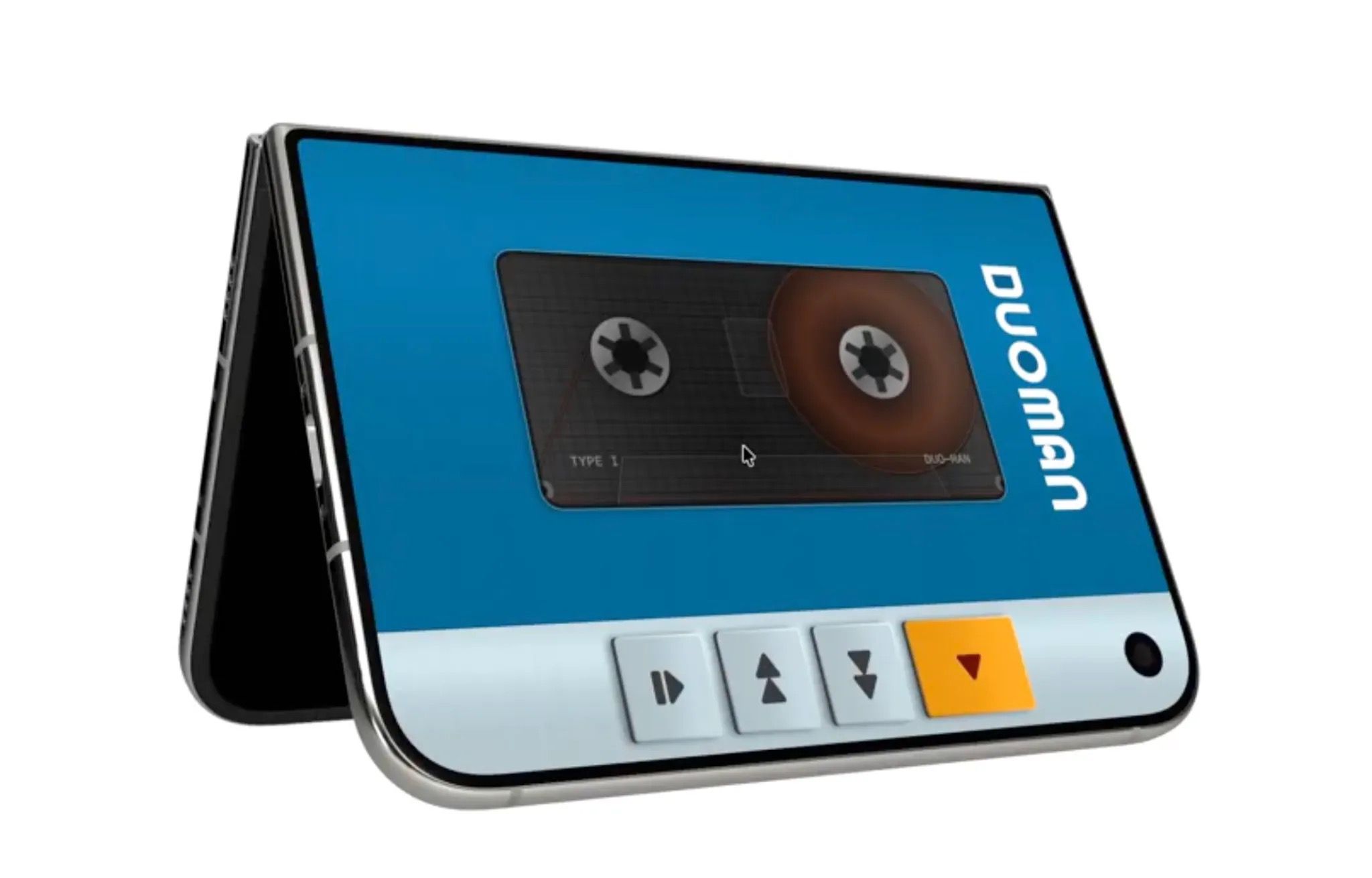
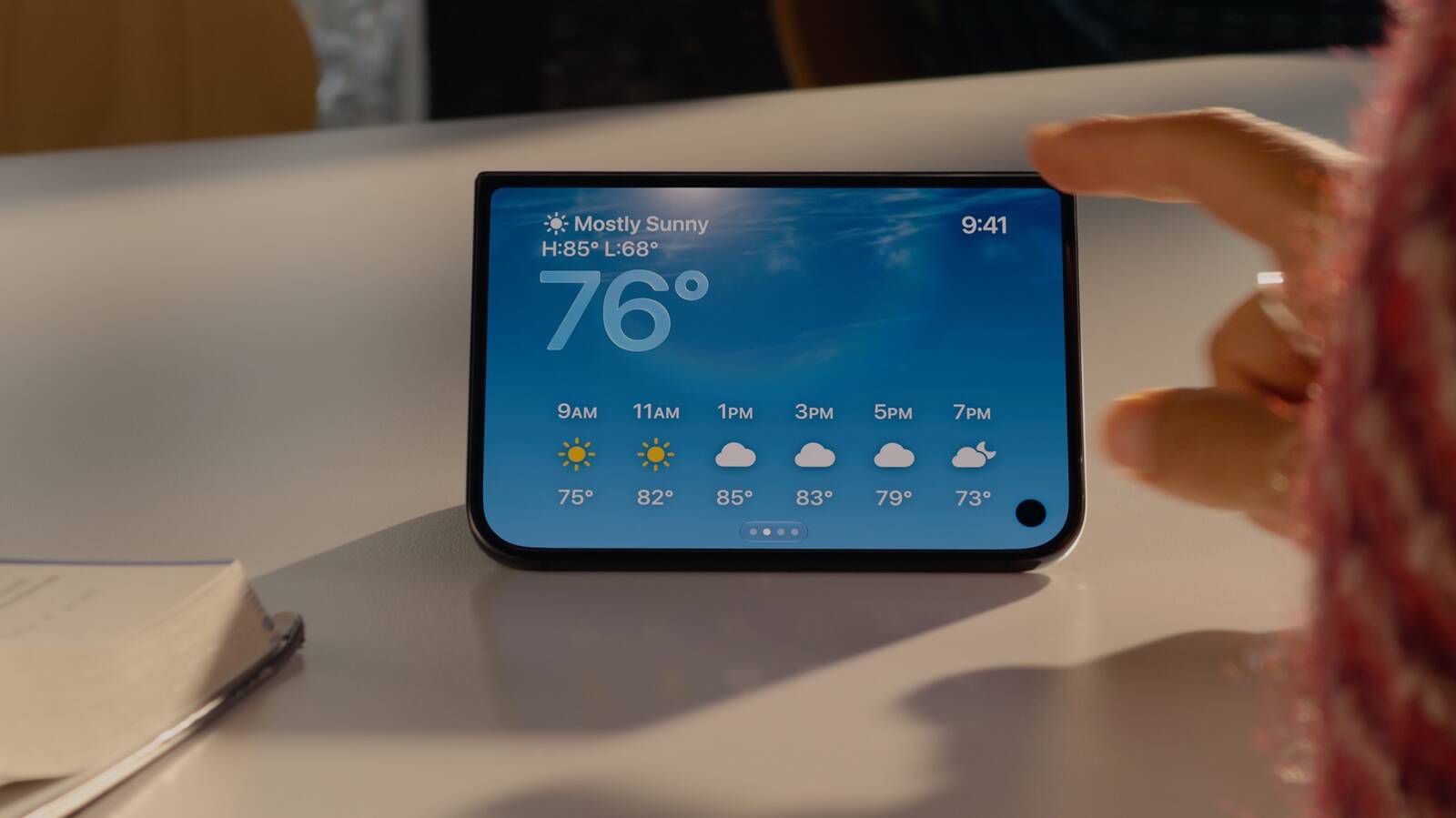
I'm also someone who works from home.It’s my phone, the book-style foldable Motorola Razr Fold, that serves as my PC.This means the easiest way for me to interface with the UGREEN NAS is via the Android app.
Fortunately, the mobile app happens to also be the easiest way to set up the NAS in general.Personally, I consider this piece of software reason enough to buy the product, though you don't need to shell out over a thousand for this particular version, since all UGREEN NAS models share the same app.With the UGREEN app, you don't need to spend any time researching the differences between RAID types.
The app explains the differences in plain language, so that you can decide between maximizing storage space and maximizing redundancy.It likewise explains the difference between filesystems like ext4 and btrfs.Close Remote access is enabled out of the box, with no need to figure out Tailscale, set up port-forwarding, or research reverse proxies.
If you want SAMBA file-sharing, you can enable that in a few taps, rather than numerous command line prompts that can sometimes be required when going the DIY route.If you want to install Jellyfin, it’s available directly from UGREEN’s App Center, saving you from having to learn about containers or enter a terminal.That said, there’s no Plex.
UGREEN’s app selection continues to lag behind Synology’s, but I will say that the built-in software is quite nice.The included “Sync & Backup” app handles the majority of what I want a NAS to do.UGREEN’s own “Theater” app can serve as a Plex alternative if you only want to stream directly to your phone or tablet.
UGREEN’s “Photos” app may be enough that you don’t feel the need to figure out how to install Immich.The “Music” app lets you stream your library without having to deal with syncing MP3s between multiple devices.While power users will have their preferred alternatives, what’s here is good enough that I can easily recommend someone buy this unit even if they limit themselves to UGREEN’s own software.
A NAS intended for multiple users Syncing devices and sharing files is no problem at all Close Setting up multiple users was as easy as everything else.I treated my initial user account as a system administrator for the entire home.I then created separate user accounts for each member of the home old enough to have files that need backing up, which means my spouse, the older of our two kids, and myself.
I opted for each of us to have our own personal folders that we are free to organize however we wish.Our individual user accounts can’t see other people’s folders without their permission, but the system administrator account can.As a user, interacting with the UGREEN app is familiar if you’ve used Google Drive, iCloud, Dropbox or any other consumer cloud storage.
You can even share files in much the same way, choosing to share a synced folder with another user or sending them a direct link to the file.You have a choice whether direct links operate exclusively over LAN or can be shared with others outside your network via UGREENlink.Having a unit like this has been a big improvement over relying on cloud storage.
When my spouse, who runs a dance school, recently needed photos of a dance performance downloaded from Google Drive onto their MacBook, Google was being unreliable, failing to download the images and not explaining why in the way Google software often does when it fails (enjoy staring at a spinning circle with no information).Fortunately, I was able to download the files from Google Drive onto my phone and upload them over our local network to the NAS.I then shared the folder with my spouse and that was that.
They were then able to access those files remotely and successfully able to download them.Related I replaced cloud apps with these 8 open-source Linux programs that keep everything local Less uploading, fewer subscriptions, and a lot more control over my files! Posts 14 By Umair Khurshid That’s not the whole story, either.Even though I was able to successfully download the photos from Google Drive to my phone, it did not tell me how many files were downloading, how many had already downloaded, how fast the download was, nor how many files were left.
I simply had to keep refreshing my Downloads folder as the files appeared.Yet when the time came to upload those photos via the UGREEN app, I could watch a list populated with every file I asked it to upload and view a progress bar as it completed each task.This is the sort of information I need in order to depend on a product and troubleshoot issues as they inevitably arise.
With 9TB of storage, we have far more space available to us than we have ever purchased from the cloud, and this is at the low end of what the DXP6800 Ultra can handle.We also have faster transfer speeds, since most of our data backup takes place over our local connection and isn’t dependent on remote servers.This is also a way to reduce dependency on data centers, for those who may be looking to do such a thing.
That’s not to say everything’s perfect.I have run into a similar issue with my NAS as I have with any other self-hosted product, such as my Homey Pro or Home Assistant Green.Occasionally, the IP address changes, and this confuses things.
The UGREEN app usually does a good job of automatically detecting the new IP address, but it’s not 100%.What’s more tedious is having to manually retype the new IP address in Jellyfin on my TV.It’s possible to address this on the router side by assigning the NAS a fixed IP address, but this is the sort of issue someone completely new to home networking will run into.
Should you buy the UGREEN NASync DXP6800 Ultra? The UGREEN NASync DXP6800 Ultra is a great unit, and I enjoy the degree of future-proofing that it offers.But as I alluded to earlier, my spouse and I just purchased a UGREEN DXP4800 Pro only a few months before being sent this unit.That smaller, four-bay unit cost us nearly half the price, and it did everything we needed.
It still does.Despite the two of us being working professionals who regularly work with photos, our needs aren’t demanding enough that we need to make the leap to the Ultra.We aren’t working with massive RAW files or 4K video often enough to justify this sort of purchase.
Likewise, our movie library consists of digitized DVDs, not Blu-Ray discs.That’s not to say that the DXP6800 Ultra is a particularly expensive NAS.It’s an affordable alternative to UGREEN’s own iDX6011, which comes with an Intel Core Ultra CPU and can cost up to $6000.
It’s quite common for a six-bay NAS to cost several thousand dollars once you start adding more powerful CPU and high amounts of RAM.In the end, the DXP6800 Ultra is an ideal NAS for families or businesses like mine that may benefit from having more hard drives and extra performance overhead, but the DXP6800 Pro is a near identical unit that costs several hundred dollars less.The Ultra gets high marks, but I know which one I’d buy.
UGREEN NASync DXP6800 Ultra 8 Brand UGREEN CPU Intel Core 5 120U The UGREEN NASync DXP6800 Ultra NAS has six bays that hold up to 208TB of storage — and a Core 5 120U that can handle even demanding network tasks.See at Amazon $1450 at Ugreen Expand Collapse
Read More