Thread is the hot new low-power mesh network in the smart home world, with IKEA recently adopting it for a new range of Matter devices.But even though Thread is the future, Zigbee still gets my personal pick for the present.Let me explain.
Zigbee devices are cheap Zigbee devices are almost always the cheapest mesh network smart home accessories you can buy.Much of that is down to the fact that the technology has been around for so long.Zigbee really started to pick up speed in the early 2010s and remains arguably the most common mesh technology.
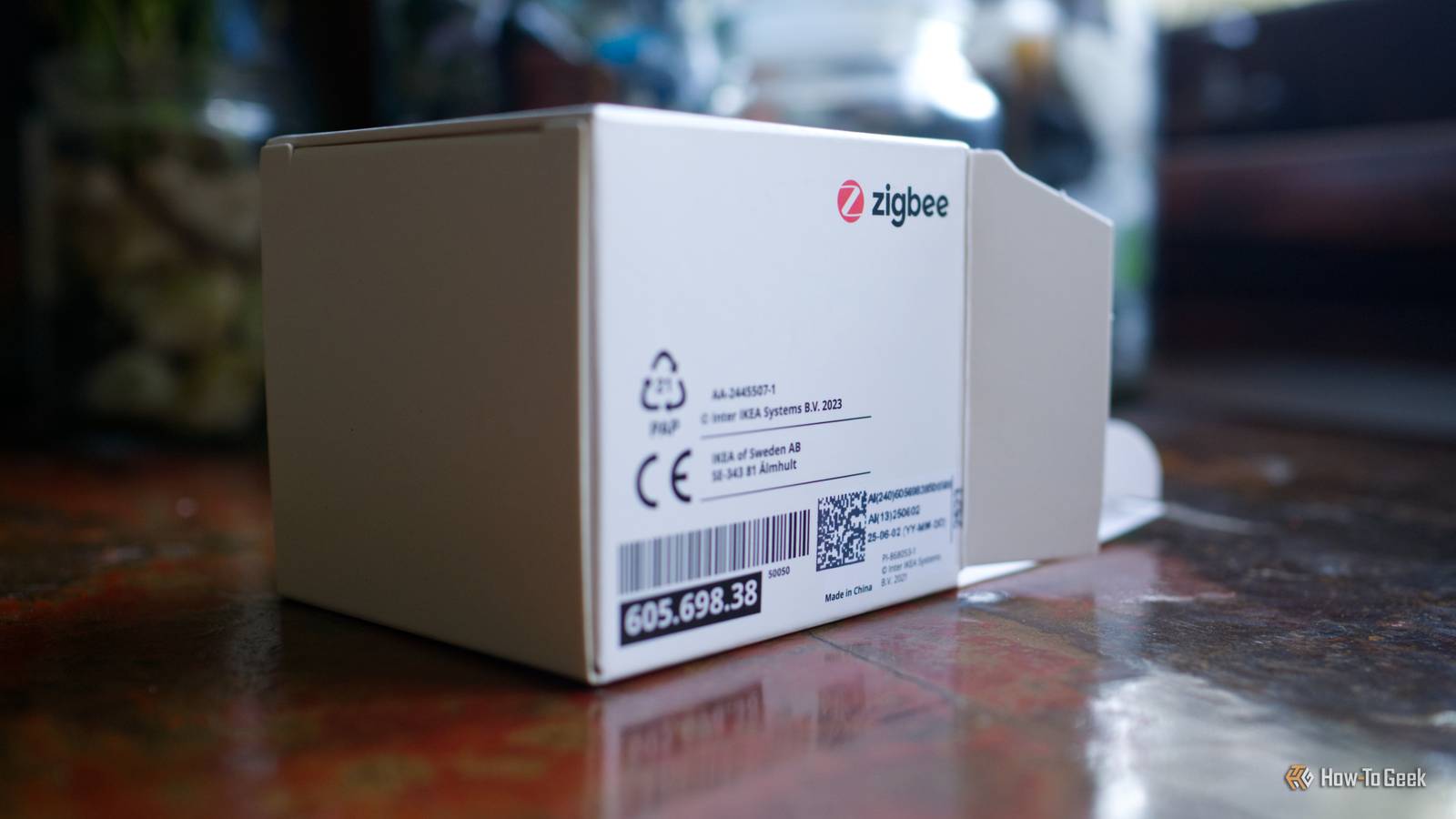
These devices have always been cheaper than Z-Wave alternatives.IKEA’s Zigbee smart plugs typically cost less than Amazon’s basic own-brand Wi-Fi.Broadly speaking, Matter over Thread is a newer technology, so it still demands a premium over Zigbee.
IKEA’s entry into the market certainly changes things, with the company’s Thread devices managing to cost less than their Zigbee ones, but it will take a while before other manufacturers bow to downward pressure on their prices.Even Zigbee radios, the hardware accessories necessary to coordinate a network, can be found for relatively cheap, like the $25 SONOFF Zigbee 3.0 USB Dongle Plus.While cheap doesn’t always mean good, costs can really start to add up when you purchase large numbers of items like smart bulbs, switches, plugs, and sensors.
Thread can’t compete with the massive number of Zigbee devices When you’re shopping for smart home accessories, you might not find everything you need if you’re determined to stick with Matter over Thread.Because Zigbee has been around for so long, you’re far more likely to find even the weirdest of sensors.Some niche items include bed presence sensors (which are more useful than you think), water shutoff valves like the $70 Aqara Valve Controller T1 that pair perfectly with your leak detection sensors, and soil moisture sensors that let you know when your house plants are thirsty.
Many of these less common devices are still surprisingly affordable, like SONOFF’s Smart Water Valve for automating irrigation at only $36.Time is on Zigbee’s side, since there simply aren’t a comparable number of Thread devices on the market yet.While you might be able to find a few examples of niche smart home accessories that use Thread, their scarcity will likely mean you’ll pay more for them.
Home Assistant supports a massive library of devices Home Assistant users have a choice of two options when starting a Zigbee network.The first is Zigbee Home Automation, and it’s the “basic” default integration that is included with Home Assistant.It works well, is simple to set up, and many never feel the need to use anything else.
The other option is Zigbee2MQTT, a more powerful Zigbee coordinator that is often favored for its expanded device support, ability to access more features on connected devices, and the fact that you can run it on a separate device so that your Zigbee network’s status isn’t tied to that of your Home Assistant server.You can run both of these at once, though you’ll need two USB radios.People seem to be having more problems with Matter Thread is a mesh network, comparable with Zigbee, whereas Matter is the underlying protocol.
Thread isn’t used for much beyond Matter at the moment, which means that if you’re building a Thread network, then it’s effectively going to be a Matter over Thread network since those are the devices that will be connecting to it.Anecdotally speaking, there appear to be more issues with Thread (and Matter) than there are with Zigbee.I am but one person, so my experience is subjective, but I see a lot more complaints about getting Matter devices working over Thread than I do with Zigbee on the Home Assistant forums and r/HomeAssistant.
This is likely down to teething issues, but there is some evidence beyond anecdote to back it up.Though IKEA’s entry into the Matter over Thread space has been warmly welcomed, the company has acknowledged connectivity issues that have seen some users encounter a hit rate of just over 50% when trying to pair new devices.I’m always of the opinion that if it ain’t broke, don’t fix it.
Following this logic, I will probably a Thread network at a later date to support Matter devices, rather than replace my current Zigbee setup.Thankfully, the beauty of Home Assistant’s open approach means that you don’t need to pick between them; you can have both.There's life in Zigbee yet In late 2025, the Connectivity Standards Alliance (CSA) announced Zigbee 4.0, the next iteration of the Zigbee mesh network.
In addition to being backward compatible with existing Zigbee devices, networks using the upgrade will be able to take advantage of new long-range capabilities, hubless pairing with Bluetooth Low Energy (BLE) devices, stability improvements, and better security.How-To Geek Report: Subscribe and never miss what matters Unlock your tech-savvy potential and master the digital world with How-To Geek.Subscribe By subscribing, you agree to receive newsletter and marketing emails, and accept our Terms of Use and Privacy Policy.
You can unsubscribe anytime.It’s not clear whether existing adapters like the Home Assistant Connect ZBT-2 will receive support for Zigbee 4.0 via an over-the-air software update, but it’s clear that Zigbee isn’t ready to roll over just yet.Home Assistant Connect ZBT-2 Dimensions (exterior) 83x83x179mm Weight 157g The Home Assistant Connect ZBT-2 supports both Zigbee and Thread, although it must be set up for use with either one of the two protocols.
It offers 4x the responsiveness of the previous model, and is designed to be easy to open for modding, with accessible pins and pads.$65 at Amazon Expand Collapse Right now, even as a smart home enthusiast who writes about this stuff for a living, hopping on board the Thread train when so many compelling Zigbee options exist isn’t particularly appealing.IKEA’s arrival into the space might have been enough to sway me if I were starting from scratch tomorrow, but most other manufacturers are still pricing their accessories too high for my tastes.
It’s also interesting to learn that some of IKEA’s new Matter devices actually work with Zigbee after all.
Read More