HONG KONG -- DeepSeek, the Chinese tech startup that rivals OpenAI's ChatGPT, has been gaining ground in many developing nations in a trend that could narrow the gap of artificial intelligence adoption with advanced economies, a new report suggested.In the Thursday report, researchers from Microsoft said global adoption of generative AI tools reached 16.3% of the world’s population in the three months to December, up from 15.1% in the previous three months.Yet the divide of AI adoption in developed and developing countries is widening, the report noted, with AI adoption across advanced economies growing nearly twice as fast as developing nations.“We are seeing a divide and we are concerned that that divide will continue to widen,” said Juan Lavista Ferres, chief data scientist for Microsoft's AI for Good Lab, which used anonymized “telemetry” to help track global device usage.Countries that invested early and consistently in digital infrastructure and AI led in terms of shares of users, including the United Arab Emirates, Singapore, France and Spain, according to the report.Some of Microsoft's figures overlapped with the findings of a Pew Research Center survey published in October that mapped which countries are more excited than concerned about AI.In both reports, for instance, South Korea stood out in its embrace of AI.When DeepSeek released its advanced reasoning AI model called R1 in January 2025, which it said was more cost-effective than OpenAI’s similar model, it raised eyebrows in the global technology industry and many were surprised by how China is catching up with the U.S.
in technological advancements.Leading science journal Nature published peer-reviewed research co-authored by DeepSeek founder Liang Wenfeng in September, describing it as a “landmark paper” from the Chinese startup.Lavista Ferres said DeepSeek is a “good model” for tasks like math or coding, but it operates differently from U.S.-based models on topics like politics.“We have observed that for certain type of questions, of course, they follow the same type of access to the internet that China has,” he said.“Which means that there will be questions that will be answered very differently, particularly political questions.
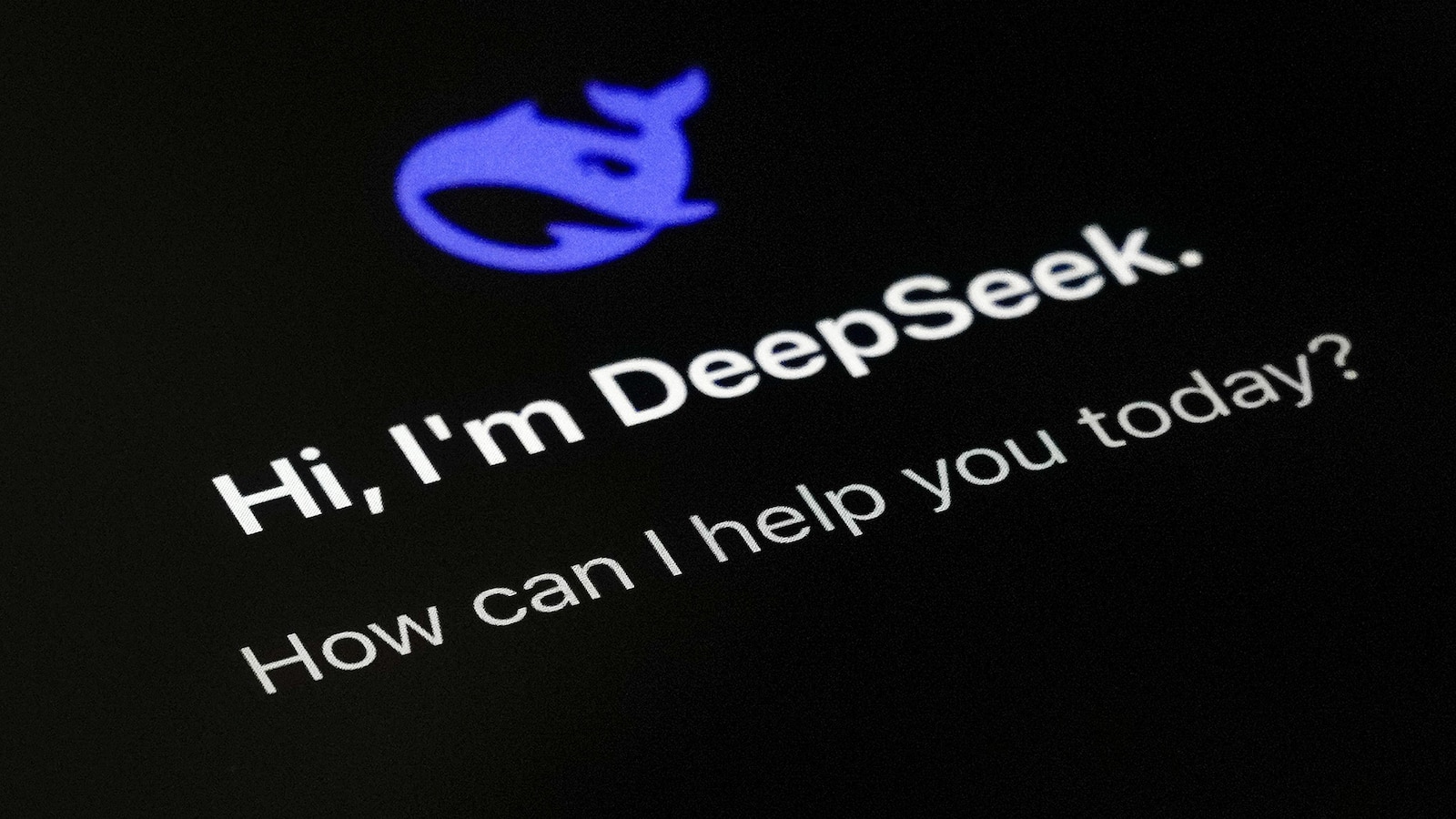
In many ways that can have an influence on the world.”DeepSeek offers a free‑to‑use chatbot on web and mobile, and has also given developers global access to modify and build on its core engine.Its lack of subscription fees has "lowered the barrier for millions of users, especially in price‑sensitive regions,” Microsoft's report said.Popular ReadsVenezuela live updates: Trump reportedly suggests lengthy US oversight of Venezuela1 hour ago37-year-old woman fatally shot by ICE officer in Minneapolis identifiedJan 7, 6:56 PMFBI releases images of seized motorcycles as search for Ryan Wedding continuesDec 30, 4:51 PMDeveloped countries including Australia, Germany and the U.S.
have sought to limit the use of DeepSeek over alleged security risks.Microsoft last year banned its own employees from using DeepSeek.Adoption of DeepSeek remained low in North America and Europe, the report found, but it surged in its home country China, as well as Russia, Iran, Cuba, Belarus – places where U.S.
services face restrictions or where foreign tech access is limited.DeepSeek’s market share in China was 89%, the report estimated.That’s followed by Belarus’s 56% and Cuba’s 49%, both of which also had low AI adoption more broadly.In Russia, its market share was around 43%.In Syria and Iran, DeepSeek’s market share reached around 23% and 25%, respectively, the report added.
In many African countries including Ethiopia, Zimbabwe, Uganda and Niger, DeepSeek’s market share was between 11% to 14%.“Open‑source AI can function as a geopolitical instrument, extending Chinese influence in areas where Western platforms cannot easily operate,” the report said.___O'Brien reported from Providence, Rhode Island.