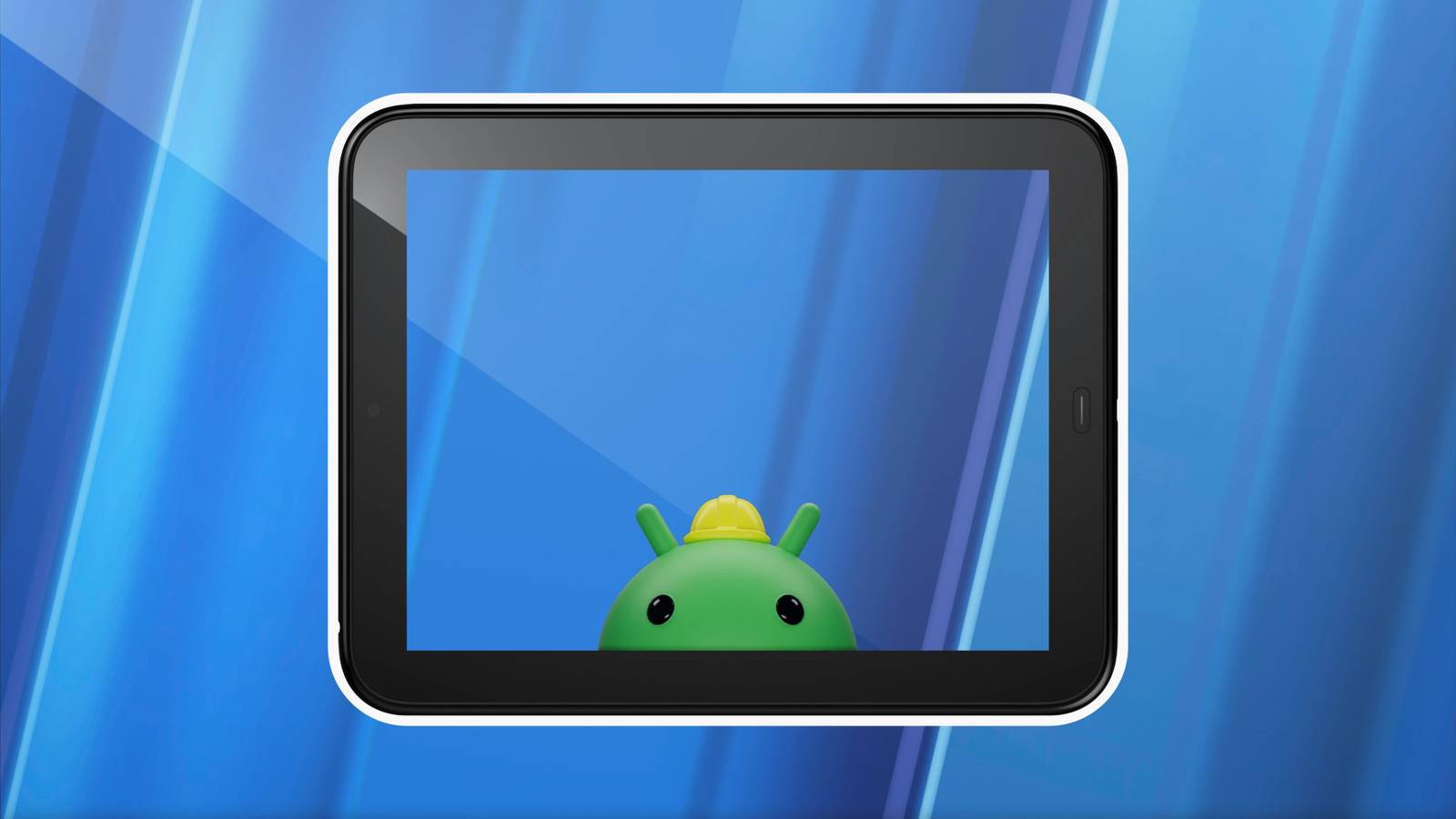
Android’s history with tablets is filled with failures.Ironically, one of the most sought-after Android tablets didn’t actually launch with Android at all, but it had a lasting impact on the platform.This is the story of the HP TouchPad.
It’s no secret that Apple has dominated essentially every tablet that’s tried to compete with the iPad.Android has been on most of those tablets, but in the early 2010s, HP was readying its own attempt at a tablet.It didn’t include Android—at least at the start—and it would become famous for all the wrong reasons.
HP enters the tablet game Puts its hopes on a brand new OS In April 2010, HP acquired Palm, Inc.for $1.2 billion.Just two years earlier, Palm had stopped developing new PDAs—its bread and butter—and went all in on its new webOS operating system.
People loved webOS, but it wasn’t enough to save an already declining company.Before acquiring Palm, HP’s history with mobile devices was comprised mostly of calculators, PDAs, and “handheld computers.” The company had never made a touchscreen tablet before, but the introduction of the iPad in early 2010 kicked off an explosion that HP wanted to be a part of.HP didn’t take long to put webOS to use.
In the Summer of 2010, rumors started popping up about the company working on a webOS tablet in two sizes referred to as “Topaz” and “Opal.” The larger of the two would eventually be revealed in February 2011 as the HP TouchPad.The first problem for the TouchPad was its launch window.It was announced in February, but it didn’t actually go up for sale until July.
Meanwhile, Apple announced and released the iPad 2nd Gen during that five-month span.Any excitement about the TouchPad was long gone by the time people had to put money down for it.HP sets the TouchPad on fire A flop like we’ve never seen before The initial sales of the TouchPad were less than 10% of the units HP had ready for launch—25,000 of 270,000.
Sales were comically bad in some countries.Only 12,000 were sold in the first month in all of Europe.It was so bad that Best Buy refused to pay HP to stock any more TouchPads.
So, what does a company do when it has a stockpile of devices that no one wants to buy? A fire sale.A mere 48 days after the TouchPad went up for sale, HP announced it was discontinuing all webOS devices.Then, the very next day, HP dropped the price from $499 all the way to $99 for the 16GB model ($149 for 32GB).
This is when the TouchPad truly became a legendary device.Retailers quickly burned through TouchPads after word spread of the steep discount.Suddenly, there was a huge demand for this tablet that no one wanted to buy.
Many orders ended up getting canceled due to a lack of inventory.The fire sale was so successful that HP made another production run of the TouchPad to clear out the remaining inventory of components.At $99, this tablet from a PC brand with an unfamiliar OS became an impulse buy.
The TouchPad was finally in a decent number of people’s hands.Now what? Android saves the day So long, webOS WebOS was a bright spot for the TouchPad, but it wasn’t without flaws.The main issue was that it simply had far fewer apps than the iPad.
HP’s App Catalog had around 10,000 apps by the end of 2011—less than half the number of apps available for the iPad in the App Store.The good news was that webOS was a Linux-kernel-based operating system.That meant it would be possible for the TouchPad to run Android.
10 days after the fire sale kicked off, that’s exactly what happened.The CyanogenMod team demoed Android 2.3 Gingerbread running on the TouchPad, and the Android community was off and running.CyanogenMod was a very popular custom ROM at the time—with a fascinating history of its own—and it was the best option for getting Android on the TouchPad.
By October 2011, CyanogenMod had an alpha version available.A few months later, a port of Android 4.0 Ice Cream Sandwich was released.But the floodgates truly opened when HP released the Android source code in February 2012.
Subscribe to our newsletter for Android modding deep dives Hungry for more tech archaeology? Subscribe to the newsletter for focused coverage of Android modding, device history, and hardware tinkering - thoughtful context and technical takes that illuminate why these devices endure.Subscribe By subscribing, you agree to receive newsletter and marketing emails, and accept our Terms of Use and Privacy Policy.You can unsubscribe anytime.
The source code made it much easier to develop Android builds for the TouchPad.It eventually got unofficial CyanogenMod builds based on Android 4.1/4.2/4.3 Jelly Bean, Android 4.4 KitKat, and Android 5.0 Lollipop.The XDA forums for the TouchPad were exploding with development.
People who had never rooted their devices or installed a custom ROM were joining the party.Interest in putting Android on the HP TouchPad was so strong that it actually outlived CyanogenMod itself.Three years after Cyanogen Inc.
shut down CyanogenMod, the TouchPad received a port for Android 9 Pie thanks to the Evervolv ROM.That’s the most recent Android version currently available for the TouchPad, and people are still improving and using it.In many ways, the HP TouchPad put a spotlight on the Android modding community.
People had been rooting and installing custom ROMs on Android phones for years, but it wasn’t something you’d read about on mainstream tech websites.The TouchPad taught a generation of users that the software shipping on a device is just a suggestion.It fostered a culture of modding and DIY that still exists in the Android community today.
Every time you root a phone or even just sideload an app to bypass a restriction, you are tapping into the same spirit that kept the TouchPad going well past when HP decided it wasn't worth the shelf space.Related I Turned My PalmPilot on for the First Time in Over 20 Years, and Honestly, I’d Buy One Today Palm was so good that Android and iOS took all of its best bits.Posts 1 By Andy Betts
Read More