Connector manufacturer TE Connectivity now uses 3D printing for catheter shafts.These medical device components are now lower in cost thanks to additive manufacturing.Catheters are often coated in polymer jackets, with different thicknesses, lengths, and materials being used at different areas of the catheter.
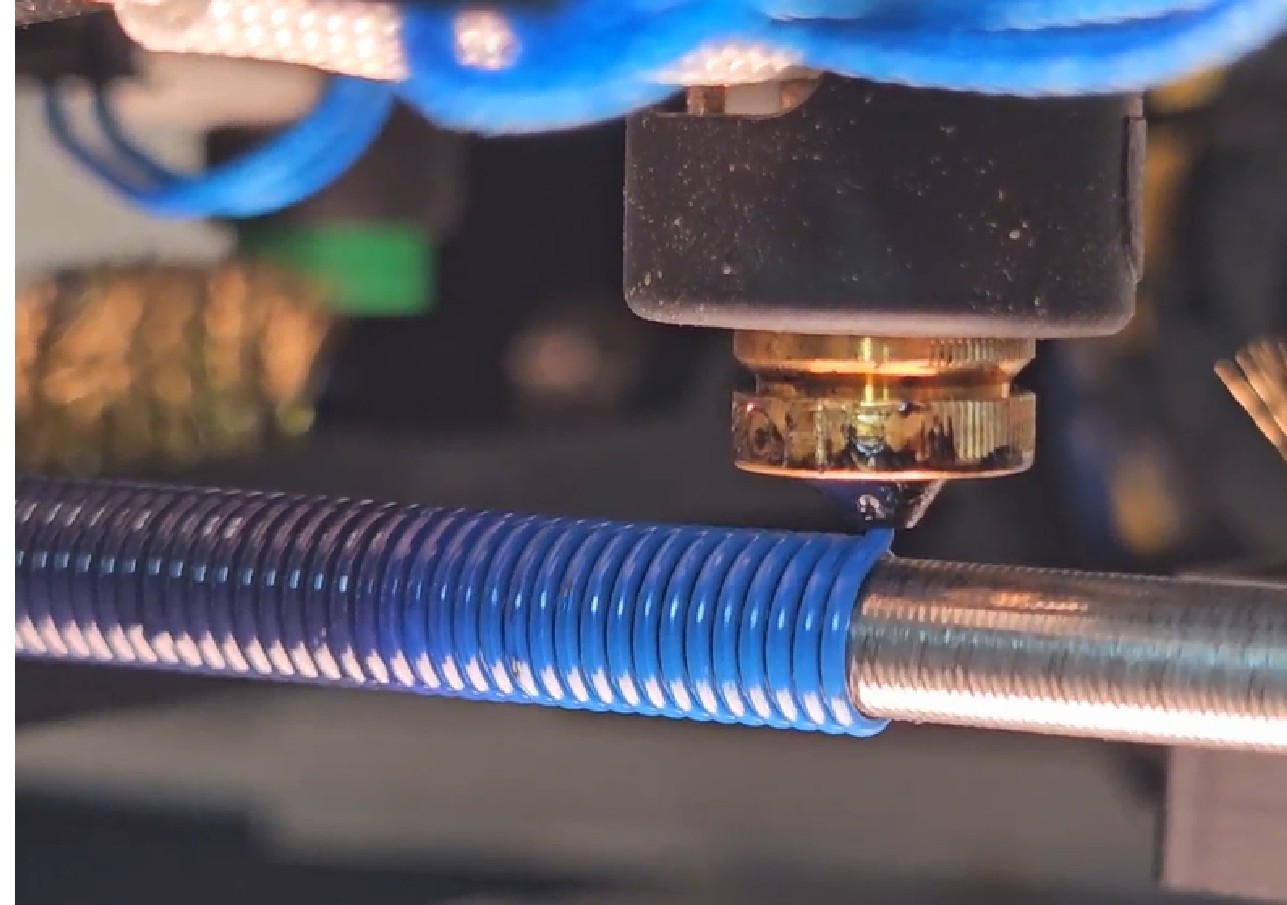
TE’s Advanced Technology Group at their Galway, Ireland-based PROPELUS Prototype Center decided to develop a specific process to print on the catheter itself as the catheter is rotated.The resulting process uses less material and is quicker while part properties and looks are kept the same.Production is more flexible; more iterations can be made, while greater design freedom could lead to entirely new catheter designs and functionalities.
Propelus Prototype Center.Image courtesy of TE Connectivity.Pat Duane, senior vice president of TE’s Medical business, said, “This work reflects TE’s continued focus on advancing manufacturing innovation to help our customers develop increasingly sophisticated minimally invasive medical devices,.
We believe additive manufacturing technologies have the potential to expand design possibilities, accelerate development and support the future of catheter manufacturing.” Medical Engineering Fellow Bernard McDermott added that, “This process, along with complementary disruptive processes in development, will result in a paradigm shift in catheter manufacturing for our customers.It has the potential to significantly reduce product costs, simplify supply chains and have a positive environmental impact.” Catheters are flexible tube-like devices that are put in the human body to open something, suck something out, or put it in.These are critical devices that nonetheless are more cost sensitive than other things such as implants.
A catheter can be a class I device if it’s a short-term urinary catheter; that same device could be a class II device if it needs to be left in for longer periods, while Class III catheters are used to drain the heart, for example.Catheters are sometimes disposables but could be used five or twenty times.Increasingly, there are “smart catheters” that can be used to diagnose and sense.
Researchers are trying to connect the catheter to the world to export data and use it as a wired treatment and sensing device.With more data, more sensors, and more functionality, the real estate in the catheter is becoming scarce.Thinner is definitely better in catheters.
At the same time, as with all medical device development, it is laborious.Now TE and its 90,000 employees may have speeded things up a little.By printing on the catheter itself, the company could embed additional sensors in between the layers.
It could use different materials to create novel ways of bending and maintaining shapes.Different shape memory materials could interact with the body in predetermined ways, for example, opening up the catheter inside the body.Through 3D printed structures, it could make actuators or cushions at specific locations.
Circuits could be embedded, or conductive traces could be printed on or in between the layers.You could add strain or other sensors as well.I like this very much.
I think that similar processes could be used to coat a lot of different medical devices.You could also think of printing medical compounds, medicines themselves, or special coatings as well that could improve the performance of many devices.You could apply an antiseptic, a more biocompatible substance, or something that would promote wound healing or keep a long-term port healthy.
Heparin could be added to stop clotting when needed, or antibiotics could make long-term treatment safer.I also like that this firm developed its own specific process for its own specific needs.Other firms could do very similar things to accelerate their development.
At TE, the company explored making elastomeric seals and made a motorcycle.TE has been using 3D printing since 1987, when Rob Zubrickie introduced it there before continuing to work as their 3D printing manager for 30 years.This kind of tenure allows a company to, in effect, get marinated in 3D printing.
Through understanding the different technologies, applying them again and again, and growing capabilities, you can truly master the technology.A lot of focus is on corporate initiatives, turnarounds, and plans.But the discipline to try and try again over decades is often overlooked.
At TE, this has led to advances in connectors, electronics, and seals that will pay dividends for the firm.Subscribe to Our Email Newsletter Stay up-to-date on all the latest news from the 3D printing industry and receive information and offers from third party vendors.Print Services Upload your 3D Models and get them printed quickly and efficiently.
Powered by FacFox Powered by 3D Systems Powered by Craftcloud Powered by First Mold Powered by Xometry 3DPrinting Business Directory 3DPrinting Business Directory
Read More