LED strip lighting is all the rage, and for good reason.It’s cheap, versatile, easily integrates with smart home platforms, and it’s easier than ever to make your own.But LED strips don’t always look good, and sometimes you need a little help to get that finished look.
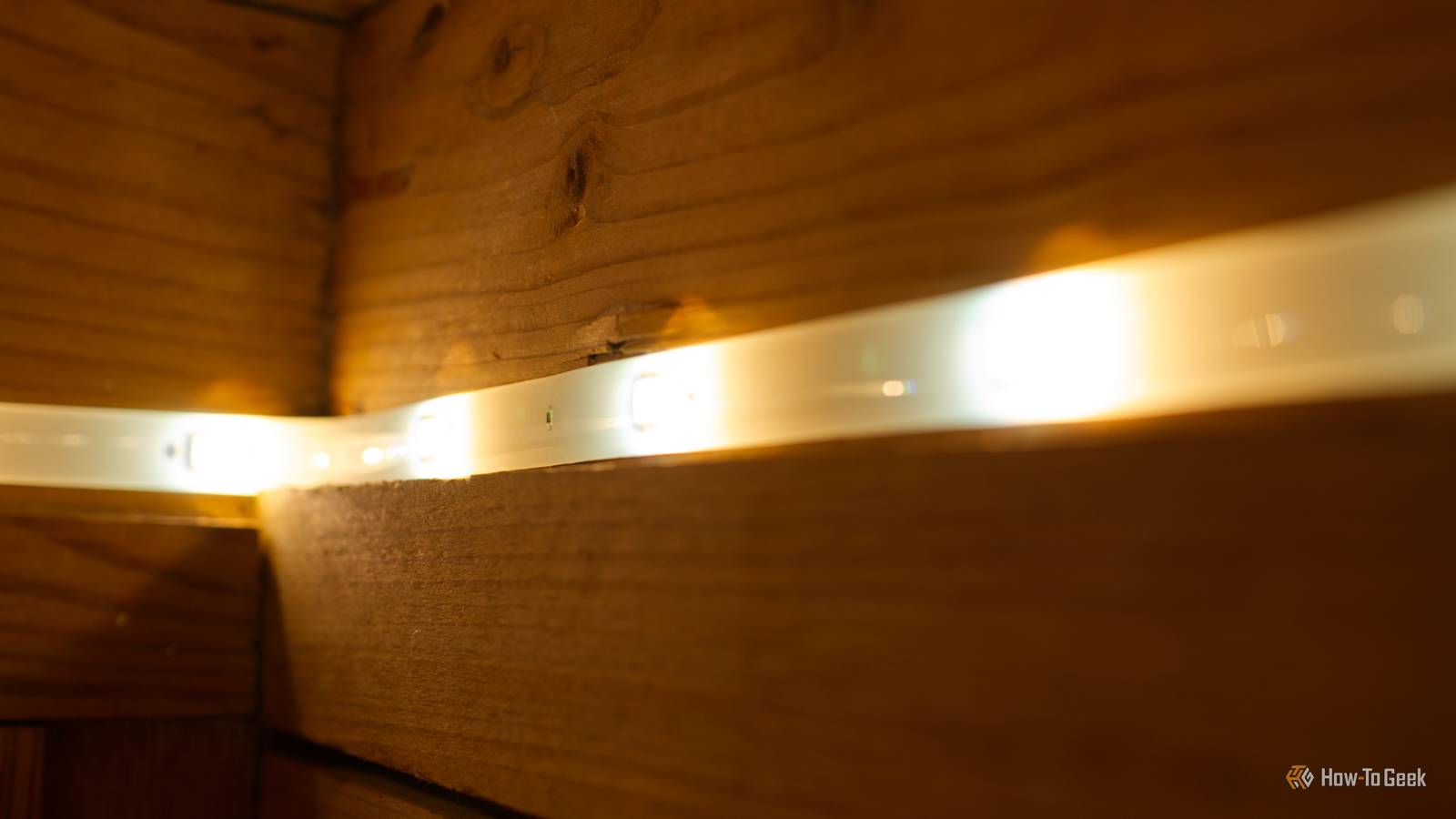
Hide LEDs for an instant glow-up Do this and you’re 90% of the way there The biggest mistake you can make with LED strip lighting is leaving the LEDs on display.These small, intense beads of light do a great job of illuminating your home, but they’re arguably not much to look at (unless you like them—in which case, you do you).For me, LED strips need some sort of diffusion, and the easiest way of doing this is to simply bounce them off a surface like a wall or countertop.
Thankfully, the fix is remarkably easy: hide the LED as best as you can so that you get the benefit of the ambiance, without the harshness of the diodes.One way to achieve this is to place your LED strips strategically.My house is old enough to have picture rails, so I could feasibly hide thin LED strips by attaching them to the top of the picture rail.
If you’re using LED lighting to illuminate an area like a kitchen worktop, you can mount them under a cupboard out of view.Sometimes, this isn’t enough.Adding a small lip to any edges where the lights are still visible can do the trick.
Do this with a cheap piece of wood and finish or paint it to match whatever it is you’ve attached it to.Hide the LEDs, and you’re mostly there, depending on the density of your strips.Add diffusers to mask LED density Turn harsh light into a warm glow Close If you can’t avoid having your LED strips on display, or you don’t want to hide them, adding diffusers is a great idea.
These sit on top of your LED strips and scatter the light, which can have a transformative effect.The main benefit of a diffuser is that the light is more evenly dispersed, which creates more of a glow.The light will be less harsh and your space more evenly lit.
This makes for a gentler light, which works well in spaces like bathrooms, bedrooms, and walk-in wardrobes.The other benefit is that individual LEDs will be much harder (and sometimes impossible) to see.The effect is more pronounced with denser LED strips, where the gap between each diode is shorter.
The idea here is to make your LED strip look like one long, neon-like light source.You can get really creative with this effect, especially if your lights are for more than just functional illumination.For example, creating sound-reactive lighting with WLED for your next party, or designing some sort of cyberpunk-esque feature light in a shape of your choice.
It’s also worth noting that the diffusion effect is beneficial to LED lighting in general, even if you do a good job of hiding your strips in the first place.For an even glow, consider adding cheap diffusers or more expensive “neonizer” designs.You can even have a go at 3D printing your own.
Color-match white temperature for a consistent look Pair strips with each other and the light outside Something else that can really spoil the look of your LED strip setup is mismatched white temperature.This isn’t a problem for lighting that is meant to be moody and colorful, but if you have LED strips and scenes that are designed purely for illumination, getting the white balance right really makes the difference.Thankfully, this is pretty easy.
All you need to do is design scenes within your smart home platform of choice that specify the same temperature, which is measured in kelvins (K).You’re probably going to want to match these to existing light sources in your home, like non-smart bulbs.The other way to do this is to use an integration like Adaptive Lighting for Home Assistant.
This will change the temperature of select lights automatically, based on the location of the sun.You will see warm hues at the start and end of the day, and more neutral daylight in the middle of the day.Adaptive Lighting is also available in platforms like Apple Home.
It works best for lights that are on all day, or that are used to complement natural light sources like skylight windows and solar tubes or sun tunnels.The best way to add LED strips to your home is to use WLED with an ESP32 microcontroller.Check out five WLED-powered projects you can build in a weekend.
You can even use WLED to make your own TV Ambilight.
Read More