Most PC upgrades feel like a big project because you're reading reviews, checking compatibility, maybe cracking open a case or watching a tutorial before anything actually changes.However, you don't need to spend very much to get what you need.I've bought most of the cheap accessories below more than once, which tells you something about how well they hold up.
You don't need to spend a lot to get a decent Wi-Fi Adapter Spend a little extra to get faster Wi-Fi Close A USB Wi-Fi adapter is one of the easiest ways to get an older desktop or laptop running as if it is brand new.Instead of laying an Ethernet cable across the room, you just plug a small dongle into any open USB port, let Windows or macOS sort out the drivers on its own, and connect to your home network like you normally would.Don't buy the cheapest option available.
Getting a cheap adapter just to be done with it seems tempting, but paying a little more is smarter here.That's true even if your PC already comes with built-in Wi-Fi.D-Link Wi-Fi 6 USB Adapter Speed 1800 Mbps D-Link's DWA-X1850-B1 has all the Wi-Fi bells and whistles you could ask for—it supports both Wi-Fi 6 and WPA3, and is backward compatible with older standards.
$40 at Amazon Expand Collapse Mine cost me $76 on Amazon, and I highly recommend it.I whip this out when my Ethernet cable is out of reach, and I even bought a second one for a computer in my kid's room.I have free ones that came with my PCs, but you notice the difference when you use them.
You can get cheaper ones, but Wi-Fi is crucial to any computer these days.You can get a good one for less, but it's really up to you.Mine comes with an antenna, and while I have not noticed a difference, those tend to work better from what I've heard from friends.
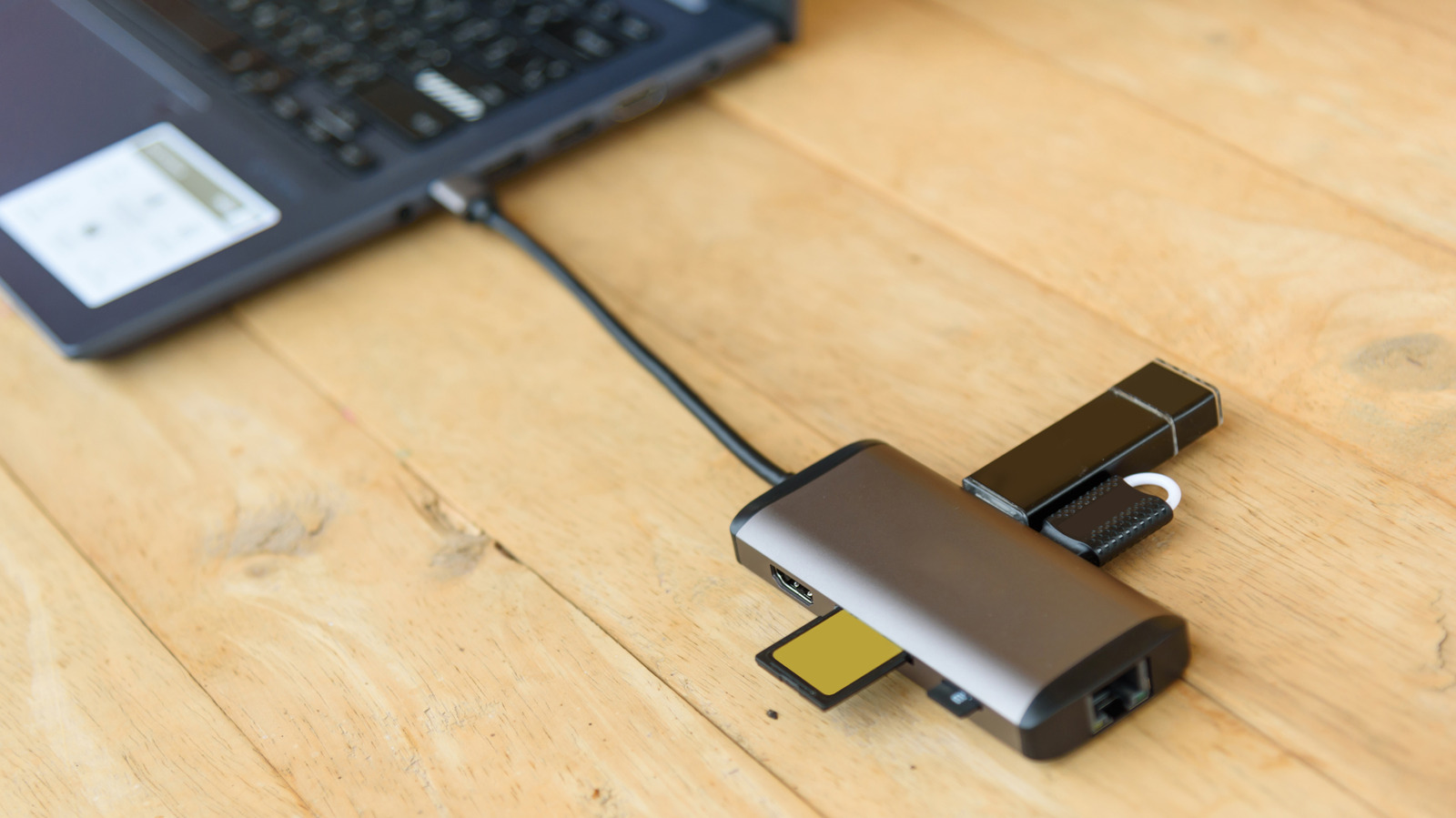
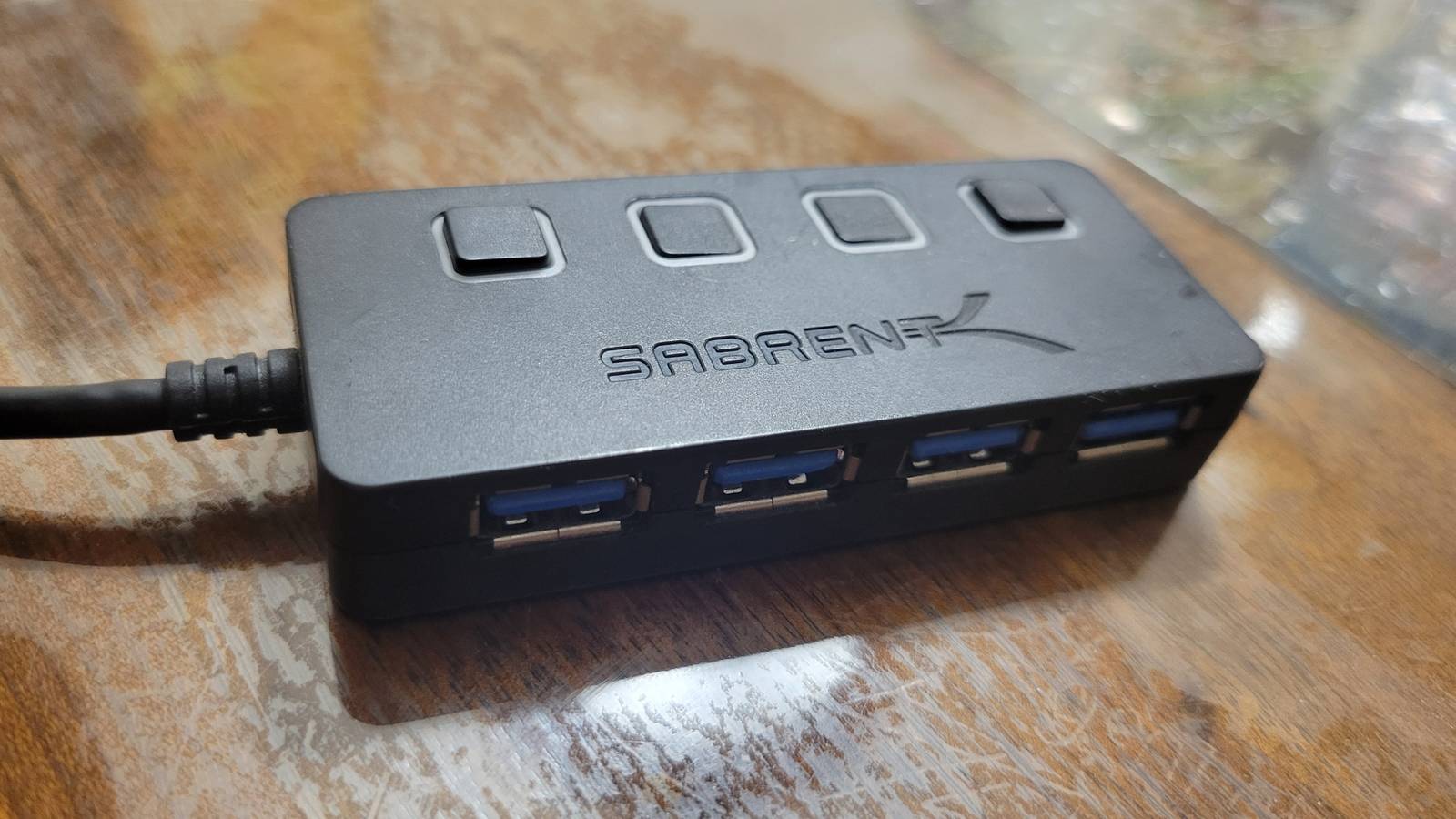
A USB Hub can give you more ports Power switches help keep your ports from taking a beating I love using a laptop, but I absolutely hate how limited it is.I sometimes feel the same way about my PC.A USB hub turns one port into many, letting you plug in all your desk accessories at once instead of constantly swapping things in and out.
At minimum, get a hub that comes with power switches.You can cut power to a webcam or external hard drive without unplugging it, which is handy for privacy and saves energy.I bought a Sabrent for $15 on Amazon twice, but I know Ankers work well too.
Both of the devices I bought still work perfectly fine, and it has even worked on a MacBook with an adapter.You don't need to download any drivers, and you can use it on any OS.Since you're toggling ports with a button instead of yanking cables in and out, your computer's built-in USB ports take a lot less physical abuse over time.
Anker 4-Port USB Hub $10 $15 Save $5 Brand Anker Whether you need more ports on your desktop, something handy to plug laptop accessories into, or you've run out of ports on your Xbox Series X|S console, everybody loves a good USB hub.Ports 4 Power supply included No $14.99 at Anker $10 at Amazon Expand Collapse Most of these hubs, like mine, also have small LED lights next to each button so you can easily see what's powered on.The more expensive hubs run USB 3.2, and some plug into the wall to save your laptop battery.
You should never keep this plugged in when the laptop is off; that is actually how I killed the charge of my laptop.This is one of the upgrades you should be careful with, and you should make sure you're not plugging in anything too demanding, like a USB-powered fan.A cheap dongle brings Bluetooth to any computer Save your fast ports for other gear If your computer doesn't have Bluetooth built in, a USB Bluetooth dongle is one of the cheapest and easiest ways to add it.
You just plug the little adapter into an open USB port, let your computer recognize it, and then pair whatever wireless devices you want through your Bluetooth settings.This is where you can actually get pretty cheap.Mine is normally $10 on Amazon, and I stand by it today.
It is UGREEN, so it is a trusted name, and it has let me connect my keyboard, mouse, and multiple earbuds.It's so reliable that whenever I run into connection issues, I know right away it's the device and not the adapter.UGREEN USB Bluetooth $7 $10 Save $3 Brand UGREEN The UGREEN Bluetooth 5.3 adapter has stable, high-speed data transfer with low power consumption.
It connects up to five devices simultaneously, like keyboards, mice, or headphones, but only one audio device can play at a time.$7 at Amazon Expand Collapse Even if your computer already has Bluetooth built in, it might be worth grabbing one of these anyway.Older built-in chips running Bluetooth 4.2 or earlier tend to be pretty limited.
The dongle I use has Bluetooth 5.3, which provides improved power efficiency, lower connection latency, and rock-solid stability for everyday wireless devices.You should keep this in a 2.0 port; no need to waste a 3.0 port on something like this.You can also get controllers to run really well with it, and I've even stopped using a wired connection for my Xbox controller because of how well this Bluetooth USB works.
Quiz 8 Questions · Test Your KnowledgeUSB standards & connectorsTrivia ChallengeFrom clunky Type-A plugs to lightning-fast USB4 — test your knowledge of the universal serial bus revolution.HistoryConnectorsSpeedsStandardsHardwareBegin 01 / 8HistoryIn what year was the original USB 1.0 specification officially released?A1993B1998C1996D2000Correct! USB 1.0 was released in January 1996 by a consortium led by Intel, Compaq, Microsoft, and others.It aimed to replace the chaotic mix of serial ports, parallel ports, and PS/2 connectors that plagued early PCs.Not quite — USB 1.0 launched in January 1996.It was developed by a consortium including Intel and Microsoft to simplify the frustrating tangle of legacy ports on personal computers at the time.Continue 02 / 8SpeedsWhat is the maximum data transfer rate of USB 2.0, also known as 'Hi-Speed' USB?A12 MbpsB480 MbpsC960 MbpsD5 GbpsCorrect! USB 2.0 tops out at 480 Mbps, which is why it earned the 'Hi-Speed' label when it launched in 2000.
That was a massive leap over USB 1.1's 12 Mbps Full Speed ceiling, making it practical for external hard drives and cameras.Not quite — the correct answer is 480 Mbps.USB 2.0 is branded 'Hi-Speed' and launched in 2000, offering a 40x improvement over USB 1.1's Full Speed 12 Mbps mode, which made external storage far more viable.Continue 03 / 8ConnectorsWhich USB connector type was specifically designed for use with mobile phones and cameras, featuring a distinctive 5-pin trapezoidal shape?AUSB Type-BBUSB Micro-BCUSB Mini-BDUSB Type-CCorrect! USB Mini-B was the go-to connector for early digital cameras and mobile phones before being largely replaced.It features a recognizable five-pin trapezoidal design and was formally specified in USB 2.0, though it has since been superseded by Micro-B and USB-C.The correct answer is USB Mini-B.
It was the standard connector for early digital cameras and many mobile phones, featuring a 5-pin trapezoidal shape.It was eventually displaced by the slimmer Micro-B connector, which allowed for thinner device designs.Continue 04 / 8StandardsUSB 3.0 was later rebranded by the USB Implementers Forum.What is its current official name?AUSB 3.1 Gen 2BUSB 3.2 Gen 2x2CUSB 3.2 Gen 1DUSB 3.1 Gen 1Correct! The USB-IF rebranded USB 3.0 as USB 3.2 Gen 1 to fit into a unified naming scheme.
It still delivers the same 5 Gbps 'SuperSpeed' transfer rate — the confusing renaming was meant to streamline the standard's versioning but arguably made it more complicated.Not quite — USB 3.0 is now officially called USB 3.2 Gen 1.The USB Implementers Forum rebranded the entire USB 3.x family to create a unified naming structure, though the 5 Gbps SuperSpeed performance of the original USB 3.0 remains unchanged.Continue 05 / 8ConnectorsWhat key physical feature makes USB Type-C different from all previous USB connector types?AIt uses gold-plated contacts for better conductivityBIt is fully reversible and can be inserted either way upCIt is the smallest USB connector ever madeDIt supports only digital audio signalsCorrect! USB Type-C's most celebrated feature is its symmetrical, reversible design — you can plug it in either way without fumbling.Introduced in 2014, it also supports far higher power delivery and data speeds than older connectors, making it a true universal solution.The standout feature is its fully reversible design — you can insert a USB-C plug either way up, ending the frustration of guessing the correct orientation.
Introduced in 2014, USB-C also supports higher power delivery and data speeds than its predecessors.Continue 06 / 8HistoryWhich organization is responsible for developing and publishing the USB specification?AIEEE (Institute of Electrical and Electronics Engineers)BISO (International Organization for Standardization)CUSB-IF (USB Implementers Forum)DANSI (American National Standards Institute)Correct! The USB Implementers Forum (USB-IF) is the non-profit organization formed by the original USB developers to maintain and promote the USB specification.Founded in 1995, it certifies compliant products and grants the right to use the official USB logo.The correct answer is the USB-IF, or USB Implementers Forum.This non-profit was founded in 1995 by the companies that originally developed USB, including Intel and Microsoft.
It maintains the specification, runs compliance programs, and certifies products to carry the USB logo.Continue 07 / 8HardwareWhat maximum power output did USB Power Delivery 3.1 introduce, enabling charging of high-performance laptops?A60 wattsB100 wattsC140 wattsD240 wattsCorrect! USB Power Delivery 3.1, released in 2021, dramatically raised the ceiling to 240 watts using Extended Power Range (EPR) mode.This is enough to charge even power-hungry gaming laptops and workstations over a single USB-C cable, replacing bulky proprietary chargers.The answer is 240 watts.USB Power Delivery 3.1, introduced in 2021, added an Extended Power Range (EPR) mode that maxes out at 240W over a USB-C cable.
Earlier PD versions were capped at 100W, which was insufficient for many high-performance laptops.Continue 08 / 8StandardsUSB4, released in 2019, is based on which company's proprietary technology that was donated to the USB-IF?AApple's Lightning protocolBIntel's Thunderbolt 3 protocolCGoogle's USB-C Audio standardDAMD's SuperSpeed architectureCorrect! Intel donated the Thunderbolt 3 specification to the USB-IF, which became the foundation for USB4.This means USB4 at its fastest tier (40 Gbps) is technically compatible with Thunderbolt 3 devices, blurring the line between the two standards significantly.The correct answer is Intel's Thunderbolt 3.Intel donated its Thunderbolt 3 spec to the USB Implementers Forum, and it became the basis for USB4.
The top USB4 speed tier of 40 Gbps mirrors Thunderbolt 3, and the two standards share a high degree of compatibility.See My Score Challenge CompleteYour Score/ 8Thanks for playing!Try Again Putting LED lights near your screen is easier on your eyes When gaming in the dark, keep a light on I really underestimated how great it is to have an LED light strip.My son is actually the one who showed me why this is great.USB-powered LED light strips are a cheap and easy way to add some ambient lighting behind your monitor or on the edges of a desk.
You just peel off the backing, stick the strip to the back of your monitor or under your desk, and plug it into a free USB port on your PC.It turns on and off with your computer automatically.The main reason people do this is that it helps keep your eyes from straining in dark rooms.
It sounds like a lie, but having a bit of light behind your screen makes the contrast a lot softer.That said, not all light strips are created equal, and a few things are worth paying attention to before you buy.The first is color temperature.
Ideally, you want something rated at 6500K or D65.That's roughly the color of natural daylight on an overcast day, and it keeps the light behind your screen from throwing off how colors look on it.Philips Hue Lightstrip The Philips Hue Lightstrip offers a premium lighting experience with plenty of functionality, although it comes with a hefty price tag.
$99 at Amazon See at Best Buy See at Target Expand Collapse So no need to find bluelight mode or something like it; this actually helped me way more than the modes the computer comes with.If you don't want to stick these on a monitor, there are alternatives.My son puts it on the drawer behind his monitor instead, and it has the same effect.
You're just letting some light into the background so you aren't staring at a blast of pure white for hours.My light strip came from Walmart with a desk drawer we bought, but any basic one from Amazon gets the job done.This won't turn your device into a supercomputer None of these accessories will turn your computer into a supercomputer, but that's not the point.
A Wi-Fi adapter won't fix a slow connection, a hub won't boost performance, and a light strip is just a light strip.They just make your computer easier to use.You won't get dramatic performance gains without spending real money, but these small upgrades make enough of a difference to be worth trying out.
Read More