If you want the big-screen experience at home, you’re going to need to choose between a massive TV and a projector.There are pros and cons to both, but choosing between the two is relatively straightforward once you consider what’s most important to you.Add How-To Geek on Google Add as Preferred Source Follow on Google Discover I recently went through this process, and here’s how I decided.
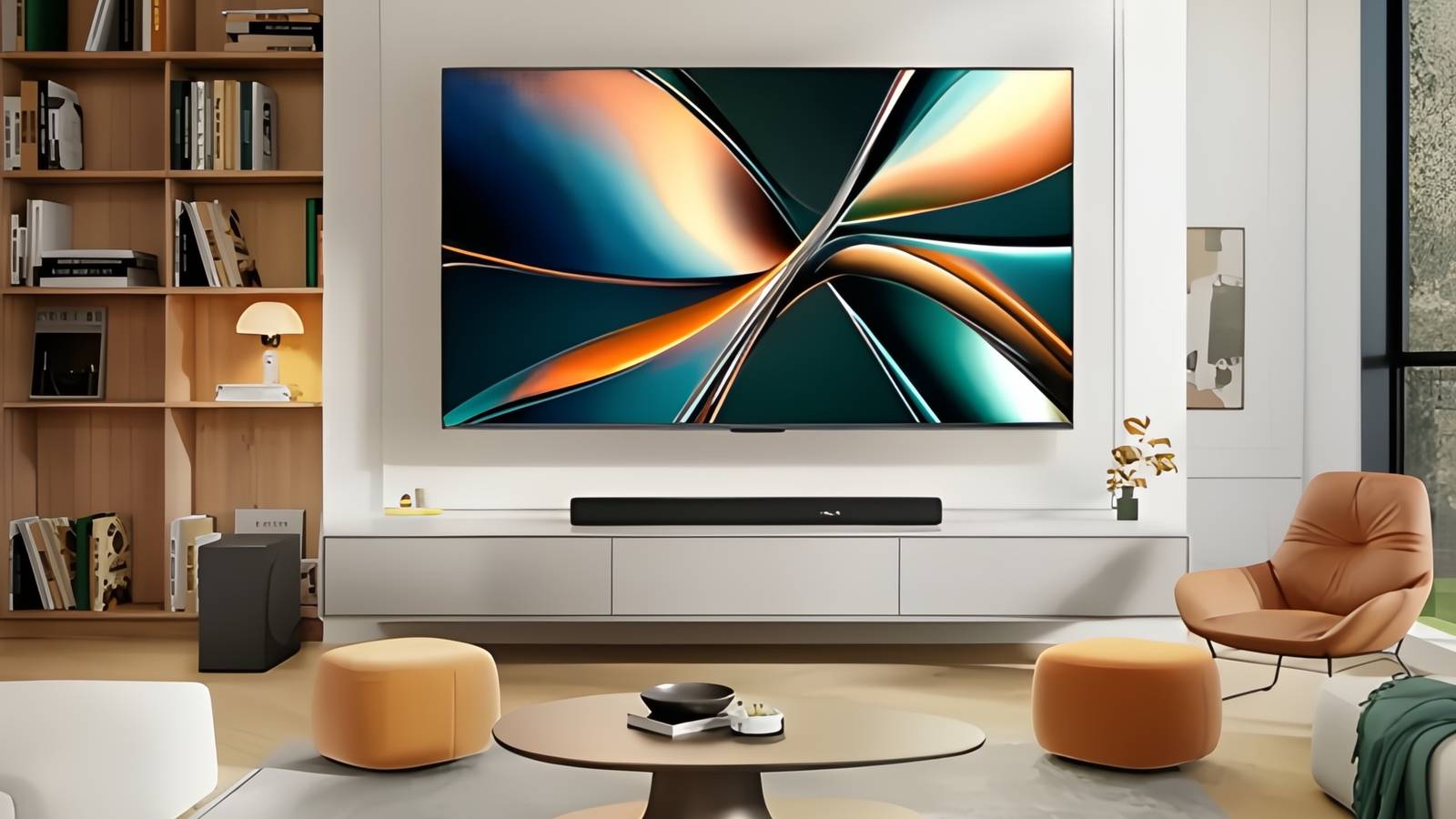
Massive TVs are here But they’re not perfect You can now buy 100-inch or larger TVs, starting at around $1,500.A Samsung M90H mini-LED 100-inch retails for around $2,500 but can be found for far less than that during sales events.If you opt for a budget brand like TCL or Hisense, you’ll be able to knock that price even lower.
You can also opt for OLED models up to 97-inch, and larger 115-inch mini-LED panels for significantly more.For your money, you get an excellent 4K image with an “effortless” contrast ratio that means the TV looks good regardless of how much light is in your room.There’s no competing with the emissive brightness of a TV, whether that’s thanks to an LED array or per-pixel light output as per OLED.
If you want the brightest, most contrasty image in any conditions, choose a TV.They come with an antenna input for watching broadcast television, passable audio, and usually four or more HDMI ports.You’ll want a soundbar or dedicated surround setup for the best audio, but built-in TV speakers have come on leaps and bounds.
There are some downsides to picking a TV.If you want a screen that’s larger than 100 inches, you’re going to need to spend a more money.Expect to pay around $20,000 for a 115-inch mini-LED or 97-inch OLED.
For most of us, this is prohibitively expensive and makes those 100-inch models look like a bargain.For most, a 100-inch TV is the limit.If you want OLED quality, you’ll need to reduce this to 77 inches (attainable at $2,000), which is a serious reduction in screen size.
If you haven’t got a massive wall to fill, this isn’t an issue.Considering you’re reading a comparison between big TVs and projectors, that’s probably not the case.The other problem with big TVs is that they’re heavy.
Samsung’s 100-inch M90H weighs 121.3 lb (55 kg) without the stand.It’s a two-person minimum job to move it, and your stand needs to be able to withstand the weight of a small adult.Mounting it on the wall is going to be an ordeal, and you’re probably better off hiring someone to do it for you.
There are two other things to consider.First, TVs are highly reflective, which can greatly impact daytime viewing.Lastly, a 100-inch screen is , and that can be grating when the TV is off since it means there’s a permanent giant black void on your wall.
Projectors have never been so accessible They can now replace your TV Close Projectors have typically been seen as something designed for home theatre enthusiasts with light-controlled rooms, painted black walls, and 7.2 surround sound systems.While they’re still perfect for cinema nerds, things are starting to shift.You can still buy long-throw and short-throw projectors, and they’re brighter and better than ever.
But you can also now buy ultra-short throw (UST) projectors, and those are probably the best fit for replacing your TV.They allow you to put a projector in your living room without the downsides traditionally associated with projection as a display technology.UST projectors sit right in front of the wall or screen, so you won’t get in the way of the image you’re trying to project.
Modern models like the AWOL Vision Aetherion Max and the upcoming Xgimi Aura 3 Max can do 4K 120Hz with low input latency and gaming-friendly features like VRR.They also get decently bright for daytime viewing when paired with the right kind of screen.Unlike a massive TV, they’re small, light, and easy to move.
They also produce way larger images than any TV.The aforementioned Aura 3 Max can produce a 200-inch image while being only a few inches away from the wall.Projectors tend to cost more than TVs, though in terms of dollar-to-inch the odds are still very much in their favor.
There’s a flurry of less recognizable companies like AWOL Vision, Xgimi, and NexiGo (in addition to familiar faces like Hisense, Epson, and LG) that have turned the space into a highly competitive market.You can expect to pay around $5,000 for a flagship UST projector unless you get in early and fund a pre-release model for around half that.A projected image isn’t going to be as bright as that of a TV, which can make for underwhelming performance in rooms with ambient lighting.
One way to combat this is with an ambient-light rejecting (ALR) screen, which you’re going to need if you want to get the most out of your projector.By contrast, some see projectors as being less fatiguing to watch.You’ll pay around $500 for a fixed screen, though a floor-rising or motorized drop-down screen will cost you more.
These give you the ability to completely hide your setup, something you can’t do with a TV (and that starts to matter when your TV hits the 100-inch mark).Perhaps the biggest downside is that projectors lack contrast compared to TVs.The absence of light is what defines the darker parts of an image, so the right screen can go a long way towards controlling this.
You might also want to give some serious thought to a means of controlling ambient light (dimmable room lighting and blackout blinds or curtains are a good start).Choosing between the two Pros and cons Price is a big factor in making your decision.You can get a relatively cheap big TV for $1,500, but the projector is only one half of the equation.
If you’re serious about projection, factor in the price of your desired screen.You can order samples to test out before you buy, so it’s a good idea to buy the projector first and match the screen to it.Your intended use is also important.
If you mostly watch in the day, you might want to stick with a TV.If you want to watch live TV, keep in mind that projectors do not include antenna inputs.For mixed use, including gaming, you’ll want to spend more on a modern projector that kicks out a lot more light.
Light and reflections are a big consideration for both purchases.One reason I won’t be sad to see the back of my OLED is that it’s basically a mirror, and a projector screen will combat direct reflections far better.Installing a massive TV is harder and requires TV stand upgrades or heavy-duty mounting brackets that can withstand the weight of the TV.
There are only a handful of projectors that can actually replace your TV, but there are more TVs that hit the 100-inch mark.You will get a better deal on a TV, now and into the future.Even so, now is a great time to consider the switch to a UST projector; the technology finally feels ready for the mainstream.
This time, I picked a projector As much as I liked the appeal of a massive TV, I decided to take my chances on a bright UST projector.I wouldn’t have bothered, were it not for the fact that modern projectors are now perfect for gaming.
Read More