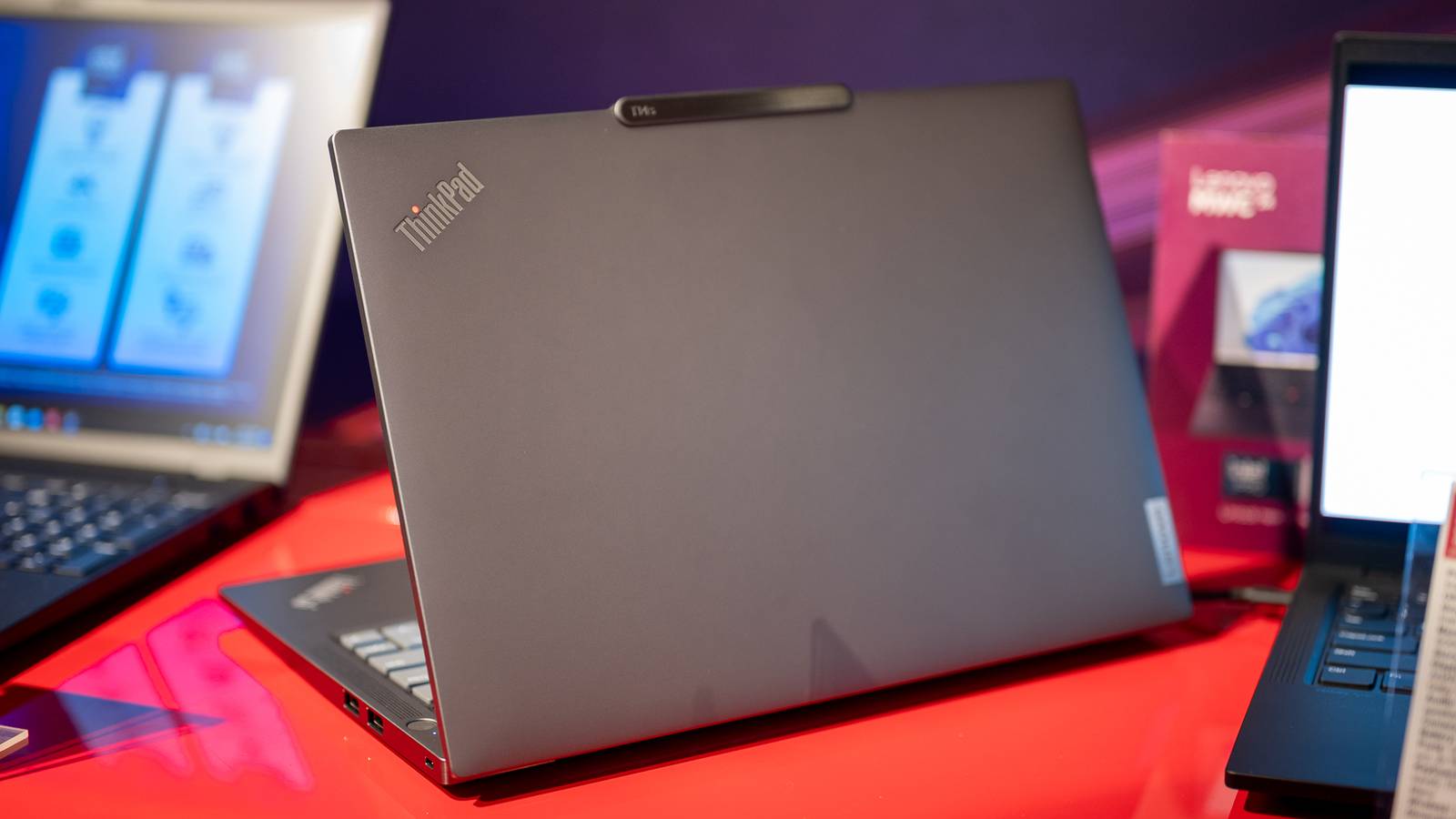
ThinkPads: Why do they have a cult following? What do they offer that your current laptop doesn't? They're more than mere specs; for some, they're a passion.It's a strange affinity to truly love a brand of laptop, but some swear by it—and I have five reasons.ThinkPads are one of the most recognizable laptops out there.
They've been around for decades and adored by many.In the Linux world, ThinkPads are renowned for their fantastic compatibility and are frequently recommended.Many Linux users vouch for them (including me).
But there's more to them than just hardware compatibility, and I'll go over what makes this classic brand the perfect choice for fellow geeks.Related 5 hard truths about switching to Linux that Windows users need to hear Before you format that drive, have a quick, honest chat with yourself.Posts 163 By Dibakar Ghosh Legendary serviceability Cheap and easy-to-find parts flood the market If you've ever researched ThinkPads, you've probably come across droves of people praising their serviceability, and it's all true.
ThinkPad parts inundate online markets (like eBay) with options to fix anything you can think of.From screens to power modules, finding the part takes only minutes, all unambiguously labeled, cheap, and easy to install.Repairability is one thing, but upgradability is another.
It's very common for ThinkPad users to mod their purchases—installing upgraded screens, extra hard disks, or additional RAM.Guides, ideas, and parts are easy to come by, so, unlike most other laptops, making an inexpensive ThinkPad purchase sometimes means bumping its offering to premium levels.Unfortunately, their serviceability has taken somewhat of a hit in recent years.
Some of the newer ThinkPads now solder RAM and Wi-Fi cards onto the board to save space and weight, which is a grave mistake if you ask me.However, every ThinkPad series has a different use case, and not all of them do that—the larger P-series models being one notable exception, and I'm sure there are more.If modularity is a big concern, then weigh your options first.
Lenovo provides detailed technical specification sheets—called PSREF (Product Specifications Reference)—for every model.Study these before a purchase.Quiz 8 Questions · Test Your KnowledgeLinuxTrivia ChallengeFrom a Finnish student's side project to powering the world's supercomputers — how well do you really know Linux?HistoryCultureCommandsKernelFun FactsBegin 01 / 8HistoryIn what year did Linus Torvalds announce the first version of the Linux kernel to the world?A1989B1993C1991D1995Correct! Linus Torvalds posted his now-famous message to the comp.os.minix newsgroup on August 25, 1991, describing Linux as 'just a hobby, won't be big and professional.' That turned out to be quite the understatement.Not quite — Linus Torvalds made his famous announcement in 1991, when he was just 21 years old and a student at the University of Helsinki.
He described it as a 'hobby' project, which is arguably the most successful hobby in computing history.Continue 02 / 8CultureWhat is the name of the Linux mascot, and what kind of animal is it?ABeastie, a daemonBTux, a penguinCGNU, a wildebeestDRex, a foxCorrect! Tux the penguin became the official Linux mascot in 1996, designed by Larry Ewing.The name 'Tux' is often said to stand for Torvalds UniX, and the penguin was chosen after Linus mentioned he was once bitten by a penguin at a zoo.The answer is Tux, a penguin! The mascot was chosen after Linus Torvalds mentioned being bitten by a fairy penguin at a zoo in Canberra, Australia.Designer Larry Ewing created the iconic image in 1996 using GIMP — fittingly, free software.Continue 03 / 8KernelWhat type of kernel architecture does Linux use?AMicrokernelBExokernelCHybrid kernelDMonolithic kernelCorrect! Linux uses a monolithic kernel, meaning the entire operating system runs in kernel space.
This famously sparked a heated debate between Linus Torvalds and computer scientist Andrew Tanenbaum in 1992, who argued microkernels were the superior design.Not quite — Linux uses a monolithic kernel, where the OS core runs as a single large process in kernel space.This was actually controversial, leading to a famous flame war between Linus Torvalds and professor Andrew Tanenbaum, who believed microkernels were the future.Continue 04 / 8CommandsWhat does the classic Linux command 'sudo' stand for?ASystem User DoBSwitch User and DoCSuperuser DoDSecure Unix DoCorrect! 'sudo' stands for Superuser Do, and it allows permitted users to run commands with the security privileges of another user — typically the root superuser.It's one of the most typed commands in Linux and has inspired countless memes about power and responsibility.The answer is 'Superuser Do'! While 'switch user' logic is involved, the name specifically refers to executing a command as the superuser (root).
First developed in the 1980s, sudo is now a cornerstone of Linux security, letting admins grant elevated privileges without sharing the root password.Continue 05 / 8Fun FactsWhat percentage of the world's top 500 supercomputers run Linux?AAround 75%BExactly 50%C100%DAround 90%Correct! As of 2017, Linux achieved 100% domination of the TOP500 supercomputer list — and has maintained it ever since.From weather modeling to nuclear research to AI training, every single one of the world's fastest supercomputers runs Linux.Remarkably, the answer is 100%! Since November 2017, every single computer on the TOP500 supercomputers list has run Linux.It powers everything from climate simulations to particle physics research at CERN to AI model training at major tech companies.Continue 06 / 8HistoryWhich operating system directly inspired Linus Torvalds to create Linux?AMS-DOSBBSD UnixCMinixDSolarisCorrect! Torvalds was inspired by Minix, a small Unix-like OS created by Andrew Tanenbaum for educational purposes.
Frustrated by Minix's limitations and licensing restrictions, he set out to build his own kernel — and the rest is history.The direct inspiration was Minix, a small educational Unix-like system created by professor Andrew Tanenbaum.Torvalds was using Minix on his new PC but found it too limited.His desire for a more capable, free system drove him to write Linux from scratch starting in 1991.Continue 07 / 8CultureWhat does the 'GNU' in 'GNU/Linux' stand for?AGeneral Network UtilityBGNU's Not UnixCGlobal Networked UnixDGNU Null UnixCorrect! GNU stands for 'GNU's Not Unix' — a classic recursive acronym beloved by hackers.
The GNU project was started by Richard Stallman in 1983 to create a completely free Unix-like operating system.Linux provided the missing kernel to complete the GNU system.GNU stands for 'GNU's Not Unix' — a recursive acronym, which is a playful trick where the abbreviation refers back to itself.Richard Stallman launched the GNU Project in 1983, years before Linux existed.
When Torvalds released the Linux kernel, it completed the puzzle Stallman had started.Continue 08 / 8Fun FactsWhich of the following runs on the Linux kernel?AmacOSBAndroidCWindows Subsystem for LinuxDiOSCorrect! Android is built on top of the Linux kernel, making Linux the most widely used OS on the planet when you count smartphones.Billions of Android devices worldwide are technically running Linux — Torvalds' 'hobby' project ended up in nearly everyone's pocket.The answer is Android! Google built Android on top of a modified Linux kernel, which means billions of smartphones worldwide are running Linux under the hood.macOS and iOS use a Darwin/XNU kernel, and WSL runs Linux tools but translates syscalls rather than running the kernel natively.See My Score Challenge CompleteYour Score/ 8Thanks for playing!Try Again Exceptional build quality Military-grade testing and an awesome keyboard Many in the user base praise ThinkPads for their build quality.
While some say it has decreased since the IBM days, it has a lasting reputation.In particular, people rave about their keyboard and layout.Personally, I've gone through a half-dozen of them, but the letters are usually fading off the keys when replaced, so perhaps I've gotten more value for money than I realize.
ThinkPads also undergo rigorous mil-spec testing (MIL-STD 810G) to evaluate them for resilience under extreme conditions.Category Test Type Description Kinetic Forces Mechanical Shock High acceleration, repeated shock (18 times).Vibration Tested while running and turned off.
Environment Fungus 28 days with common fungus spores.Fuel Vapor Fuel vapor environments.Sand and Dust Different types of sand, for hours.
Shipboard Vibrations 4–33 Hz for 2 hours.Weather High Altitudes 15,000 ft.Humidity 91–98% at 86–140°F [30–60°C].
Solar Radiation 7x24-hour cycles (simulated).Extreme Temperatures -13–140°F [-25–60°C], 3 cycles of 2 hours each.Low Temperature -13°F [-25°C] for 24 hours (-5.8°F [-21°C] while operating for 8 hours).
High Temperatures 145.4°F [63°C] for 24 hours (109.4°F [43°C] while operating for 8 hours).If you look after your device, it will last many years.The workhorse models (e.g., T, P, or X series) have powerful processors in them, and unless you need cutting-edge hardware, they'll last well into the future—mine is over 10 years old.
Value for money A long-term cult following with plenty to offer Their cost-effectiveness is why I buy ThinkPads.They've long been a favorite for businesses, which frequently turn over hardware, dumping old devices in large quantities into public marketplaces.You will find thousands of ThinkPads on eBay, all at enticing prices.
Given the sheer volume of competition, it's not uncommon to find a 2-3-year-old laptop for $300-$400.These devices are not slouches either; the P-series models go for raw power, with older models shipping a Quadro GPU and newer ones an Nvidia RTX.You may pay extra for newer generations from the flagship line (X1 Carbon), but the iconic T series is the sweet spot—capable, light, and budget-friendly.
Series Use case E series Small business.Budget.L series Enterprise; affordable.
A step up from the E-series.T series Enterprise; mainstream.A workhorse for businesses.
P series Workstation.A power-hungry T-series with dedicated GPU options.X series Mobile workhorse.
A lighter T-series.X1 series Flagship (Intel).Z series AMD.
Yoga 360° swiveling screen.Lenovo may have discontinued some of those listed, but you can still find them second-hand or refurbished, and often under $200.Enduring community 2-3 year-old laptops for a mere few hundred bucks For technical products, I always ensure first that they have a strong community.
It's a sign of good health, support, and sometimes even quality.Regular access to useful information is something people don't value enough.For other laptops, their communities may be sparse or too general, but the ThinkPad community has been strong for decades.
There's no shortage of help, inspiration, or guides, and so, if you decide to make a purchase, then know that you're not only buying into a well-built, robust device but also the community.Lenovo ThinkPad X1 Carbon Gen 13 Aura Edition 8 Operating System Windows 11 Pro CPU Intel Core Ultra 7 258V Processor (8 Cores, 8 Threads, 12 MB Cache) GPU Intel Arc Xe2 GPU with >60 TOPS RAM 32GB LPDDR5x 8533MT/s soldered, dual channel $2267 at Lenovo Expand Collapse Distinctive features It's not a ThinkPad if it doesn't have that little red dot ThinkPads are immediately recognizable by the red dot in the middle of their keyboards (called TrackPoint).I've never understood why these exist, because I find them clunky.
However, a significant portion of the user base stands behind them.I can't tell if it's a joke or not, but TrackPoints are a distinctive part of the ThinkPad brand.Related Lenovo ThinkPad X1 Carbon Gen 13 Aura Edition Review: Focused On AI Features This portable ThinkPad delivers powerful computing and a stand-out OLED display.
Posts By Cianna Garrison I've had my ThinkPad for over a decade now, and it's still hanging in there, despite neglect.If I had maintained it properly—dusting regularly and re-attaching all screws after maintenance—it would last another decade.Subscribe to the newsletter for ThinkPad repair & tips Discover more about ThinkPads: subscribe to the newsletter for focused, in-depth coverage on repairs and upgrades, parts-sourcing, standout features like TrackPoint, community resources, and practical buying guidance for informed ThinkPad ownership.
Get Updates By subscribing, you agree to receive newsletter and marketing emails, and accept our Terms of Use and Privacy Policy.You can unsubscribe anytime.There are few laptops that I would consider when purchasing a new device, perhaps an HP EliteBook is one, but I'm happy with ThinkPads.
I know what I get from them.Lenovo's decision to make newer models less serviceable is concerning because a failing component (like a Wi-Fi card) will require a soldering iron (or a computer repair shop).However, their solid construction, widespread availability, low cost, and Linux support are the primary reasons I'll probably stick with ThinkPads for years to come.
If I recommend a laptop, it's a ThinkPad.Related Lenovo ThinkPad X12 Gen 2 Detachable Review: Simple Yet Functional This detachable "laptop" has got it together.Posts 1 By Patrick Campanale
Read More