Honda has built its reputation on more than just reliable engines and fun-to-drive cars.Some of its smartest engineering has gone into making everyday vehicles feel far roomier and more practical than their size suggests.The brand calls this approach "Man Maximum, Machine Minimum," and few cars showcased it better than the Honda Fit.
Despite its compact footprint, the little hatchback packed in an incredible amount of passenger and cargo space without giving up the nimble driving manners Honda is known for.The Fit may be gone, but that philosophy hasn't disappeared with it.It lives on in Honda's SUV lineup, and one model stands out as the clearest example of what happens when family-friendly practicality comes first.
In order to give you the most up-to-date and accurate information possible, the data used to compile this article was sourced from Honda and other authoritative sources, including the EPA and TopSpeed.Related 10 Compact Hybrid SUVs With the Most Cargo Space in 2025 These compact SUVs are the most efficient and spacious you can buy right now.Posts 2 By Dylan Freeburn Making every inch count Honda's approach to smart packaging has a long history Honda has long been known for making clever use of interior space, and that philosophy is still alive in its modern lineup.
The "Man Maximum, Machine Minimum" approach has shaped some of Honda's most memorable models, so it's worth looking back at the vehicles that best showcase this idea.The little hatchback that could The Honda Fit may have been small on the outside, but it was anything but cramped inside.Thanks to its centrally mounted fuel tank beneath the front seats, Honda was able to create its clever Magic Seats, which could fold flat or flip upward to carry taller items.
That clever packaging gave the Fit 112.3 cubic feet of interior volume, putting it ahead of rivals like the Kia Rio Hatchback and Ford Fiesta.It was also fun to drive, fuel-efficient, and impressively reliable—everything you'd want from an affordable daily driver.Unfortunately, as buyers shifted toward SUVs and crossovers, one of Honda's smartest small cars was left behind.
The Fit may be gone, but its space-saving philosophy continues to influence Honda's modern vehicles.Honda's ultimate space machine If you want to see Honda's space-saving philosophy taken to its extreme, you'll have to look beyond the U.S.market at the Honda STEPWGN.
This Japanese-market minivan is built around one goal: maximizing interior space with a clever, highly flexible layout.The STEPWGN's boxy shape and low floor create a huge, configurable cabin that can handle everything from family duty to cargo-hauling tasks.The fifth-generation model (2015-2021) took that practicality even further with its quirky "Waku Waku Gate" rear opening.
Unlike a traditional liftgate or swing-out door, the Waku Waku Gate gave owners both options in one setup.Need the full opening? Lift the tailgate normally; just loading something small? Open the smaller side-hinged door instead.While the feature was eventually dropped due to complexity and added weight, it remains one of Honda's most creative packaging solutions.
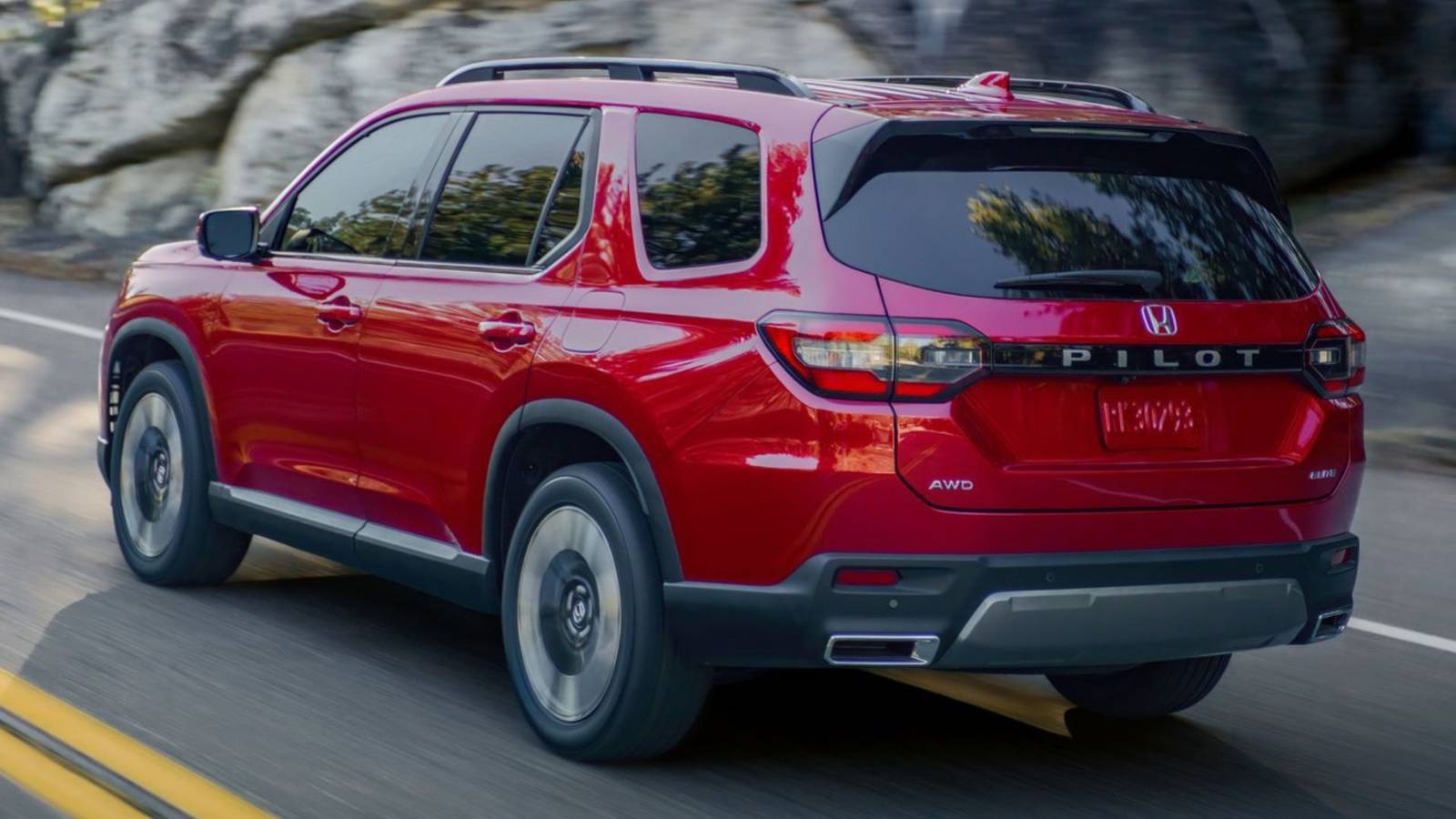
Related How the 2026 Honda Passport quietly beats more expensive rivals The 2026 Honda Passport brings 285 horsepower, upgraded AWD, and rugged looks to take on off-road rivals like the Bronco and Land Cruiser.Posts By Adam Gray Honda Pilot: Built with families in mind Honda's space-saving philosophy lives on If there's one SUV that best captures Honda's "Man Maximum, Machine Minimum" philosophy in America today, it's the 2026 Honda Pilot.Honda Pilot Like SUV Base: $37,090 Base Trim Engine 3.5-liter V6 Base Trim Transmission 10-speed automatic Base Trim Drivetrain Front-Wheel Drive Base Trim Horsepower 285 hp Base Trim Torque 262 b-ft Make Honda Model Pilot Segment Midsize SUV Powered by Expand Collapse Practicality comes first Honda didn't design the Pilot to wow you with flashy interior styling, and that's part of its appeal.
While rivals like the Kia Telluride and Hyundai Palisade lean more into premium looks, the Pilot puts everyday usability first with a wide center console and plenty of clever storage, including two-tier door pockets that swallow everything from water bottles to kids' snacks.The real magic happens in the second row.Instead of making buyers choose between a bench seat and captain's chairs, most Pilot trims give you both thanks to Honda's clever Multi-Function second-row seat.
The middle seat can stay in place, fold into an armrest with extra storage, or be removed entirely and tucked away beneath the cargo floor.The third row is just as impressive, offering enough space for adults without feeling like an afterthought.It's all part of Honda's long-running "Man Maximum, Machine Minimum" philosophy, giving the Pilot much of the flexibility you'd expect from a minivan while keeping the rugged look and higher driving position buyers want from an SUV.
A V-6 that gets the job done All that practicality is backed by Honda's proven 3.5-liter J-series V-6, an engine with a long-standing reputation for smooth performance and dependable reliability.In the 2026 Pilot, it produces 285 horsepower and 262 lb-ft of torque, paired with a responsive 10-speed automatic transmission that makes everyday driving feel effortless.The Pilot won't match hybrid rivals at the pump, but it's still respectable for a midsize SUV with a naturally aspirated V-6.
estimates come in at 22 mpg combined for front-wheel-drive models, 21 mpg with all-wheel drive, and 20 mpg for the more off-road-focused TrailSport.Engine 3.5-liter V-6 Transmission 10-speed automatic Power 285 hp Torque 262 lb-ft EPA combined fuel economy 22 mpg (FWD) 21 mpg (AWD) 20 mpg (TrailSport) Towing capacity 3,500 lbs (FWD) 5,000 lbs (AWD) No one expects a three-row SUV to carve corners like a sports sedan, and the Pilot doesn't pretend otherwise.Instead, Honda has struck a nice balance between comfort and composure, with a smooth ride, well-controlled body roll, and handling that feels more confident than its size suggests.
Most trims also benefit from acoustic front glass and plenty of sound insulation, helping keep road and wind noise to a minimum.The result is a quiet, relaxed cabin that's just as suited to the daily school run as it is to a long family road trip.Related The Honda SUV That Has More Luxury Than A Lexus (And It’s Not An Acura) This Honda SUV packs premium features, upscale design, and tech that rival a Lexus—proving luxury doesn’t always come with a premium badge.
Posts 3 By Tyler Dupont Refreshed for 2026 Updated looks, upgraded features For 2026, Honda gives the Pilot a mid-cycle refresh to keep it competitive as newer rivals from Hyundai and Kia enter the scene.A tougher new look Honda is leaning into the growing demand for tougher-looking SUVs with the 2026 Pilot's refreshed design.The biggest changes are up front, where a taller rectangular grille, sharper LED headlights, and a chunkier bumper give it a more rugged presence.
The updates continue with a revised rear bumper, standard roof rails across the lineup, and new 20-inch wheel designs.Honda also adds three new paint options, including Ash Green Metallic, which is exclusive to the TrailSport trim.Overall, the refreshed Pilot swaps some of its previous sportiness for a more adventurous look that better matches what many SUV buyers are after today.
More tech comes standard The 2026 Pilot brings its tech game up to speed, with more features now standard across the lineup.Every trim gets a 10.2-inch digital gauge cluster and a 12.3-inch touchscreen with wireless Apple CarPlay and Android Auto, while Google Built-In adds integrated apps and a complimentary three-year data plan.That's not all, either.
Most buyers also get a wireless charger, powered tailgate, heated front seats, power-adjustable front seats, and tri-zone climate control as standard.Higher trims add premium touches like a panoramic roof, head-up display, Bose audio, and ventilated front seats.
Read More