For years, the formula for picking a sports sedan was pretty simple: big horsepower, quick 0–60 times, and serious track cred.If that was your checklist, the BMW M3 usually ended up near the top.It’s been the benchmark for decades, and for good reason.
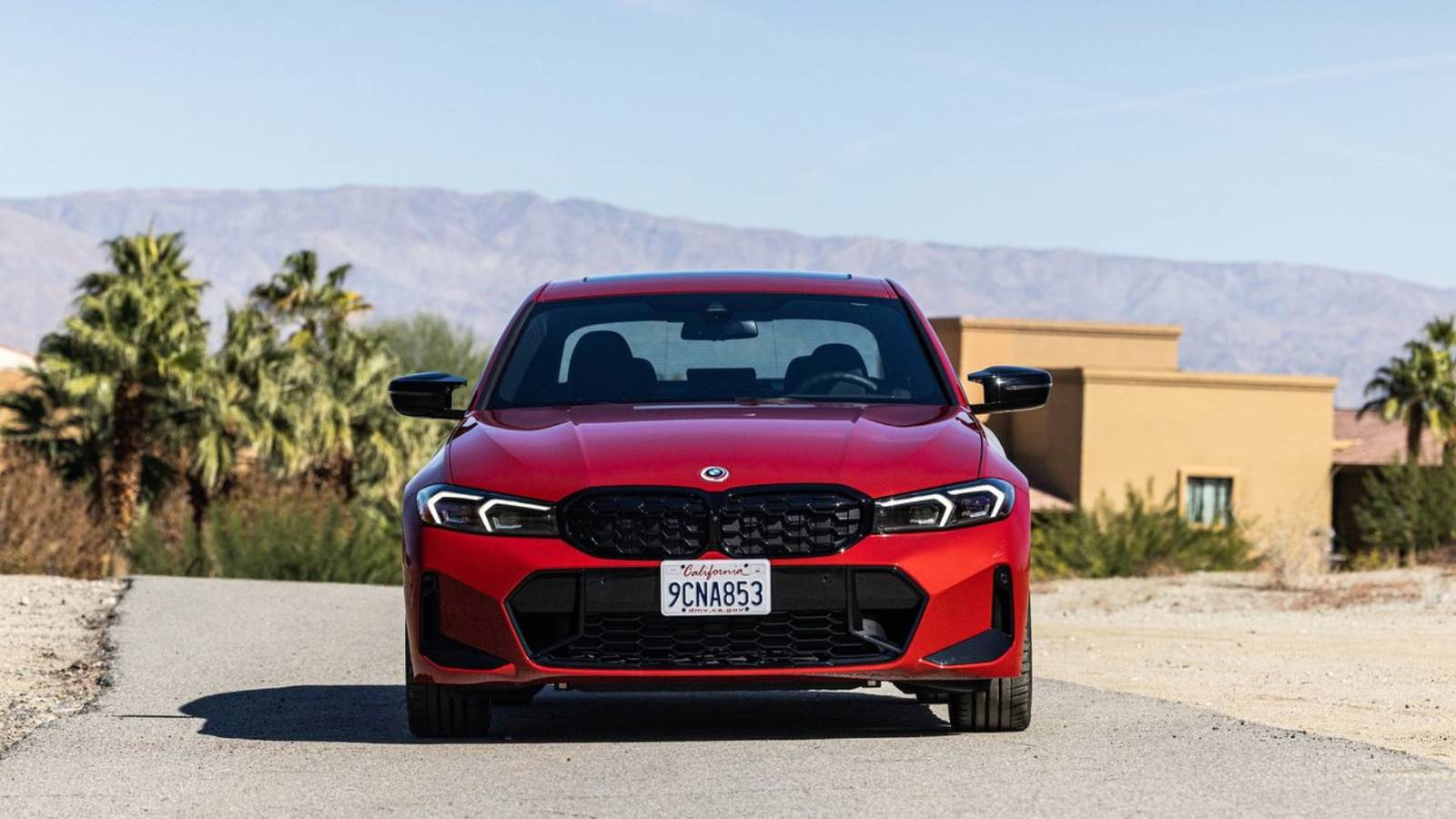
But BMW’s own lineup now includes something that makes the old pecking order a lot less clear.The M340i brings plenty of speed, sharp handling, and far more day-to-day comfort, all without the harder edges that come with an M3.This year, it feels like the BMW performance sedan most people should want.
In order to give you the most up-to-date and accurate information possible, the data used to compile this article was sourced from BMW and other authoritative sources, including CarBuzz, the EPA, J.D.Power, RepairPal, and TopSpeed.Related BMW vs.
Mercedes vs.Audi: The most reliable luxury brand revealed When it comes to dependability, the 2025 J.D.Power rankings give BMW, Mercedes, and Audi a clear order.
Posts 2 By Adam Gray Luxury sports sedans still have plenty of life left in them They continue to balance performance, comfort, and everyday usability better than ever People like to say SUVs and pickup trucks run the show in the U.S., but the sports sedan hasn’t gone anywhere.It’s just changed—now it’s quicker, more polished, and way more usable day to day than the old tire-smoking versions.Today’s sports sedans are basically rolling showcases for what brands can do when they’re trying to impress drivers.
The Alfa Romeo Giulia brings Italian flair with serious pace, while the Cadillac CT5-V Blackwing doubles down on old-school muscle with modern polish.Then you’ve got stuff like the Mercedes-AMG C63 S E Performance, which goes all-in with hybrid tech and absurd power figures.Some lean luxury, others go full performance, but together they show the sports sedan still has plenty to say.
How the BMW M3 became BMW’s ultimate performance sedan The BMW M3 built its reputation on a pretty simple idea: start with the 3 Series and sharpen everything without breaking what already works.Early cars like the BMW M3 (E30) came out of homologation rules, but they ended up setting the tone with high-revving engines, tight balance, and a chassis that cared more about precision than comfort.Over time, the formula evolved as the market changed.
Naturally aspirated straight-sixes gave way to V-8s, and later turbocharged engines, but the core identity stuck around.Even today’s versions of the M3 still focus on sharp steering, strong front-end bite, and a driving feel that keeps it firmly in enthusiast territory.Technically, the M3’s strength has always come down to how heavily BMW’s M Division reworks the base car.
It’s not just a tune-up — you get reinforced subframes, stiffer bushings, a wider track, upgraded suspension, bespoke brakes, and a significantly more powerful engine.The result is a car that feels quick in a straight line but really comes alive when you push it through corners.It’s hard to fault because it does the fundamentals so well, even when you’re driving it hard.
Related The 2026 BMW M240i Proves You Don’t Need an M2 to Have Fun The 2026 BMW M240i delivers thrilling performance, sharp handling, and everyday comfort—all without the M2’s hefty price tag.Posts 1 By Tyler Dupont The BMW M340i does almost everything right for less A strong mix of performance, comfort, and value without the M3 price tag We’re definitely fans of the M3, but as much as we like it, it might not be the smartest pick this year compared to its more laid-back sibling: the 2026 M340i.It comes in two versions—rear-wheel drive and all-wheel drive—and both land a good chunk cheaper than the M3, with a gap of more than $15,000 to start.
Here’s how the 2026 M340i pricing breaks down: 2026 model MSRP BMW M340i (RWD) $61,550 BMW M340i xDrive (AWD) $63,550 $60K isn’t exactly “cheap” for a performance sedan by any stretch, but it starts to look a lot more reasonable next to the 2026 M3, which kicks off at $78,400 for the so-called entry-level trim.Near-M3 performance without the hardcore edge Comparing prices alone doesn’t tell the full story.A new Alfa Romeo Giulia starts just under $45,000, making it significantly cheaper than both the M3 and the M340i, while still offering up to 280 horsepower depending on the version.
Where the 2026 M340i starts to make more sense is in what you get from its engine and overall output.The specs for the 2026 M340i are as follows: Spec 2026 BMW M340i Engine 3.0-liter twin-turbocharged inline-6 Transmission 8-speed automatic Power 386 hp Torque 398 lb-ft The new M3 comes with a 473-horsepower 3.0-liter turbocharged inline-six, while the M3 Competition turns things up even further, pushing out 523 horsepower in xDrive form from the same engine.Speed and power you can actually live with every day Even with the M3’s much stronger engine, the M340i isn’t exactly hanging around.
Reports put the base M3 at around 3.9 seconds to 60 mph, while the M3 Competition xDrive can drop that to a brutal 2.8 seconds.BMW says the M340i still gets the job done in about 4.4 seconds with rear-wheel drive or 4.1 seconds with all-wheel drive, which keeps it firmly in quick territory.Yes, it’s a touch slower than the entry M3, but in real-world driving that difference is barely noticeable for most people—especially when you factor in the price gap.
The M340i feels fast without being overwhelming, delivering strong performance without that constant “hold on tight” surge you get from the M3.It’s more about usable speed you can enjoy every day rather than all-out intensity at every stoplight.Related Why the 2025 BMW 4-Series Is the Best-Selling Luxury Car of 2025 (So Far) Stylish, refined, and packed with performance, this luxury car is leading 2025 sales for all the right reasons.
Posts By Tyler Dupont Where the 2026 BMW M340i really shines A balance of speed, comfort, and everyday usability that makes it easy to live with Just because the M340i is cheaper, a bit less hardcore than the full M cars, and slightly slower than its more extreme sibling, doesn’t mean it’s not still built for driving properly hard when you want it to be.According to the 3 Series’ overall score of 82 out of 100 from (which includes the M340i), you’re not really giving much up.That rating breaks down into 81 for reliability and an even stronger 84 for driving experience, which says a lot about how well-rounded it is.
Turbocharged straight-six performance with classic BMW feel The new BMW M340i runs BMW’s TwinPower Turbo B58 inline-six, and it’s widely regarded as one of the brand’s best modern engines.Power comes on strong, with a broad, usable torque curve that builds early and stays consistent through the mid-range, so you don’t have to wring it out to have fun.Under the skin, it uses a twin-scroll turbo, high-precision direct injection, and Double VANOS variable valve timing, which keeps everything smooth but still sharp when you lean into it.
The B58’s closed-deck design adds extra rigidity for higher cylinder pressures, and even with the 48-volt mild-hybrid system smoothing out any lag, it still feels very much like a traditional, responsive BMW straight-six rather than anything overtly electric.What really makes it stand out is how much of that classic BMW straight-six character it still keeps.It’s smooth and refined in a way most modern turbo-fours just can’t match, with a subtle exhaust note that gradually wakes up the harder you drive it.
You don’t get the same sharp, aggressive edge you’d find in the M3 and its S58 engine, but that’s kind of the point.The M340i feels like the smarter balance—quick, engaging, and still relaxed enough to live with every single day.xDrive grip and balance that actually work in real-world driving You might think going for the pricier xDrive version would take away some of the rear-wheel-drive feel of the base car.
In reality, it doesn’t really work like that—the system in the M340i is tuned to still behave like a rear-biased sports sedan, just with extra traction on standby.Around town or on normal roads, it keeps most of the power going to the rear wheels to preserve that balanced, classic BMW feel.The front axle only really joins in when you push harder or when grip drops, stepping in to stabilize things without making the car feel dull or overly front-heavy.
Mechanically, it uses an electronically controlled multi-plate clutch in the transfer case to constantly vary torque between the front and rear axles in real time.Instead of just reacting when slip happens, it can adjust preemptively based on conditions and driving inputs, which keeps everything feeling stable and composed.Combined with the stability systems and rear differential tuning, the M340i ends up feeling calm and confident in everyday driving, especially in the wet or on changing road surfaces.
It’s the kind of setup that just makes sense if you’re not spending your life on a track.Related Hyundai's sports sedan delivers BMW-like thrills without the price tag A sports sedan that proves fun doesn’t have to be expensive.Posts By Tyler Dupont The BMW M340i lands in the performance sweet spot Fast enough to be fun, comfortable enough to live with every day The M3 is definitely the louder, more aggressive of the two, and in most situations it’ll still outrun an M340i.
But if what you want is a sports sedan that feels just as good on a back road as it does on a daily commute, the M340i really nails that balance.Comfort and refinement that actually earn respect Where the M3 leans into its dual-purpose character with stiff suspension, aggressive seating, and a constant sense of edge in the chassis, the M340i dials things back just enough to feel genuinely relaxed when you’re not pushing on.Its Adaptive M suspension smooths out rough roads with a level of compliance the M3 doesn’t really prioritize, and even on bigger wheels, it’s tuned to stay comfortable and composed.
Inside, the approach is just as balanced.You still get BMW’s Curved Display as standard, pairing a 12.3-inch digital cluster with a 14.9-inch central touchscreen running iDrive 8.5, just like the M3.The difference is in the focus—less track-style data overload, more everyday usability, which makes the cabin feel a bit more approachable without losing any of the tech.
Newsletter: Smart BMW insight and buying clarity Subscribe to our newsletter for clear, practical coverage of performance sedans like the BMW M340i.We break down specs, comfort, real-world usability, and ownership costs so you can judge which sport sedan fits your priorities.Get Updates By subscribing, you agree to receive newsletter and marketing emails, and accept our Terms of Use and Privacy Policy.
You can unsubscribe anytime.The dashboard comes trimmed in soft-touch Sensatec as standard, with optional Vernasca leather available for the seats, door panels, and armrests.Compared to the more track-focused M3, which leans into heavily bolstered seats and a motorsport-first mindset, the M340i takes a more relaxed approach overall.
Brushed aluminum or open-pore wood trim options, ambient lighting, and a softer design language all help make the cabin feel more approachable.That doesn’t mean comfort has been overlooked.The standard sports seats strike a solid balance between long-distance support and spirited driving, while the thick-rimmed, leather-wrapped M steering wheel feels right at home whether you’re cruising or pushing on.
Add in effective noise insulation that does a good job keeping wind and road noise out, and it ends up being a very easy car to live with day to day.The M340i is set up as the slightly more comfort-focused sports sedan compared to the M3, but both cars are still surprisingly practical for the segment.They each offer 16.9 cubic feet of trunk space with the seats up, along with 40:20:40 split-folding rear seats for added flexibility.
When you look at passenger space in the 2026 M340i compared to the M3, the differences come down more to character than outright usability.Interior space is basically a wash between the two, but the big difference is cost—you’re paying a lot less for effectively the same amount of room in the M340i compared to the M3.2026 BMW M340i 2026 BMW M3 Headroom (front/rear) 38.7 inches/37.6 inches 40.6 inches/37.8 inches Shoulder room (front/rear) 56.0 inches/54.6 inches 56.0 inches/54.6 inches Legroom (front/rear) 42.0 inches/35.2 inches 41.6 inches/35.6 inches Lower running costs than the M3 make it easier to live with long term The M340i starts at a lower price than the M3, and it also looks likely to be cheaper to run over time.
According to , the M3 averages about $1,161 a year in maintenance, while there isn’t a direct figure yet for the M340i.That said, with its less stressed engine and milder tuning, it’s generally expected to be the more affordable car to keep on the road.Fuel economy also swings in its favor.
Data from the puts the M340i at around 29 mpg combined (27 city/33 highway), with annual fuel costs of roughly $2,400.The M3, by comparison, returns about 19 mpg combined (16 city/23 highway) and closer to $3,650 a year in fuel—so the gap adds up quickly if you’re driving it regularly.Related The Sports Sedan Redefining Luxury Without Breaking the Bank This luxury sedan is turning heads with its upscale features, surprisingly accessible price point, and impressive performance capabilities.
Posts By Adam Gray Why the BMW M340i is the performance sedan to get this year It hits the right mix of speed, comfort, and value without going over the top When you line the M3 up against the M340i, it’s obvious the M3 is the more extreme, track-focused machine.That’s still going to be the one for drivers chasing maximum BMW M performance and outright aggression.But the M340i doesn’t really try to play that same game, and that’s exactly why it works.
It’s not a watered-down M3—it’s a different idea entirely, built around real-world speed, comfort, and usability without the extra cost or hardcore edge.It strikes a strong balance between performance, practicality, and price.It’s quick enough to feel genuinely exciting, still sharp enough to satisfy on a back road, and far easier to live with day to day, all while looking every bit like a proper BMW sports sedan.
Read More