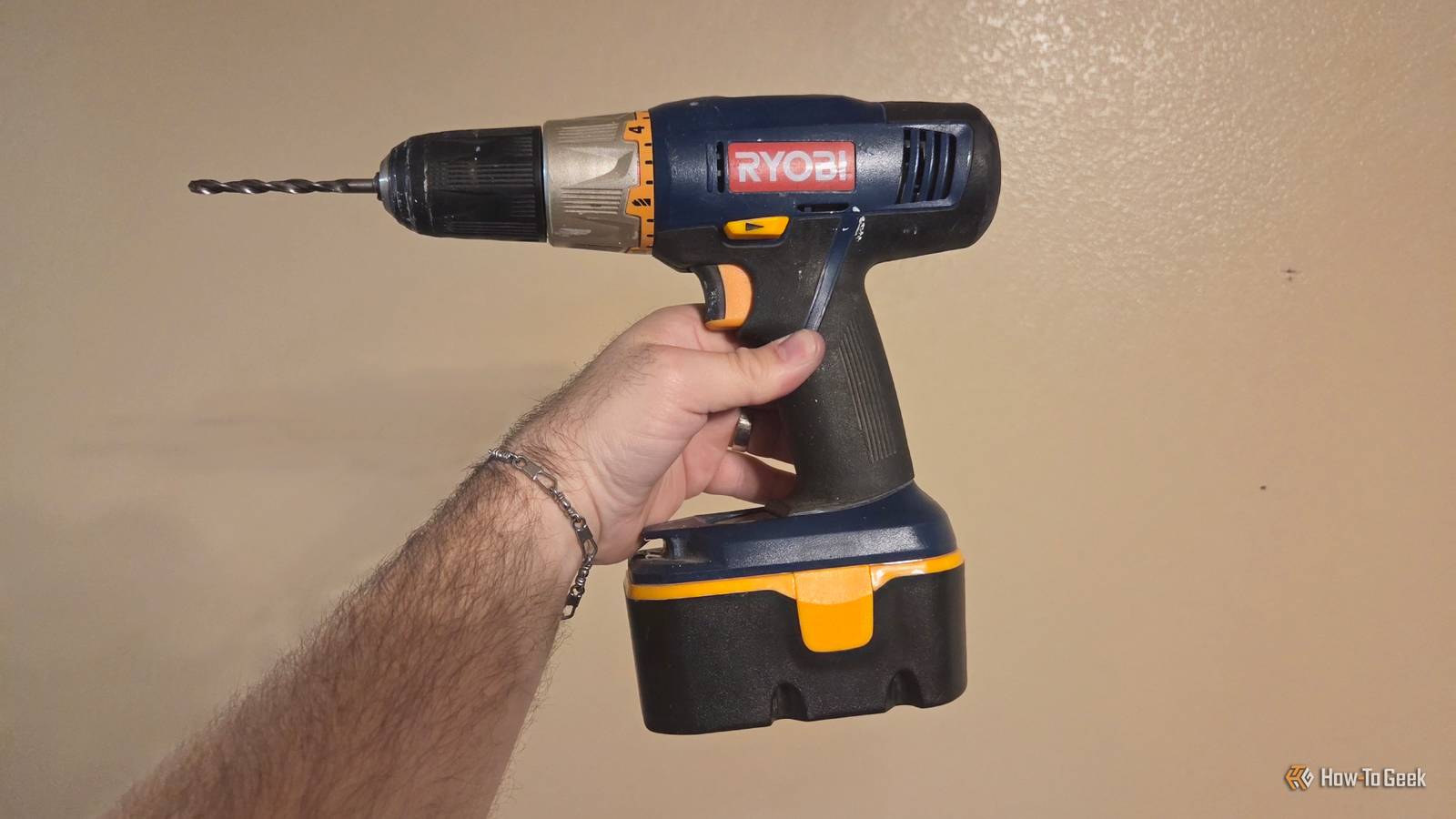
I've bought a lot of cordless power tools over the years that have come and gone, but one has remained: this trusty old blue Ryobi drill.It's a workhorse that I've owned for over 20 years, and here's why it outlasted everything else.Before the bright greenish-yellow tools that line the shelves at Home Depot today, Ryobi tools were dark blue and yellow.
Ryobi switched to neon green around 2007, ushering in a new era in which nickel-cadmium (NiCd) batteries were replaced by lithium-ion cells, promising better performance, longer runtime, and other benefits.There are two main reasons (good and bad) why I still have and use this thing.The Ryobi 18V ONE+ line can't be beat Platform compatibility is key Close Almost all vintage blue Ryobi tools came with an 18V NiCd (Nickel-Cadmium) battery, and, as we all know, that technology is outdated.
Between 2007 and 2010, most of Ryobi's tools started turning green and coming with better battery packs.Around that same time, I also owned several Milwaukee V28 and V18 power tools.As markets shifted and new technology emerged, almost every power tool brand released all-new lineups with different battery designs, more power, and more promises, but with one huge downside.
That, of course, was backward compatibility.See, that old vintage blue Ryobi drill in the photo above still works, and I can use it with any Ryobi 18V ONE+ battery.Yes, you can go to Home Depot today, buy a battery, and throw it in a 20-year-old Ryobi tool.
No fuss, no adapters, nothing.It just works! Related 4 Ryobi tools DeWALT refuses to make Ryobi makes a little bit of everything.Posts By Cory Gunther Ryobi's 18V ONE+ line has slowly but surely expanded into a massive ecosystem of over 350 tools that all run on the same battery.
And that's only counting the 300+ modern tools recently released, and not older items like my blue drill.When Techtronic Industries (TTI) bought them out in August 2000, the company realized very early on that compatibility would be important, and stuck to its guns.Now, 26 years later, every Ryobi tool still uses the same battery style and design, at least on the outside, making everything compatible.
The reason I ditched all my Milwaukee tools way back then is that the company slowly phased out the V28 line and even replaced the V18 line with its current M18 line—different battery packs, different chargers, and tools that would eventually become useless.I didn't want to deal with all that, and I already owned several Ryobi tools, so I stuck with Ryobi and sold all my Milwaukee tools.Whether or not that was the right choice for me is still up for debate, as I absolutely love Milwaukee products.
But at the end of the day, it's all those old blue and newer neon-green tools that line my garage today.The 18V ONE+ ecosystem simply can't be beat, and backward compatibility is icing on the cake.Fun fact: Techtronic Industries owns Milwaukee, too.
The company transformed Milwaukee Tool from a legacy, slow-moving corded-tool manufacturer into the hyper-focused powerhouse it is today.But by that point, the battery situation already had me buying Ryobi tools, and the rest is history.Ryobi's resale value isn't as strong I sold my expensive Milwaukee tools and stuck with Ryobi The other reason why I still have and use that old blue Ryobi power tool is resale value, or lack thereof.
See, Milwaukee tools hold their value extremely well, and that was especially true in the early days.Milwaukee V28 tools were among the first heavy-duty lithium-ion tools on the market, and they were expensive.Resale value was strong, so I sold my few Milwaukee M28 and V18 tools and used the money for a Ryobi 6-tool combo, multiple battery packs, and a few accessories I needed at the time.
I was never going to get that type of return by selling a few "budget" blue Ryobi tools.Since then, my collection of Ryobi tools has continued to expand, and I've now been buying and using Ryobi for well over 20 years.Ryobi sometimes gets a bad rap for being "cheap" because of its affordable price points, but its tools are absolutely excellent.
My old blue Ryobi is a prime example.It still works incredibly well, drills holes perfectly, has decent power, and stands the test of time.And throwing a newer Ryobi HP battery inside gives it even more power, which is a win-win.
There's a reason Ryobi is so popular with the DIY crowd: they make excellent tools at an affordable price point.And that's especially true if you're a casual DIYer or homeowner who doesn't use it every single day.It was true 20 years ago, and it's true today.
It still works, so I'm not getting rid of it I'll continue using my old blue Ryobi tools until the wheels fall off.Or, in other words, until they stop working.Sure, I have newer brushless versions of those blue tools, and when I need modern power, I surely use those instead.
However, my blue Ryobi drill keeps working, so it's staying in my toolbox.Ryobi tools work well, come at a decent price, last a long time, and will likely be backward compatible with older tools and battery packs for years to come.
Read More