When I first saw that some EVs come with power outlets inside the cabin, I longed to own one.Not anymore.I've solved that problem with my existing car, and I've gained more in the process than I expected.
This is thanks to a tiny solar generator and the panels that power it.Add How-To Geek on Google Add as Preferred Source Follow on Google Discover A small solar generator provides all the outlets my road trips need My family can charge all the devices we desire and more Some newer vehicles come with AC power outlets intended for charging laptops, tablets, Nintendo Switch consoles, and any number of portable gadgets.Yet while this is a nice upgrade, it’s a premium one that isn’t yet standard on most vehicles.
When you do get this option, you can only expect one or two outlets, and you may only be able to pull 150 watts or so.This is not a power outlet as capable as the one in your home.Fortunately, portable power stations have offered a cheaper solution.
I have an Anker SOLIX C300 that I toss into the backseat of my car whenever I go on an extended road trip.This tiny solar generator has three AC outlets on the front and contains a LifePO4 battery that stores around 300Wh of power.The built-in inverter can output up to 300 watts.
This is more than enough for most of our road trips.For the record, the USB-only model is just as easy to recommend.If this is more power than you need, I still recommend packing at least a power bank capable enough to charge a phone, tablet, or gaming handheld before you drop money on a solar panel.
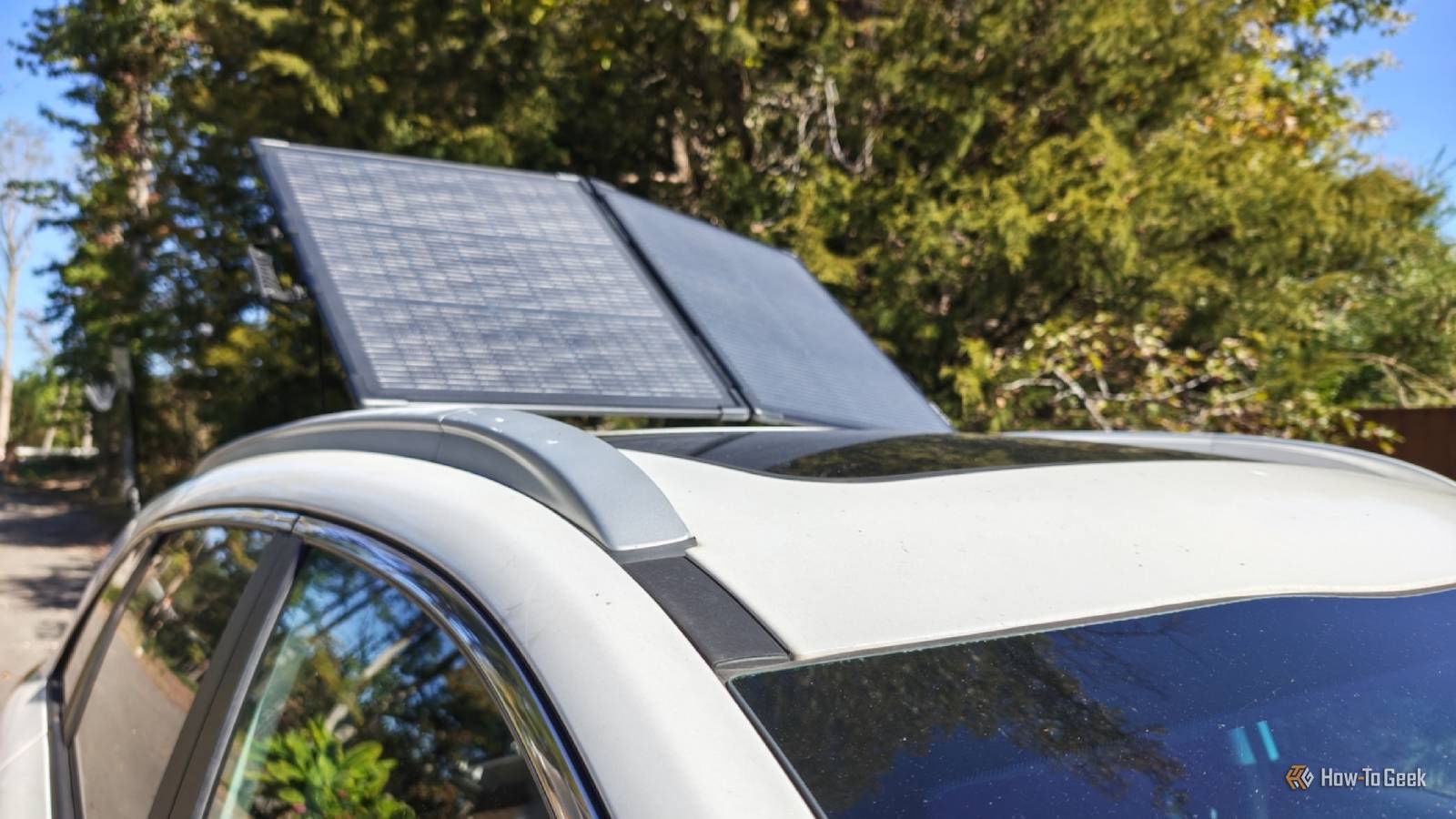
While you can attempt to charge devices directly using solar, due to the intermittent way panels generate power, and their need to bake in direct sun, it’s better for your devices if you charge a battery and let that battery power your hardware.Portable solar panels have gotten absolutely tiny For most trips, these panels are a fallback Close Portable solar panels come in a wide range, from tiny 30W panels able to charge a portable power bank all the way up to 500W panels intended for massive solar generators.For my C300, I pull out a 100W Anker SOLIX PS100 portable solar panel.
Like most 100W portable solar panels, these are lightweight and small enough to easily slide into a trunk, though you may want to put them on top of any luggage you may have with you.A panel this size can easily top up our C300 in a few hours if we’re making an extended stop at a park, lounging by a river, or resting at the beach (I’ve also learned the hard way that this is the fastest solar panel a generator this size can handle).Smaller solar panels come in all kinds of packages.
SHARGE makes a panel intended to roll out and dangle from the back of a backpack, charging up a power bank.Many panels like this transfer power directly via a USB-C connection.I have a solar-powered emergency light This versatile light lives in my glove compartment If you’ve never checked out camping lights, I recommend you give them a look.
You never have to set foot in a tent to find ample uses for such creative portable lighting.I’ve picked up a light now known as the BioLite Solar Flexlight that I keep in my glove compartment at all times.This light has a long tail that can wrap around my wrist or dangle from my neck, keeping my hands free to focus on any kind of emergency situation I may find myself in.
It’s much safer to shine down into my car’s engine than my phone, which I prefer to use without a case and would get absolutely brutalized if I dropped it.There’s also an emergency strobe light feature we could turn on if we found ourselves in a worse situation, stranded at night or off-road.The light makes this list because of the solar panel on the back, which is one of the two options available for charging.
The other is a USB-C port that sends power directly to the built-in internal battery.If you do keep it in the glove compartment as I do, don’t expect it to last as long as it would if you kept it in the house — especially if you live somewhere that gets as hot as it does here in the southern US.Lithium-ion batteries don’t appreciate the brutal temperatures experienced inside a car.
Better to keep the light in your everyday carry instead.With that said, mine is still going strong after being here for a couple of years.Why can’t we buy a solar-powered car? Now that electric cars are commonplace, solar-powered vehicles seem like the next logical leap.
Yet as I’ve learned from embracing rooftop solar, cars require far more power than most of us think.The limited number of panels that could fit on the roof of a car could trickle-charge a vehicle over the course of a week, but it could hardly keep up with the demands of a road trip.That dream remains many years away.
Read More