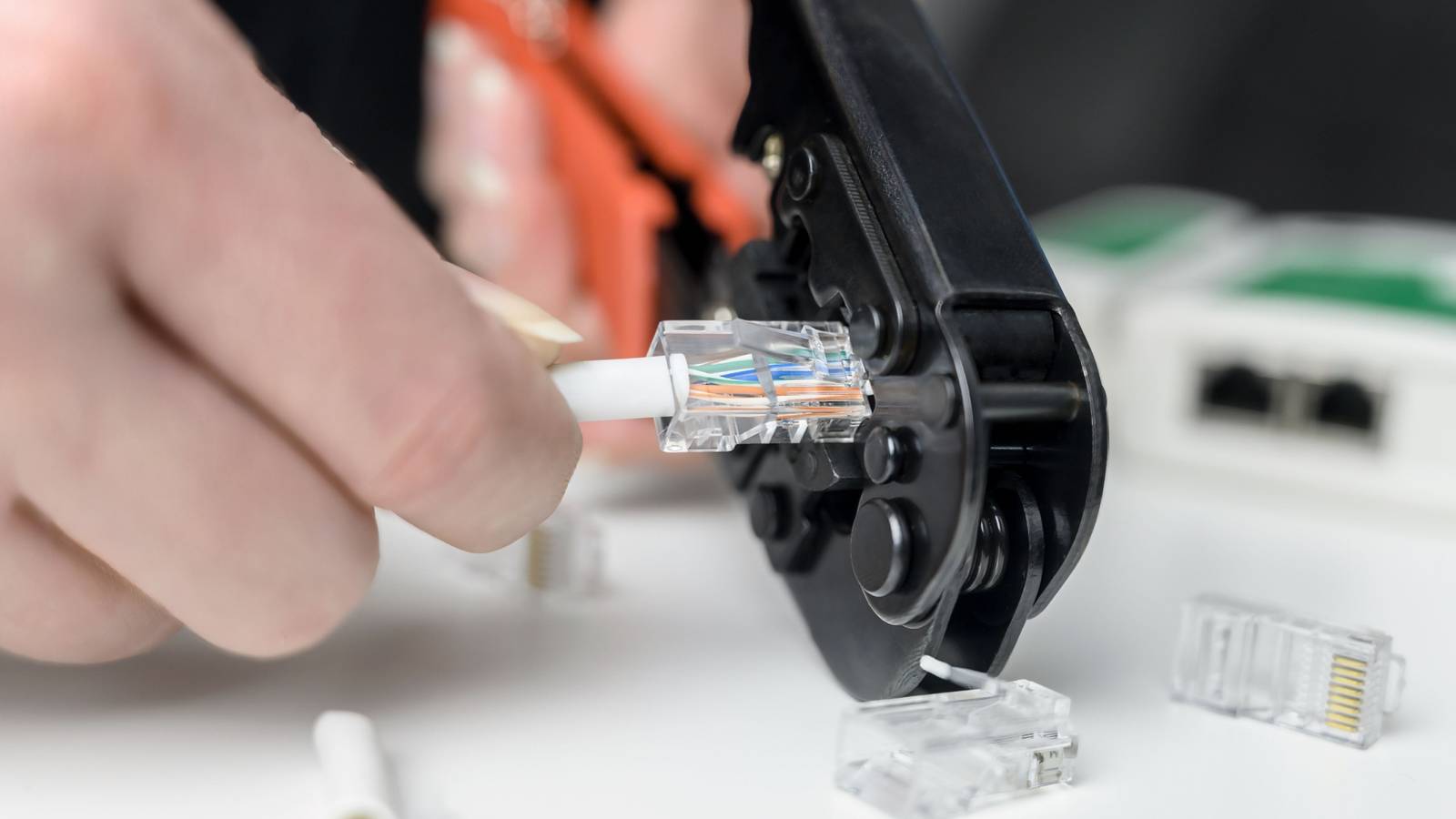
When I was but a wee young computer nerd, there was a mythical master among us who could make "crossover" Ethernet cables.This cable could connect two computers with no switch or router, and was perfect for two-player LAN gaming.With his crimping tool, box of RJ45 plugs, and spool of Ethernet, he could make anything you needed and if you were serious about your networking, you'd invest in these too.
Now that home networking is becoming much more bandwidth intense and Ethernet is more crucial than ever, the question is if you should skip the intermediary and make your own cables instead.The economics of DIY Ethernet cables have changed It's not all about the money though Let's face it—Ethernet cables are cheap these days.Whether you buy a pre-made cable from the shelf, or have your local computer store put one together to your exact specifications, it's so inexpensive that any savings from making your own cables would be negligible.
But that's not the whole story.The tools are cheaper than ever Might as well get one for fun The actual tools you need to make your own Ethernet cables are a lot less expensive now than I remember from all those years ago when LAN parties were still a thing.For well under $50, you can get a toolkit that also includes a cable tester and even comes with a stack of connectors to get you started.
Just add a roll of bulk cable and you're ready to go.So, while you might not actually save any money when doing the cabling for your home by making the cables yourself, it satisfying to learn how to do it, and if you run a homelab or need to make alterations to your wiring from time to time, buying the tools once-off will give you flexibility and save you time.Which I have been told is also money.
Solsop Pass Through RJ45 Crimp Tool Brand Solsop Cable Type CAT5-CAT7 A total solution for cutting, crimping, and stripping Cat5 to CAT7 Ethernet.Included a tester so you can immediately know if you've done the job right.Connector Type RJ11/RJ12/RJ45 $35 at Amazon Expand Collapse Reliability is harder than it looks It's not an exact science The thing is, actually making good quality Ethernet cables isn't as easy as it looks.
Even if you line up the wires right, insert them into the connector and crimp them as instructed, there's still a lot that can go wrong.If the wires aren't perfectly aligned or fully inserted, the contacts may not properly pierce the insulation.If the twists in the cable pairs are undone too far back, the cable may suffer from interference or signal degradation.
Even a slight mistake can cause packet loss or prevent the cable from negotiating higher speeds.This is why you need a cable tester in your tool or close at hand, because it would to only realize you did a cable wrong after already installing it.Factory-made cables avoid most of these issues because they're machine-terminated and tested before packaging.
It's hard to beat a robot when it comes to consistency! To be fair, the Ethernet tools you get these days often have a way for you to see the wires in the connector before you crimp, just to ensure they are aligned correctly, and it's one of those things that you get better at with practice.Just look for passthrough plugs and a passthrough crimping tool.Close Where making your own cables still makes sense A real network nerd likes to crimp in style So, while I don't think there's a straightforward financial incentive to make your own cables these days, there are still good reasons to buy the tools and learn how to do it.
For one thing, if you have the means, you can now modify cables you already own.That save you money because now you don't have to buy new cables.You can repair damaged cables or shorten ones that are too long.
You can also make multiple short cables from one long cable you don't need anymore.If you don't have access to a service where you can get custom-length Ethernet, then this is also your only other option.Subscribe to the newsletter for practical DIY Ethernet tips Joining the newsletter unlocks step-by-step guides, tool checklists, and troubleshooting advice focused on DIY Ethernet and home networking—perfect if you want reliable custom cabling, repairs, and confident installations.
Get Updates By subscribing, you agree to receive newsletter and marketing emails, and accept our Terms of Use and Privacy Policy.You can unsubscribe anytime.The biggest case of "you need to make your own cables" is when you're doing a proper DIY Ethernet cable installation.
Pulling Ethernet wiring with no connectors is far easier, and, of course, you don't need to drill holes the diameter of an RJ45 connector.The money saving here comes from doing the labor yourself, not the material costs.Depending on the size of the job and who you'd have used as your installer, that can be a significant sum.
For most people, it's probably not worth it to make Ethernet cables yourself, but I still think it's a neat skill to have, and if you're getting into DIY home networking to any extent, it's the bare minimum investment you should make.
Read More