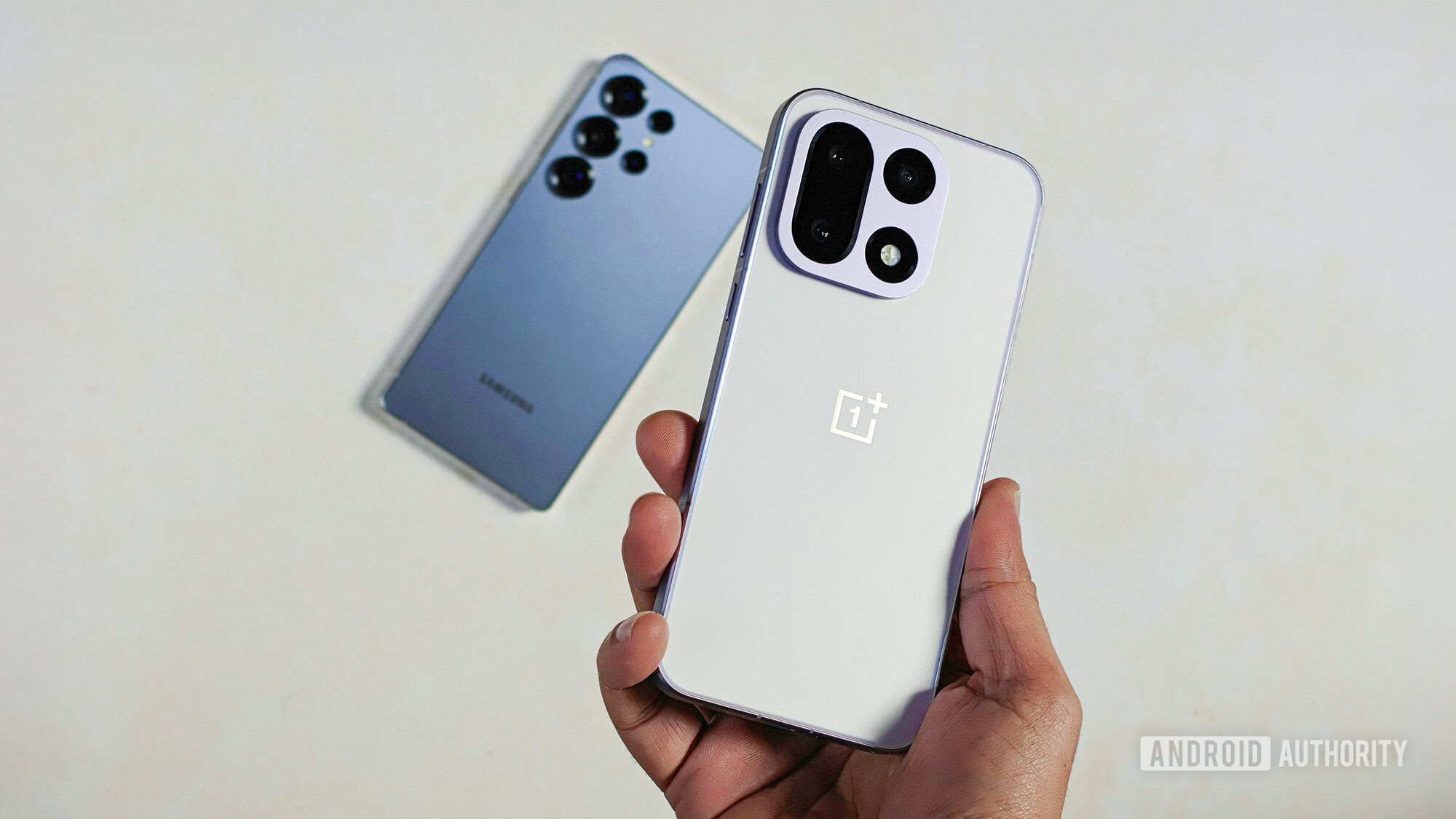
Tushar Mehta / Android AuthorityQualcomm has not one but two top-tier chipsets to pick from for 2026 flagship Android handsets.First, we had the Snapdragon 8 Elite Gen 5, which packs the company’s most powerful CPU, GPU, and AI components into a cutting-edge manufacturing process.It’s the best of the best, but it doesn’t come cheap.If you don’t want to spend a small fortune on your next flagship, Qualcomm has now announced the Snapdragon 8 Gen 5 to tempt you with.
It boasts many of the same features and capabilities, but with a performance point that’s just slightly behind last year’s Elite chip.It’s still fast, just not the very fastest.Would you buy a phone powered by the Snapdragon 8 Gen 5?2135 votesYes.39%Maybe, it depends on benchmarks.29%No, I want Elite performance.21%No, it'll probably still be too expensive.12% The Elite Gen 5 obviously catches my eye as a performance enthusiast, but in the same way I marvel at an NVIDIA RTX 5090, I’m not prepared to remortgage my house to own one.
Yes, yes, I know these next-gen flagships are going to be great for photography, AI, and other bits too, but when it comes to spending my own money or making recommendations to friends and family, even $999 is pushing the limits of most people’s budgets.So instead, I’m much more excited to see what brands can come up with based on the Snapdragon 8 Gen 5.We might be due for some new flagship-killing mid-range models or more aggressively priced “Ultra” models.Top-tier performance without the costRushil Agrawal / Android AuthorityA couple of handsets are already confirmed to be powered by the Snapdragon 8 Gen 5.
The OnePlus 15R is set to arrive before the end of the year.If it’s anything like its rather spiffy predecessor (the OnePlus 13R), we’re hopefully looking at a package with robust battery life, flexible camera, snappy charging, and plenty of performance for somewhere around $599.That seems like it’ll be a great deal.The other potential upside is that the 8 Gen 5 might not be quite as hot and perhaps even more battery-efficient. Based on our testing of the Snapdragon 8 Elite Gen 5, it’s extremely fast, but it can’t sustain its peak capabilities for very long without specialized cooling setups that are unlikely to fit in mainstream handsets.
Our early stress tests of the flagship OnePlus 15 caused it to shut down, but hopefully that won’t be a problem for the 15R and the 8 Gen 5 (though we’ll be sure to test it!).8 Gen 5 prices could span anywhere from $599 to $999.But the Snapdragon 8 Gen 5 doesn’t have to be reserved for mid-range handsets. The even higher-end Motorola Edge 70 Ultra is also rumored to feature the non-Elite chip.
Its predecessor cost around $1,000, which isn’t quite top-tier money, but it’s not far off.Motorola’s last-gen model (released two years ago) sports a Snapdragon 8s Gen 3, so using the silver-medal 8 Gen 5 for the new model is on form.Still, this cost-saving measure will hopefully allow Motorola to include a sharp OLED display, a periscope camera, and a familiar high-end design for less than other Ultra flagships on the market.More than good enough high-end performance, high-end features, and a slightly lower price than its rivals seem like a good compromise.
The age of the affordable powerhouseMotorolaNow, I’m not saying either of these handsets will be the must-buy phone of the next six months, but somewhere between the affordable OnePlus 15T and the almost-top-tier Edge 70 Ultra, there’s probably my ideal device.Top-tier flagships are obviously impressive, but we’ve long passed the point of diminishing returns for performance and price.The handheld form factor can’t fully leverage Qualcomm’s latest Elite silicon without ultra-robust cooling, and outside of high-end emulation, there aren’t many apps that can tap into that peak power anyway.As it turns out, plenty of consumers are happy to bypass the absolutely fastest chip around.Case in point, Google’s Pixel series: they’re beloved for their software and unique features despite benchmarking well behind Qualcomm’s best.
However, the Pixel series is no longer alone in the field of great handsets that don’t top the benchmarks.The broader industry shift to dual-chip strategies has landed plenty of recent other winners.Samsung’s Galaxy S24 FE and Z Flip FE perform perfectly well with “slower” Exynos hardware and are solid all-around buys.Apple has spent years differentiating its iPhone and iPhone Plus models from its Pros with slightly cut-down processors to keep prices in check.
Performance still matters, but it is increasingly not the top priority for most buyers.Importantly, the 8 Gen 5 doesn't scrimp on Elite-tier features.Qualcomm has supported this middle space before with its 600- and 700-series chips and, more recently, the 8s line.
But the Snapdragon 8 Gen 5 feels different.For the first time, the non-Elite option includes Qualcomm’s custom Oryon CPU, a trimmed-down version of its flagship sliced-GPU architecture, top-tier image processing, last year’s high-end AI engine, and all the networking extras you’d expect, from Wi-Fi 7 to Satellite NTN.On paper, that’s a top-tier setup that seems as good as — if not better than — the cut-down flagship chipsets we’ve seen in this price segment until now.The Snapdragon 8 Gen 5 isn’t exciting because it nips at the heels of the Elite — it’s exciting because it shows where the real battle for 2026 smartphones will be fought.If it can run cooler, draw less power, and help push the price of genuinely great phones lower, that’s a far more meaningful upgrade than paying sky-high prices just to sit atop benchmark charts.
Don’t want to miss the best from Android Authority? Set us as a favorite source in Google Discover to never miss our latest exclusive reports, expert analysis, and much more.You can also set us as a preferred source in Google Search by clicking the button below.FeaturesQualcommQualcomm SnapdragonFollowThank you for being part of our community.
Read our Comment Policy before posting.