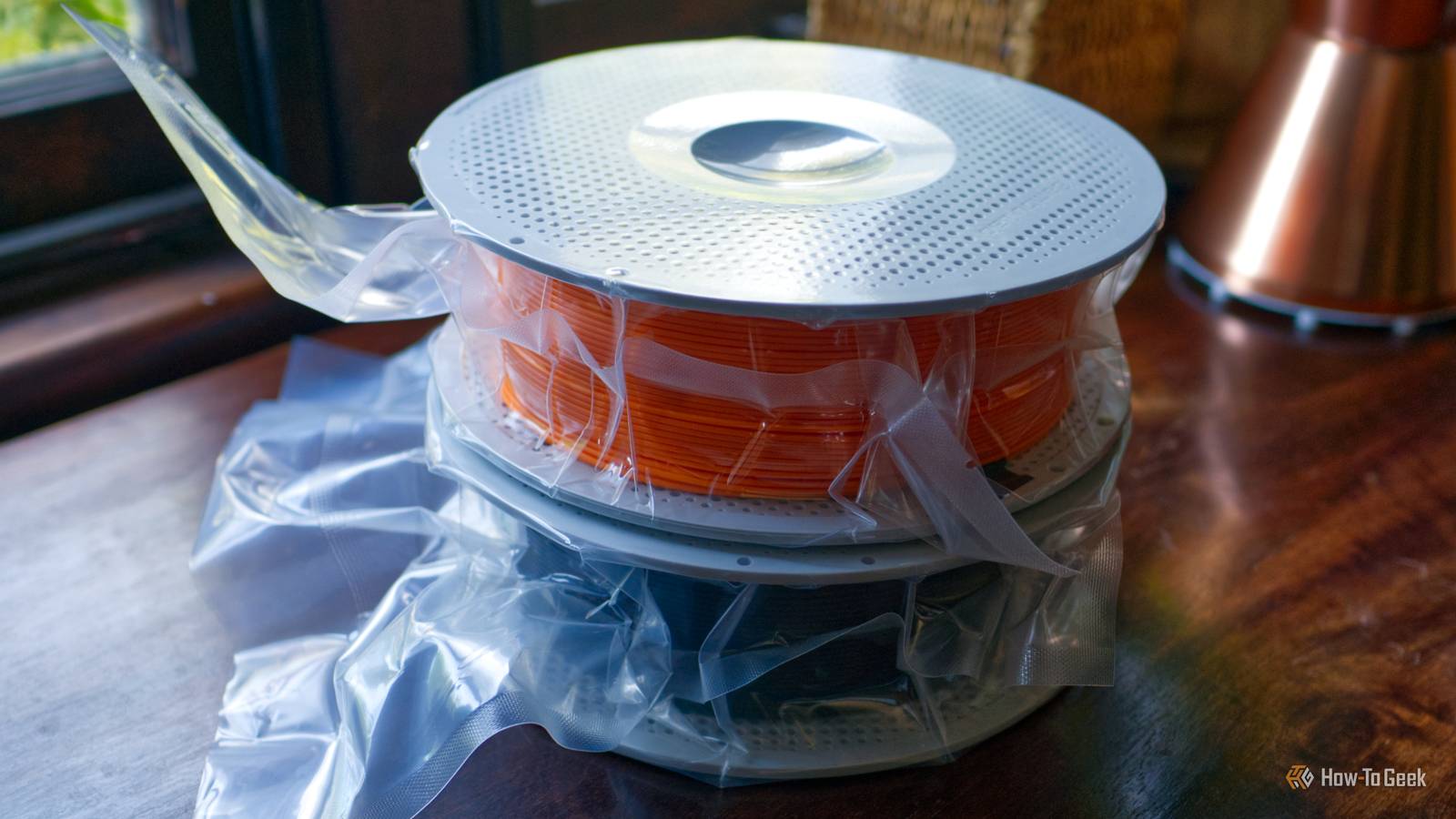
Filament is a consumable your printer uses to make things, but even when you've used up all the filament in a spool, you still have a bunch of stuff left over.Don't throw it away! You can turn almost everything that comes with your filament spool, including the spool itself, into something useful.Your empty spool can become a surprisingly good parts organizer It's like a merry-go-round for bric-a-brac Close As you probably know, most filament spools have little holes around the outside perimeter where you can secure the end of the filament if you remove it from your printer before it's all used up.
Well, some very smart creators looked at the spools we're getting with every filament purchase and realized that these supposedly disposable objects can actually be the backbone of a useful storage system.3D printing isn't the most wasteful manufacturing process in the world, but if you often print, the amount of things you throw away can add up quickly.Now, it turns out all those empty spools and spool boxes are worth more if you keep them, and that very same 3D printer eating up the filament can be part of recycling what used to be nothing more than packaging.
The Filament Spool Drawer by forgeofskill is one of the best examples I've seen so far.Designed to fit most 1Kg spools, you can print a few of these bins and then secure them using bolts to your spools.Each drawer swings outwards and has space for things like screws, nozzles, small electronic sensors, or whatever else you have lying around.
You can label the drawers if you like, and even use embossing or engraving to integrate the label into the bin itself.The spools are obviously stackable, and if you put together a tall vertical spool holder, you can have a great parts organizer.Even cardboard spool cores can become storage containers Double the eco-friendliness If you were already a responsible, eco-friendly maker, then your spools are cardboard instead of plastic.
You can absolutely still use those spool drawers with a cardboard spool, but you also get an additional option.You can easily remove the outside parts of the spool, leaving only the spool core.Then you can use something like TheMakerSphere's Bambu Cardboard Spool Core Container to turn that core into a container.
The simplest version just involved printing two caps that are pushed onto the core.However, you can use adhesive to make the bottom permanently secure, and there's also a design that uses magnets, but that obviously costs a bit of cash unless you already happen to have some lying around.The filament box is already a perfectly sized workshop storage bin It's also an excellent cat toy Filament usually comes in a cardboard box with a lid.
You can just use this box as-is for storage.They're generally uniform, regardless of brand.You can stick labels anywhere, or just write on them with a Sharpie.
Stack them vertically, or horizontally.There are 3D-printable solutions to make these boxes even more useful.3DPrints4me's Empty Filament Box Storage is a set of dividers that can create nine smaller sections inside your filament boxes, letting you store small items like screws, magnets, or nuts by size or type.
That silica packet is the easiest filament-storage upgrade of all Literally squeezing more juice from your investment This is one you probably completely overlooked, especially since the little silica packets that are vacuum-sealed in with your filament literally say "throw away" on them.But just because it says you should throw it away doesn't mean you have to.In fairness, it also says "do not eat" on these packets, but in that case I'd actually heed the warning.
In case you didn't know, the purpose of the silica gel packs is to act as a desiccant.The crystals inside absorb moisture from the air and prevent it from being absorbed by the filament.When filament becomes "wet", it causes all sorts of issues, such as stringing, sizzling and popping in the hot-end, and generally poor-quality prints.
From the moment you crack the seal on your filament, it starts absorbing moisture, and if left unused for too long, you're going to have to dry it out using a filament dryer or some DIY equivalent of one.This is one of the key challenges of storing filament.So, when you open a new box, immediately take the silica gel pack and put it with its friends in a small sealed container.
Then, to store open filament long-term, put it in a big Ziploc bag with a few of your saved gel packs.This should slow down or even prevent the filament from getting wet.Waste not, want not The spirit of the 3D-printing community is one of seeing things from a different angle, and using a little 3D-printer magic to transform it into something else.
The good news is that many creative makers have started at home, helping make 3D printing greener right out of the gate.
Read More