Linux is an operating system that encourages you to explore and tinker.You can go from zero to power user quickly, but what makes it great for power users often puts off newbies.Different desktops are available Which one is right for you? Close Personal computers with desktop environments have been around for over 40 years, so most people are familiar with either Windows or macOS.
People who try a Unix-like system for the first time might use whatever desktop their first distro uses, but installing a program built with a different toolkit than their main desktop uses can be a shock.Windows and macOS try to make programs have a consistent look and feel.A lot of this goes back to the way the original Unix was designed.
Graphical desktops didn't exist outside of research machines like the Xerox Alto.On Unix, it was already possible to switch out programs like the shell or editor.The X11 and later Wayland systems inherited this tradition, setting "mechanism, not policy." I think it's fascinating the way Linux and Unix-like systems decouple the user interface from the underlying system in contrast to the way they're integrated into Windows and macOS.
A decision like that is one reason that Linux appeals to so many technically-minded people, but I wonder if this has hampered its adoption in the marketplace.Anyone who cares about what operating system they run is probably in another league from most computer users.The Chromebook, based on Linux, has been successful because it has its own consistent user interface (even though it's possible to run regular Linux apps on certain models), though it's popular in primary and secondary education rather than among regular users.
Fragmentation Different versions working against each other As long as Unix-like systems have existed, there have been different factions.The biggest historically was between the AT&T camp and the BSD, or Berkeley Software Distribution camp.The rivalry was a lot like the Microsoft-Linux fight in the '90s and '00s.
Eric Raymond characterized it as a battle between "shorthairs" and "longhairs" in his book, .AT&T's System V was popular with business-minded administrators on large multiuser systems used by banks and other enterprise companies, while BSD implemented features like the then-new TCP/IP and graphics on workstations such as those from Sun Microsystems, co-founded by original BSD programmer Bill Joy.The rivalry culminated in the "Unix Wars" of the late 1980s and early 1990s, which was only partially assuaged by the rise of the free BSD variants and Linux distros.
While Linux distros have largely subsumed proprietary Unix in the enterprise, there's still a question of different distros, which leads to ...Different distros There's no one distro for newbies If someone expresses interest in trying Linux, the first question is "which one?" There are so many different distributions of Linux to choose from.This can be daunting for someone who might not know that much about software, computers, or operating systems in general.
Most homeowners would rather focus on living in their homes; having to care about the plumbing or HVAC system means that something has likely gone wrong.To its credit, the community has realized that the proliferation of different distros is a barrier to entry to the Linux world.They've created things like the Linux Distro Chooser.
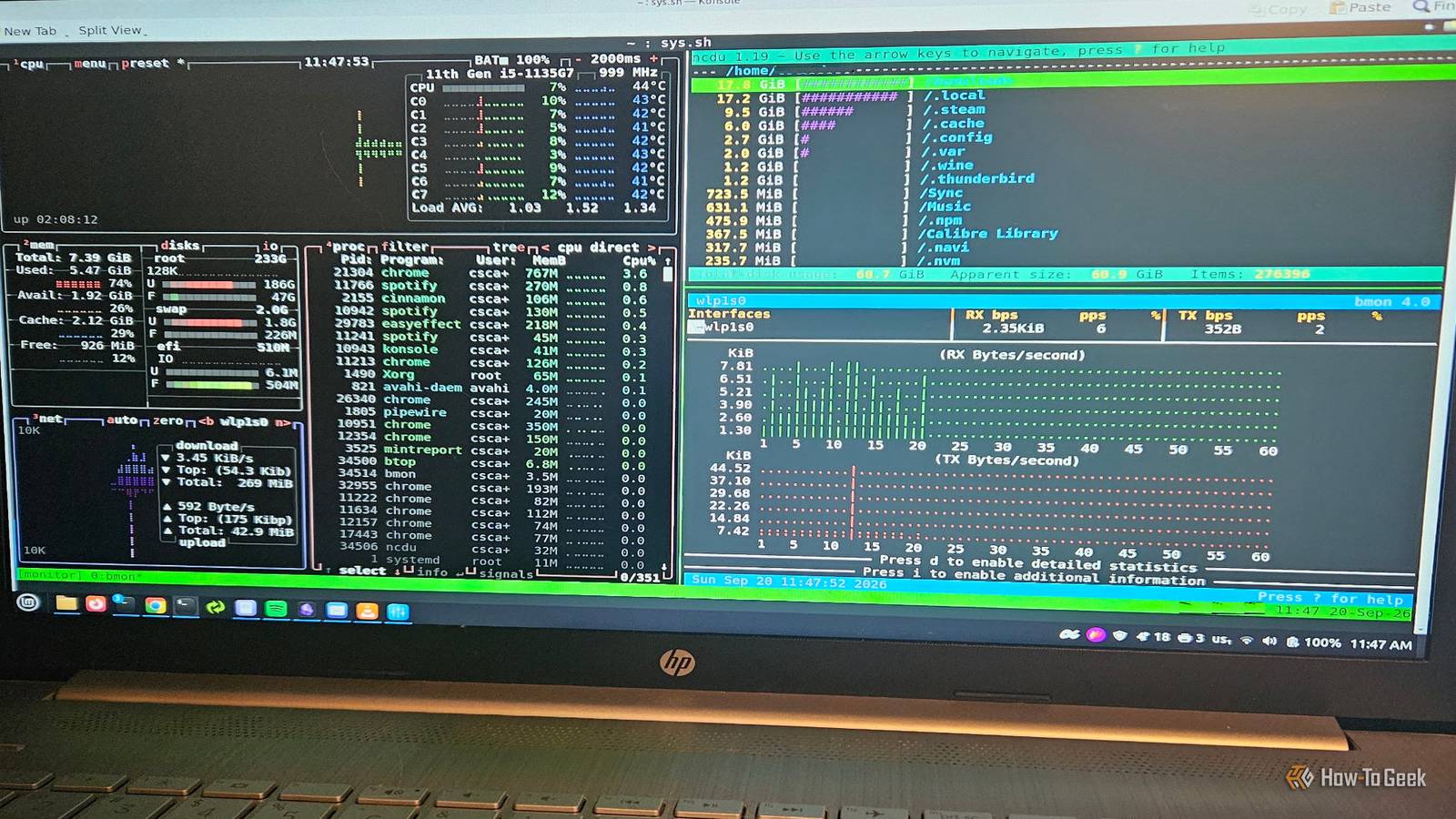
For brand-new users, a narrow range of popular distros like Ubuntu or Linux Mint still represents relatively "safe" choices.Reliance on the command-line interface An afterthought on Windows, but essential to Linux Given the way Linux has fragmented its user interface design, at least when it comes to graphical interfaces, as well as a user base that includes hobbyists, programmers, and system administrators, it's not surprising that the command-line interface still dominates Linux.I can appreciate that it's still a vital part of the system with new programs still being actively developed, while the command line on Windows is still mostly used for troubleshooting.
Maybe with more people texting on their phones and the popularity of AI chatbots, using the written word to interact with a computer could come back into vogue.Thomas Scoville even posited that the Unix command line was a kind of literature.I certainly can see the analogy as someone who majored in communication in college instead of computer science, or a "liberal-arts type" as Scoville put it.
As necessary as the command line still is, it probably puts off a lot of nontechnical users.The Unix Philosophy Pipelines on the command line One of Unix's most valuable contributions is less technical than cultural: the "Unix Philosophy" of building small programs connected by pipelines.It was refreshing in an era of baroque programming interfaces on mainframes and minicomputers in the 1970s.
It's a great way to learn how to design simple programs, but some of the assumptions break down under modern needs.The transition from the older init system inherited from Unix System V to systemd raged in the Unix community because it seemed like a violation of the Unix Philosophy, but it's not a law, and managing processes is different from building programs on the command line.Linux may not be the user-friendliest OS, but its users are friends for life What makes Linux great for power users may alienate people with less computer knowledge.
That's the reality of Linux today, but if you want to get the most out of computers, there's a Linux system for you.
Read More