Most teachers have had the experience of catching a student submitting AI-generated work that looked completely polished and was completely wrong.Tara Altherr, a high school chemistry teacher from Arizona, opens this session with exactly that scenario: she asked an AI a question any first-semester chemistry student could answer, got a detailed, well-formatted, confident response, and the response was wrong.That’s the problem she’s designed her classroom around solving.
In this session, Tara walks through how generative AI actually works, why hallucinations happen and why they’re so hard to spot, and how to design assignments where students have no choice but to do the thinking themselves.She calls it human override, and she shows what it looks like in two real classroom activities, one built around chemistry detectives solving physical versus chemical change scenarios, and one where students are elite chemists responding to a fictional toxic train derailment in their own backyard.If you’ve been wondering how to use AI in your classroom without handing students a very confident shortcut to not thinking, this session is worth your time.
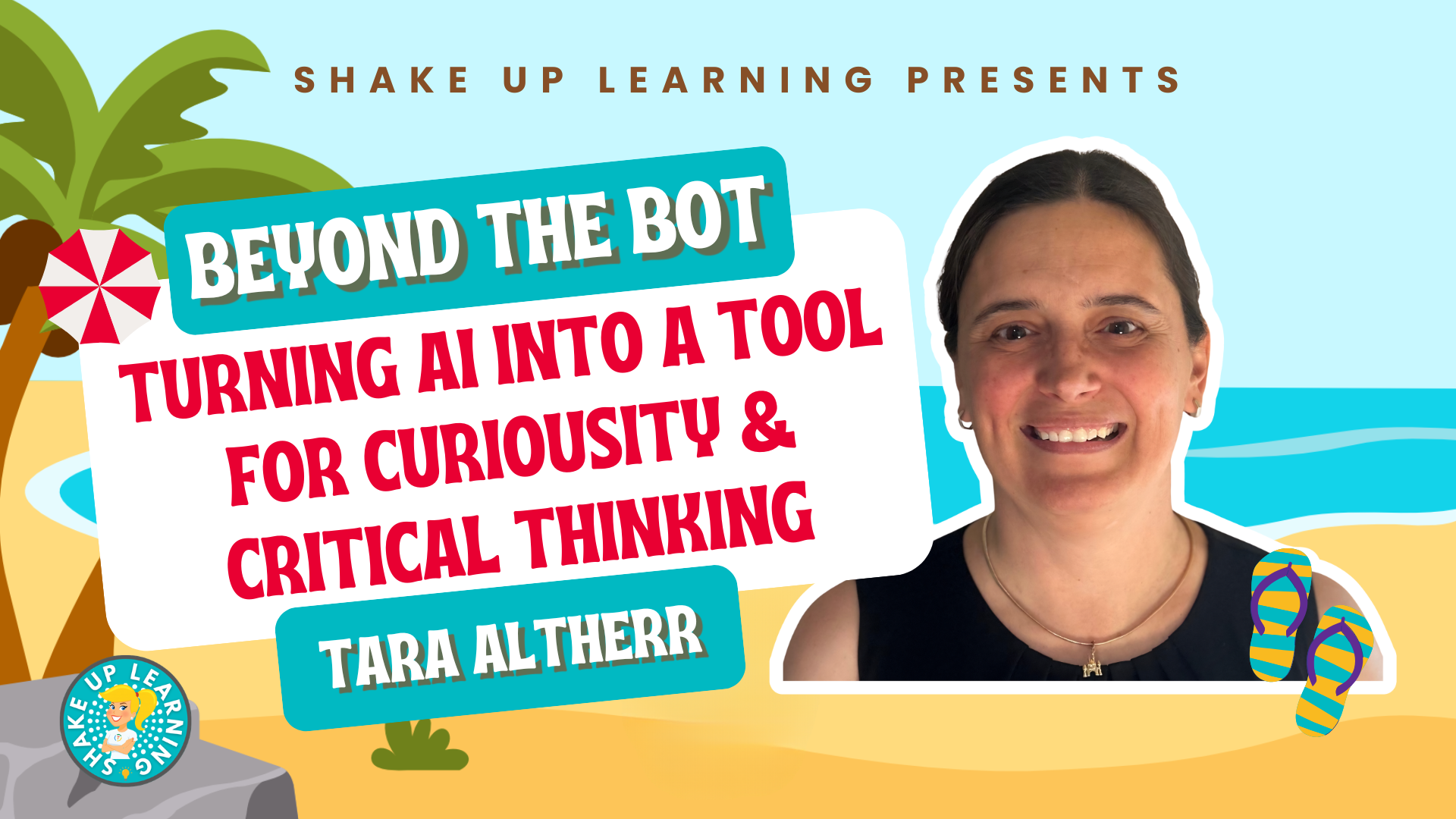
Beyond the Bot: Turning AI into a Tool for Curiosity and Critical Thinking Description: AI can give your students a confident, well-formatted, completely wrong answer, and they’ll never know the difference.That’s where Tara Altherr, an 18-year classroom veteran and high school chemistry teacher from Arizona, starts this session.Her approach is built around one idea: AI won’t replace student thinking, but only if you intentionally design against it.
Tara walks through how generative AI actually works (tokens, context windows, temperature, hallucination) so teachers understand why human override isn’t optional, and then shows exactly what that looks like in a real chemistry classroom.Her AI Chemistry Detectives activity and Operation Fall Out assignment give students structured, high-stakes scenarios where the AI is the intern and the student is always the lead.In this session, you’ll learn: Why AI hallucinations are dangerous in the classroom and how to help students recognize them The “economy of thinking” framework: computational tokens vs.
thinking tokens, and how to protect the expensive ones Her district’s CARE framework (Clarity, Accuracy, Relevance, Ethics) for evaluating AI output How to design active prompts that force student thinking instead of passive prompts that let AI do the work Two full classroom activity examples you can adapt for your own content area Register for the FREE Summer Learning Series Join us for the entire series–all summer long! The Summer Learning Series is a free, asynchronous online learning event designed specifically for K-12 teachers, instructional coaches, and education leaders.Think of this as a slow-burn mini-conference with new presentations dropped every week all summer long! This series consists of expert-led presentations designed to equip K-12 teachers with a treasure trove of practical ideas, innovative teaching tools, and actionable lesson plans.️ REGISTER HERE and check out the full schedule! Get Credit for this Session with ALL ACCESS Each Summer Learning Series session is available as a full online course inside the ALL ACCESS Membership.
Members can watch ad-free, access bonus resources, and earn a certificate of completion for every session.It’s flexible, self-paced PD—on your terms! Join ALL ACCESS and start earning credit today! About Tara Altherr LinkedIn Instagram Tara L Altherr is a high school chemistry teacher and PLC leader in Arizona.She specializes in practical, classroom-ready AI strategies that support critical thinking and student engagement and has presented on AI integration at ISTE and AzTEA.
Shake Up Learning 2025.Unauthorized use and/or duplication of this material without express and written permission from this blog’s author and/or owner is strictly prohibited.Excerpts and links may be used, provided that full and clear credit is given to Kasey Bell and Shake Up Learning with appropriate and specific direction to the original content on ShakeUpLearning.com.
See: Copyright Policy.
Read More