The automotive world is filled with incredible success stories.Ford gave us the Model T, Mustang, and F-150.The Chevrolet Suburban is the longest-running nameplate in automotive history, and the Corvette is the longest-running sports car nameplate.
And from Europe came the Volkswagen Beetle, Porsche 911, and Mercedes-Benz S-Class.Yet, for all of these success stories, there are far more failures.The Ford Pinto, Pontiac Aztek, Tucker 48, and Cadillac Cimarron, to name just a few.
In some ways, the failures are even more well-known than the successes, and their stories are just as fascinating.Here are five classic cars that were doomed to fail from the start.We picked these five because each one has a unique reason for its failure.
Some of them sold well enough and even lasted for a few years on the market, but their makers (and maybe even the general public) had much higher expectations for them.Simply put, these vehicles had high hopes initially that never materialized in the long run.5 Ford Edsel Model Years: 1958–1960 The Edsel wasn’t just a new car; this was a whole new division.
Edsel was to join the Ford, Mercury, Lincoln, and Continental brands, but it didn’t work out that way.The Ford Edsel lineup was manufactured from 1958 until 1960.Those dates are important because the timing was part of the problem.
As the Edsel was introduced, America began to gravitate more towards smaller, more efficient cars.Timing wasn’t the only issue.Buyers didn’t know what to make of the Edsel.
It was supposed to slot between Ford and Mercury, but the pricing overlapped.Was the Edsel more or less premium? Buyers didn’t know.Not only did the pricing overlap, but so did most of the features and technology.
There wasn’t much to make the Edsel stand out.On top of that, the Edsel was saddled with (no pun intended) that horse collar grille that is polarizing even to this day.The result was Ford selling just 116,000 Edsels during the three years they were in production, less than one-third of the expected volume.
Related 750-HP Porsche for 70% off? The rise of used EV supercar bargains For enthusiasts who care about the numbers, the math is simple.Posts By Joe Kucinski 4 Porsche 928 Model Years: 1978–1995 Produced from 1978 to 1995, the Porsche 928 has by far the longest production run of any vehicle on our list.It was even featured in a major motion picture, the 1983 film , whichmade Porsche’s 1970s slogan “There is no substitute” an unforgettable part of Porsche's history.
Yet the 928 is still considered a failure as it never quite lived up to expectations.The main “problem” with the 928 is that it isn’t a 911.It is as simple as that, really.
The 928 is a fine car, but Porsche enthusiasts are so consumed by the 911 that any other model, no matter how good, is almost always seen as a second-class citizen.The 928 was NOT designed to replace the 911.Ernst Furmann was CEO of Porsche when the 928 was developed.
He believed that due to EPA regulations, the 911 may eventually need to be phased out.He thought that if that happened, the 928 could fill the void.But he was not actively looking to replace the 911.
Instead, the 928 was developed to compete with other luxury GT cars of the day, such as the Mercedes-Benz SL.When Peter Shultz took over as CEO in 1981, he saw the 928 as a top-end product above the 911, and he continued to invest in both the 928 and 911 product lines.The 928 had a good run, but the 911 is Porsche's core identity.
The 928 never sold in big numbers, and it didn’t share any components with other models.In 1995, Porsche was facing financial struggles, and in order to keep the company afloat, the 928 had to be cut.3 DeLorean DMC-12 Model Years: 1981–1983 The DeLorean DMC-12 was produced from 1981 to 1983.
During that time, roughly 9,000 DMC-12 vehicles were produced.If it weren’t for the smash hit , the DeLorean may have faded into history with the likes of the Pontiac Sunbird and Dodge Mirada.Of course, the real DMC-12 couldn’t travel through time.
If it could, it may have traveled back in time to prevent ex-General Motors executive John Z.DeLorean from ever founding the DeLorean Motor Company in the first place.The design of the DMC-12 was handled by the legendary Giorgetto Giugiaro himself.
The same man who designed the original VW Golf, BMW M1, Lotus Esprit, Fiat Panda, and many others (but it was DeLorean who insisted on the gullwing doors).There is no question that the car had a unique look, although the Renault-sourced 2.8-liter V6 produced an underwhelming 130 horsepower.However, it was not the engine that doomed the car.
The U.S.recession in the early 1980s meant people were not buying expensive new cars.The DMC-12 was supposed to retail for $12,000.
The ‘12’ in DMC-12 referred to the original target price, which was roughly $43,000 in 2026 dollars.However, in 1981, when the car hit the market, the price was $25,000, which is nearly $90,000 today.By 1983, the starting price had swelled to $34,000, or roughly $111,000 in 2026 dollars.
For comparison, a new 1984 Corvette had an MSRP of just under $22,000 or roughly $69,000 today.Inventory began to back up, the financial situation worsened, and in 1982, the company filed for bankruptcy.Then things got even worse.
DeLorean was arrested for allegedly attempting to smuggle millions of dollars’ worth of cocaine into the U.S., eventually facing a slew of charges, ranging from fraud, racketeering, and wire fraud.Using an entrapment defense, DeLorean was found not guilty of all charges, but his company was in ruins and never recovered.The DMC-12 is an icon today because of its role in one of the most successful film franchises in history, but the car itself was a failure.
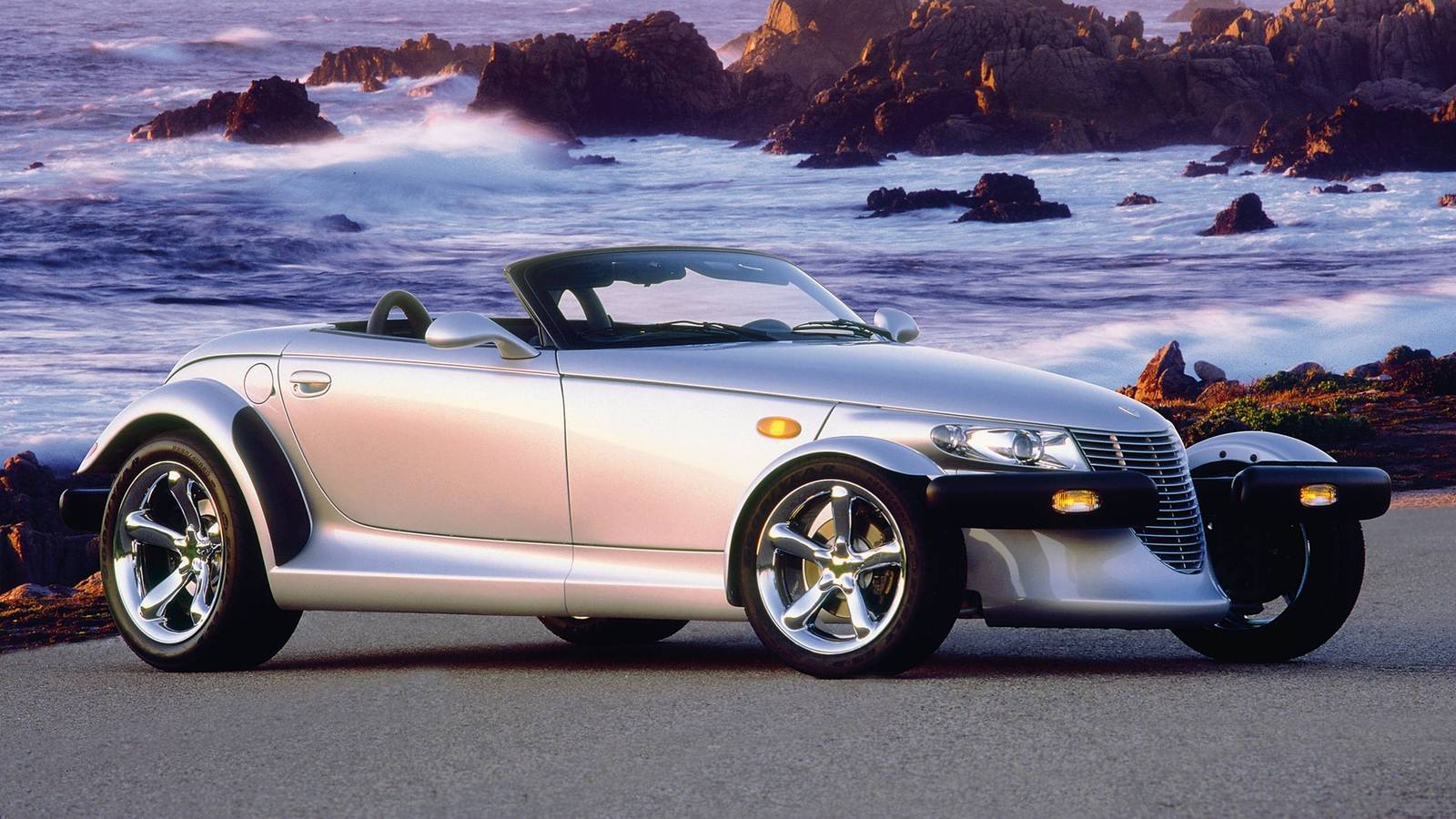
Related Six seats, seven eyeballs, zero regrets: A love letter to the Fiat Multipla Carnival funhouse on wheels a masterpiece of automotive design.Posts 1 By Carl Anthony 2 Plymouth Prowler Model Years: 1997, 1999–2002 The Plymouth Prowler burst onto the scene for the 1997 model year.There was no 1998 model; then it was sold in 1999 and 2000.
Plymouth folded in 2001, and the Prowler was sold under the Chrysler name until 2002.The Prowler had a lot going for it.It looked like a full-on hot rod.
It had the style of something that you would expect to see ripping around Southern California in the 1950s.It is a car that, by the looks of it, would surely have a throbbing V8 engine under the hood.And that is the problem.
The Plymouth Prowler doesn’t have a throbbing V8 engine under the hood.It has the same 3.5-liter V6 as the Dodge Intrepid.The engine made just 214 horsepower (later upgraded to 253) and was connected to a four-speed automatic transmission.
Yuck.That is a combination no self-respecting hot rodder would be happy with.If they had done a manual transmission and a V8 engine making 300+ horsepower, the story of the Prowler may have been very different today.
It’s a real shame because this was one car with a lot of promise.1 Lincoln Blackwood Model Years: 2002 The Lincoln Blackwood was available in 2002, with roughly 3,000 examples sold during its one year of existence.Subscribe to the newsletter for deeper classic-car lore Discover why subscribing to our newsletter makes sense: expert-led coverage of automotive missteps, design choices, market context, and restoration-interest stories that turn failed classics into lasting lessons and must-know histories.
Get Updates By subscribing, you agree to receive newsletter and marketing emails, and accept our Terms of Use and Privacy Policy.You can unsubscribe anytime.In many ways, it failed because it was simply ahead of its time; the idea of a "luxury truck" seemed a bit preposterous to buyers in the early 2000s.
However, today, with trucks like the six-figure Ford F-350 Platinum Plus with Smoked Truffle leather interior, French stitching, and wood trim, a luxury truck has much more mainstream appeal.The Blackwood certainly had some curious features.For example, the truck bed was fully carpeted, and the sides of the bed were finished in polished aluminum and black African woodgrain laminate.
It was a little too nice to be throwing bags of mulch into, but it did make the Blackwood stand out.The truck's cabin was lifted directly from the upscale Lincoln Navigator SUV.Buyers didn’t really know what to make of the Blackwood.
It wasn’t quite a luxury sedan or SUV, but it wasn’t a utilitarian truck either.After just one year, Ford pulled the plug, and the Blackwood was consigned to the pages of history.Failed but not forgotten History shows that even the most promising vehicles can fail if a few key pieces fall out of place.
The Prowler may have thrived with a better powertrain.The 928 and the DMC-12 were swept up in larger financial and corporate turmoil beyond the cars themselves.The world wasn't quite ready for a luxury truck like the Blackwood and a more sensible bed may have changed its fate.
If Ford had done more market research before launching the Edsel line, it may have prevented one of the worst automotive misfires in history.However, despite all of this, each of these vehicles has a dedicated following of enthusiasts today.Sometimes the cars that missed their mark in their own era end up being the most interesting classics of all.
Read More