To mark the 20th anniversary of the first film in DreamWorks Animation’s storied franchise, the writers / directors revisit the film’s long development journey, discussing its core comedic premise, evolving themes, improvisational performances, and collaborative storytelling that turned a fish-out-of-water comedy into something truly memorable.To mark the 20th anniversary of DreamWorks Animation’s 2005 hit animated comedy, (2005), Universal is re-releasing the film in theaters starting this Friday, January 16.Originally released on May 27, 2005, enjoyed massive success with family audiences, becoming the year’s sixth highest-grossing feature with a $193.6 million North American haul.
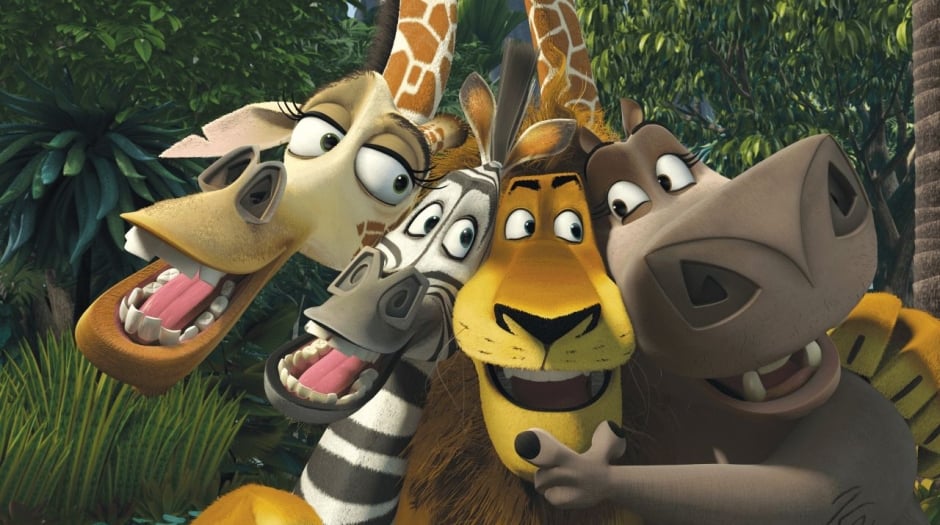
It centers on Alex the lion (Ben Stiller), the “King of New York,” who lives at the Central Park Zoo alongside the zebra Marty (Chris Rock), sassy hippo Gloria (Jada Pinkett-Smith), and hypochondriac giraffe Melman (David Schwimmer).During an attempt to head back to the wild, a series of mishaps lands the quartet half a world away from the comfortable confines of the zoo.The hit film spawned two sequels that further explored the adventures of Alex, Marty, and the gang: 2008’s and 2012’s .
AWN publisher and editor-in-chief Dan Sarto sat down with the film’s writers / directors, Tom McGrath and Eric Darnell, to discuss the movie’s long development timeframe, story evolution, casting and use of improvisation, and why the franchise continues to resonate two decades later.Dan Sarto: .Tom McGrath: Something like that, Dan.
Eric Darnell: I was going to make a bad joke.Please, Tom, continue.TM: I was just saying it was 20 years since the film came out, but it’s been… Eric and I are celebrating our 25th anniversary of actually starting the film and working on it.
It was a long run.Through all the films, it was like 15 years of working together, which was great, because it started here with .DS: TM: I went to see a high school version of it.
It was a musical, and it was really good.Scott Baio’s daughter played Marty the Zebra, and she was really great.What was cool is that they had things in the musical that Eric and I had cut out of the film, and no one knew.
There was this whole musical number - like a Busby Berkeley bit - with living steaks, and buckets.We boarded it, it was in the movie, and then we cut it.But we didn’t tell anybody.
It was never on a DVD extra or anything.But the high school musical had a version of that, so I don’t know - maybe it was just in the zeitgeist.Someone was in the know.
DS: ED: I think part of it came from the relationship Jeffrey Katzenberg had with Jerry Seinfeld and this idea of doing something that would involve Manhattan and New York City.Jerry began developing the idea, and then he went on to work on what became .But we really fell in love with the big idea: what if you take four New Yorkers, born and bred, rip them out of their New York home, where they’ve been their entire lives, and drop them into a savage jungle? How would they survive? And what if these New Yorkers were not people, but zoo animals? It’s such a great, clear comedic premise.
From there, it was easy to keep moving.We found an amazing cast of characters to play these parts, who brought so much life, comedy, and quality of character to the project.It just kind of took off.
TM: It’s a classic fish-out-of-water story.New Yorkers go camping.And New Yorkers going camping already feels funny.
Originally, the story was about civility versus savagery, which is still a component of it, but it could be a very dark, unrelatable theme.We eventually found a theme that was more like, “Don’t eat your best friend.” Then, as we developed the movie, it became more about not letting the location define who you are.Home is where the heart is.
It turned into a friendship story: as long as they were together, it didn’t matter where in the world they were.That’s why all the movies became kind of a travelogue built around that lesson.DS: ED: It didn’t seem that difficult.
Everybody we spoke with really got the concept clearly and saw the promise of it.They invested themselves in the project and the characters.We had a great casting agent, Leslie Feldman, who helped us find the chemistry - which was crucial - how the characters and actors could really play off each other.
TM: We knew it was going to be a broad comedy, so we went for the funniest actors at the time: Ben Stiller, Chris Rock, and David Schwimmer.Then Leslie brought Sacha Baron Cohen to us.No one had really heard of him here.
He’d done in the UK, but not in America.No one knew him, but we were told he was really funny.Eric and I went to record him, and he had two lines of dialogue where he just asked a couple of questions - he was like Lemur Number Three or whatever - and he was so funny.
He would riff and create these five-minute monologues, and Eric, our producer, and I were just looking at each other thinking, this guy has to be the king of the island, because he’s hilarious.Then you bring in the “Move It, Move It” song, which he wanted to sing, and that became iconic to the movie as well.It was a great opportunity to find people like Cedric the Entertainer.
A lot of people just wanted to have fun and flex their comedic muscles on this movie.An embarrassment of riches, as you say.ED: Tom’s right.
Sacha would just go on.It was all physical comedy.He’s the lemur king trying to pick up the lemur girls in the crowd.
He would just go on forever.A lot of it was so blue that we couldn’t use it in the movie.He’d say, “I just couldn’t stop.” TM: We worked a lot with improv.
We did a lot of writing, but it was very open book.It was also great having Chris Rock play off Ben Stiller.Sometimes we’d record Ben and either improv with him or have a reader improv.
A month later we’d record Chris, and he’d improvise something.Then three months later we’d get Ben again and he’d throw something back.Over the course of eight months, you’d get a scene that feels spontaneous.
That’s the magic trick of animation - making it feel like they’re really playing off each other.There were a couple of occasions when we got Ben and Chris together for a few sessions, and the energy, pauses, and comedic timing were incredibly valuable.DS: ED: That was Clare [Knight], our editor.
We had the lemurs a little more cool, kind of loungy, almost like jazzy lounge lizards.TM: Kind of.ED: Yeah, a little.
Clare brought in this really fun dance number, and at first your instinct was, “No, that’s not who the lemurs are.” But as we listened to the song and brought it to Sacha, he totally embraced it and wanted to sing it.It completely redefined the character for the better.It’s interesting how that kind of thing happens all the time.
There are so many talented people working on these projects, and as long as the door is open for them to bring ideas in, sometimes it can be exactly what the film needs to take it to the next level or open up a whole new direction you hadn’t thought of before.That happens with editorial, music selections, and across departments.So much of what you see on screen came from storyboard artists: little pencil drawings of ideas.
You give them the script and a little room to move, and they come up with all these amazing ideas.A lot of the wonderful visual gags, honestly, came from Tom, too.He kept showing up with little pencil drawings he’d done the night before.
He’d say, “I had an idea last night,” and he’d scribble these things out.So much of the penguin stuff was completely invented from his magical brain.I think that inspired the other story artists to kick up their game—because even the directors were doing this kind of work.
We were all jumping in and doing what we could to really plus everything at every step.He was a great influence.TM: It was a great partnership.
It was done at PDI.Eric and I did our fair share of traveling; Eric came down and lived in a crappy apartment, and I’d fly up and stay at Eric’s house.We’d sit on his back porch and brainstorm the movie, coming up with crazier ideas after hours that we could put into the film.
But as Eric said, great ideas came from everywhere.Bob Saget was consulting with the studio at the time, and as he was leaving he said he loved the penguins.He said, “At the end of the movie, they should get to Antarctica, look at the landscape, and just go, ‘This sucks.’” We thought, great, we have to do that.
So, we put it at the end, then realized maybe the penguins could come back.We moved it to the middle of the movie: they get to Antarctica, realize it sucks, then bring the boat back to Madagascar and become part of the third act.That’s the luxury of animation - you can experiment, move big pieces around, invent characters.
The penguins weren’t in the original script.They evolved into part of the story.That’s a big difference from live-action.
We can try things, throw out entire sequences, and come up with better ideas.That’s why these movies sometimes take three or four years.DS: TM: It was me because I pitched it in that voice, which for me meant channeling Robert Stack and Charlton Heston.
I loved Charlton Heston in .He’s smoking a cigar on a spaceship, and someone says, “Hey, you shouldn’t do that,” and he’s like this man still waging war against his brother.Then there’s Robert Stack, who’s more terse and stately.
Eric and I wanted Robert Stack, and the casting went out to him, but to our dismay, he passed away two weeks before we started animation.I think Jeffrey Katzenberg just said, “Everyone’s used to you.We’ll just use your voice.” And I think I was cheap.
DS: ED: I don’t think so.In some ways you can’t even think about it like that.You’re so much on the inside, living the movie every day.
By the time you finish a film like that, Tom and I could have sat in a room and recited it from beginning to end, from memory.Not because we’re amazing, but because that’s the job.You’re completely immersed.
Even when you take it out for an audience in rough form after two years or more, you’re often sideswiped by the reaction.Audiences surprise you.Sometimes they laugh like crazy at something you didn’t think was that funny.
TM: Or we were so tired of the joke, we didn’t think it was funny.ED: Right.Or you realize they don’t love the thing you put your heart and soul into.
You never really know.And you learn that the most excruciating - and most valuable - part of the process is getting it in front of an audience as early as you can.TM: Our approach was always to make ourselves laugh.
We weren’t thinking, “Our kids will find this funny,” or “Adults will find this funny.” We were channeling that mid-century Warner Bros. animation sensibility, which hadn’t really been done at the time.had come out, but there wasn’t much squash and stretch.Some of what we were doing was an experiment: pushing the broadness of the animation.
I remember promoting the film on a U.S.tour, going city to city like vacuum-cleaner salesmen.At one point I ended up in Philadelphia, and we screened the movie for an elementary school.
There was a little boy, maybe seven years old, wearing a necktie, his feet barely touching the chair.He raised his hand and asked, “Are you guys going to make a sequel?” That’s when I thought, okay, they like it.And honestly, that was the dawn of sequels.
really launched that idea.Before that, you had , and most sequels were direct-to-video.It wasn’t until the early 2000s that theatrical sequels really gained momentum.
Jeffrey Katzenberg was always prepared, just in case.Even at the premiere we were already brainstorming: if this movie is well received, what’s the next story? DS: TM: For me, it hasn’t really changed that much.It’s always about the story.
Even with sequels.Eric and I fell in love with the characters from the first movie and wanted to tell more stories.You might think it would be easier, but it’s actually not.
You still have to figure out what’s new.What are you bringing to it? What story are you telling the second time around? It felt like every movie we made up through was getting slightly better, because we were evolving as storytellers.When we introduced a fun villain like Dubois in the third film, that’s when the franchise really started firing on all cylinders.
But sequels are never easy.Even when the characters are more defined, you still have to create an interesting story.And now animation is so saturated.
Back when we made , it was Disney, Pixar, DreamWorks, there wasn’t as much competition.Then Sony came along, Netflix entered the space… Jeffrey Katzenberg used to say, “If it were easy, everyone would be doing it.” Now it feels like everyone doing it, and everyone’s fighting for a release date.Competing in that environment is challenging.
ED: What Tom’s getting at is really important.The bulk of these films are still made by people sitting in rooms, hashing out ideas… story artists scribbling on paper, redrawing scenes 50 times.Chris Miller worked on the “Meet the Lemur” sequence for about a year, over and over again.
He later became a director at DreamWorks.A lot of people misunderstand the role of technology.They’ll say, “Look what we can do now.
Maybe we can make a movie in 12 months instead of four years.” But that’s not where the work is done.That’s where it finds its life and meets the world.The vast majority of the work is still done the way it’s been done for a hundred years: you come up with a great story, great characters, and find a way to tell that story well.
If the technology allows fur, maybe you do a story with fur.If it doesn’t, you do robots or insects, like in the early days of CG.You work with the tools you have.
But none of it matters if there isn’t a great story behind it.It’s characters people care about.DS: TM: I’d love to see it again in a theater.
Comedies are meant to be seen with an audience.Laughter is contagious.Whether it’s a comedy or a horror movie, it’s a communal experience.
To have the movie back on a big screen again is really a joy.I’m also curious to see how it plays now that it’s digital, since it was originally released on film.Eric and I rewatched it recently, and we’re pretty proud of it.
A lot of it still holds up, and there are details you really only notice on a big screen, not on a phone or streaming.ED: The last time I watched the film with an audience was when it was first released.Rewatching it recently, I was caught off guard by jokes I’d forgotten and found myself laughing out loud.
I’m really looking forward to watching it again with an audience now that the stakes are low, compared to the nail-biting experience of the original release.And I’m excited for a new generation to discover it and, hopefully, fall in love with it.DS: Dan Sarto is Publisher and Editor-in-Chief of Animation World Network. DreamWorks Animation’s ‘Madagascar’ Heading Back to Theaters Tom McGrath Talks ‘The Boss Baby: Family Business’ Tom McGrath Returns to Direct ‘The Boss Baby 2’ for DreamWorks Animation Tom McGrath Talks 'Megamind' ‘Madagascar: A Little Wild’: A Fun and Emotional Mix of Old and New Watch ‘DreamWorks Madagascar: A Little Wild’ Season 8 Trailer 'DreamWorks Madagascar: A Little Wild’: A Milestone for Deaf Representation It’s Back! ‘Madagascar: A Little Wild’ Season 4 Premieres Today
Read More