20 years ago, the computers in your car mostly handled fuel injection and ignition timing, shifted the transmission, and triggered the anti-lock brakes when something went wrong.Each one ran on a dedicated chip, wired to do exactly one job, and nothing changed unless a mechanic swapped the part.Today, a modern car runs on roughly 100 million lines of code, with infotainment touchscreens accounting for a good share of that total.
Luxury vehicles with higher-end and more expansive infotainment and navigation systems may require more than 20 million lines of code to run them, according to IEEE Spectrum.The remaining lines of code decide which airbags fire and in what order in milliseconds during a crash, adjust spark timing and fuel delivery dozens of times a second, and read hundreds of sensor inputs to time a transmission shift.And roughly a third of the total exists just to run onboard diagnostics.
Synopsys, which tracks chip and software design trends, projects the total will climb to 600 million lines of code by 2027.A vehicle that keeps evolving through software instead of staying fixed the day it leaves the factory is often referred to in the automotive industry as a software-defined vehicle, or SDV for short.The phrase is turning up more in engineering roadmaps, industry research, and automotive-focused keynotes than on the showroom floor right now, but buyers who come across the term are sometimes left to guess what it actually changes about their next car.
The old way vs.the new way Enter the zonal architecture Traditional vehicles rely on dozens of small, single-purpose computers called Electronic Control Units, or ECUs, each wired directly to whatever part it controls.Cars built even a few years ago can pack more than 150 of these ECUs, one for the power windows, another for the anti-lock brakes, another for the radio, each running fixed code that doesn’t change after the car leaves the factory.
Wiring all of those separate computers together adds weight, cost, and complexity that a shopper never sees on the window sticker but still ends up paying for.Software-defined vehicles replace that setup with fewer but more powerful shared computers, often grouped by physical zone (front, rear, left, right) instead of function.Rivian, for instance, replaced the old approach of 150-plus separate control boxes with just seven zonal computers running software that can be rewritten after the vehicle is built.
Fewer, more capable computers mean less wiring, which means fewer failure points and less weight to carry, which becomes important for EVs that are looking to balance both range and performance.One prominent example comes from VW, where its engineers found that Rivian's design cuts about 1.6 miles of wiring and 44 lbs.from the vehicle.
Volkswagen announced in November 2024 that it would invest up to $5.8 billion in a joint venture called Rivian and Volkswagen Group Technology, gaining a 50% stake in exchange for cash, convertible notes, and a license to Rivian's software architecture.The first Volkswagen Group vehicles built on that architecture are expected on sale as early as 2027.Related Automakers figured out how to charge you forever for features you already own This shift across the automotive industry is known as a software-defined vehicle, or SDV for short.
Posts 6 By Carl Anthony New features can arrive anytime (with a catch) Automakers love the subscription model The zonal architecture underpinning a software-defined vehicle is what makes over-the-air updates possible.Because the car's core functions run as software on general-purpose computers instead of being locked into single-purpose hardware, an automaker can send an update that changes how the car behaves, the same way a phone receives the latest updates, without a trip to the dealership.Tesla popularized this by adding safety features, performance changes, and infotainment options to cars already sitting in owners' driveways.
Rivian has followed with monthly updates that a company product director said are meant to make owners feel like they're getting a new vehicle each time.R1S owners have watched that promise play out, gaining features such as dashcam recordings with no hardware changes required This same software layer that lets automakers add features after the sale also means those features can be locked behind a subscription, even when the hardware was installed at the factory (the most notable example is BMW, which backed away from charging a subscription for heated seats after backlash in 2022).Because software lets automakers switch a feature on or off, they can turn what used to be a one-time cost built into the sticker price into a recurring source of monthly or annual revenue.
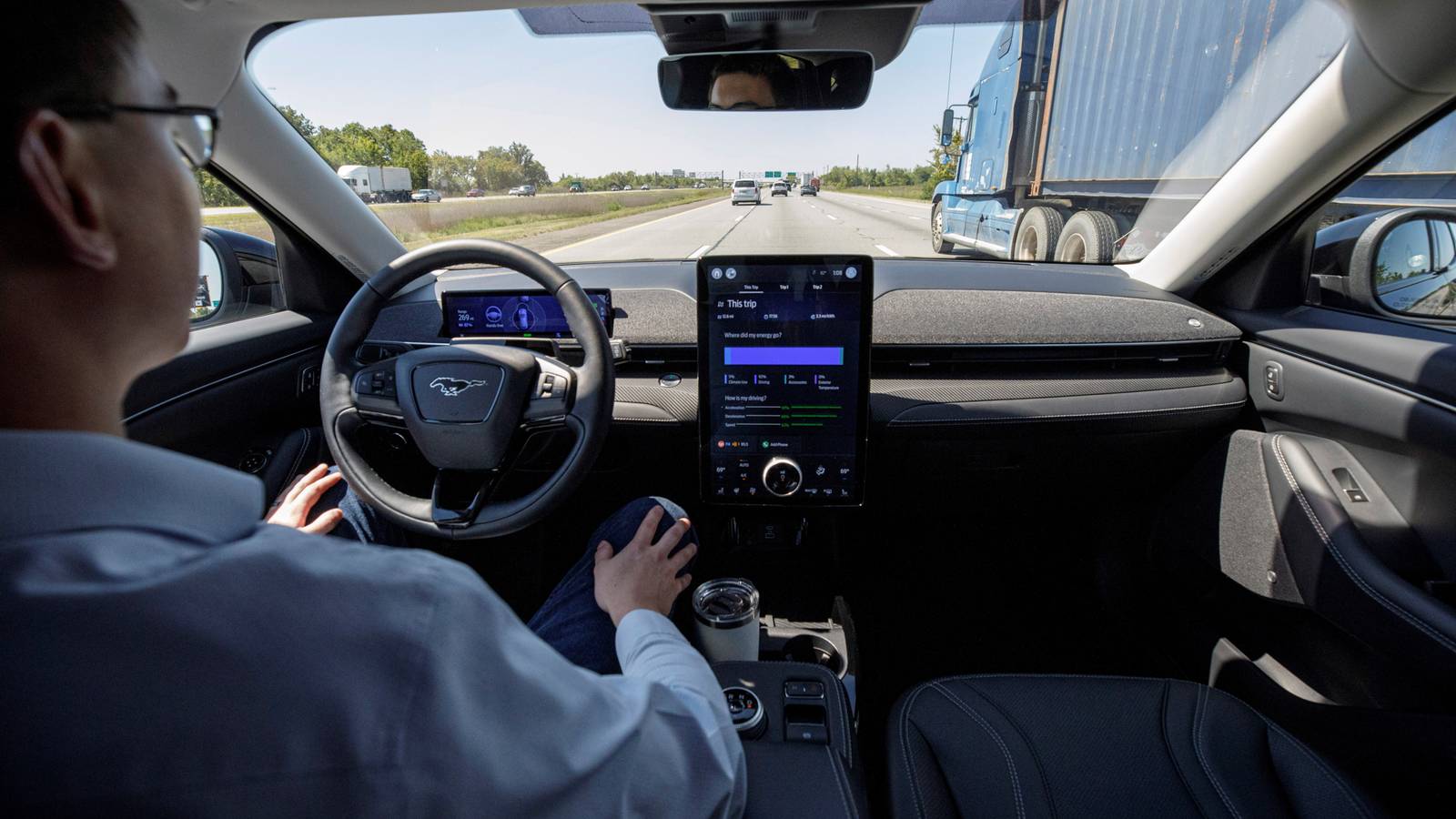
Several brands are already doing exactly that, with hands-free highway driving assist systems being a prime candidate.At the time of this writing, GM charges $25 a month for Super Cruise after the three-year trial ends.Ford's BlueCruise trial lasts just three months from the date the vehicle is purchased, after which it runs $49.99 a month or $495 a year.
Meanwhile, Mercedes-Benz sells an acceleration boost feature for $600 a year on the EQE and $900 a year on the EQS.The upgrade is an over-the-air software update that increases output by up to 80 horsepower and improves zero-to-60 time by as much as a full second.Related I saw XPENG’s new AI car—and the future feels closer than ever I saw XPENG’s new AI car in Munich, and it convinced me the future of driving is arriving faster than most people think.
Posts 1 By Adam Gray What this might mean going forward for car buyers According to recent S&P Global Mobility data, the average age of vehicles on U.S.roads has climbed to 12.8 years, the oldest ever recorded.Under that traditional model, once a vehicle leaves the showroom with its new owner, an automaker's opportunity to make additional money from that sale shrinks.
While dealers can earn follow-up revenue through routine maintenance and service, it’s harder for the OEM.Software-defined vehicles, by their design, allow automakers to tap into additional revenue streams.S&P Global Mobility also notes that connected and subscription service revenue is expected to grow from roughly $6 billion in 2024 to around $15 billion by 2030.
Adoption is uneven across the automotive industry right now, but moving forward nonetheless.Tesla, Rivian, and Chinese brands including Nio, Xpeng, and Li Auto are arguably furthest along the SDV path, largely because they designed their computing architecture from scratch accordingly.Legacy automakers, however, such as GM, Ford, Toyota, BMW, Mercedes-Benz, and the like, are moving toward software-defined vehicles regardless.
For car buyers today, the term software-defined might not mean much, but it does explain why a new model today could gain or lose certain features in the long-term.As time goes on, it will become increasingly important for consumers to ask tech-focused questions when shopping for their next vehicle.
Read More