Two of Apple's largest chip rivals may find themselves serving their main competitor.Apple is reportedly in early talks to have Intel and Samsung manufacture the custom processors for its devices, such as Macs and iPhones, in their U.S.factories.
Sources speaking to 's Mark Gurman claim Apple has so far conducted "exploratory discussions," including trips to a Samsung plant under construction in Taylor, Texas.The insiders stress that the discussions are still "preliminary" and might not lead to deals.The companies involved have declined to comment.
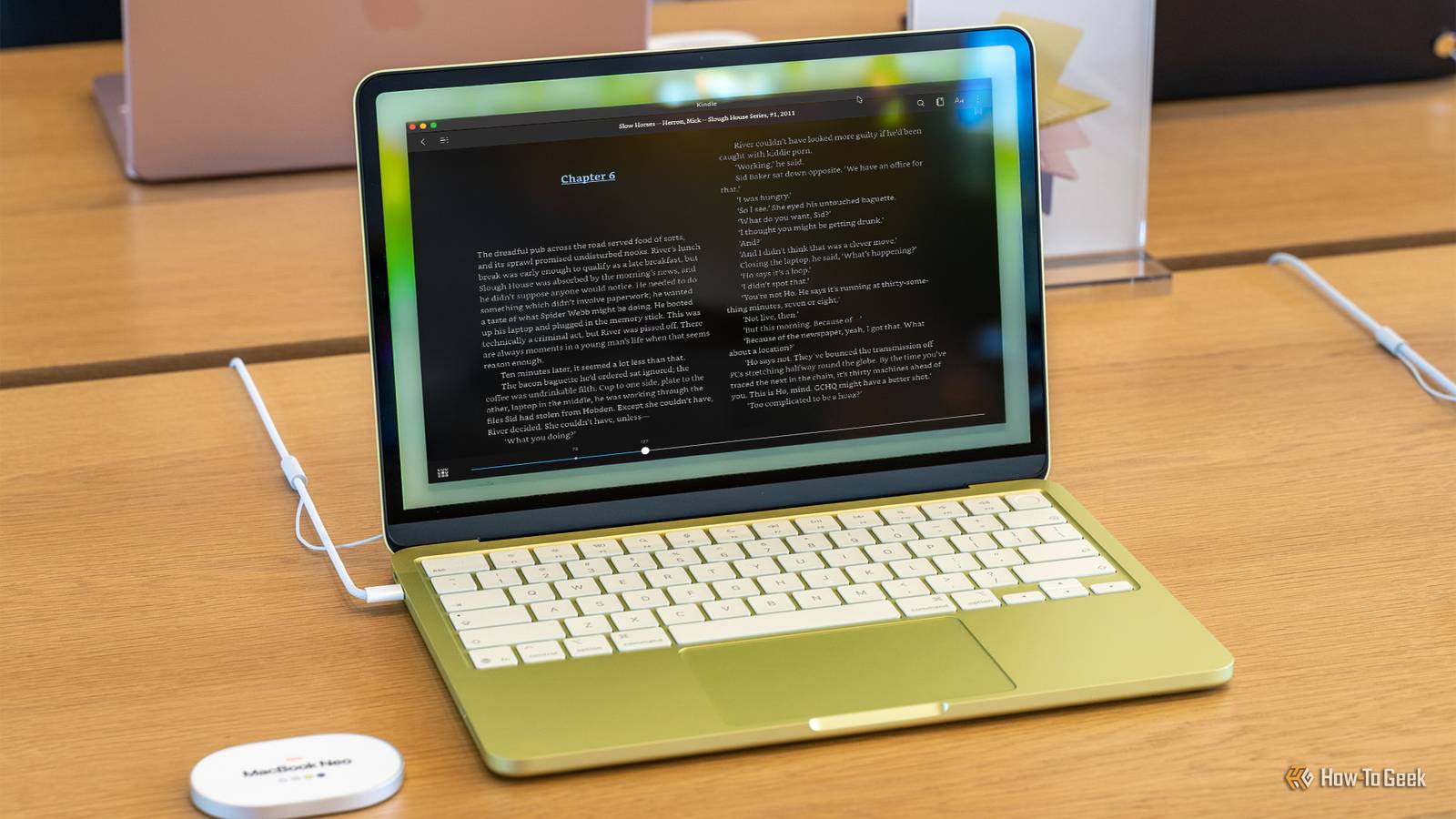
MacBook Neo (A18 Pro) Brand Apple Operating System macOS $599 at Amazon $599 at Apple $599 at Best Buy Expand Collapse The talks began before the shortages that have affected both Apple and the broader technology industr.Many tech firms are dealing with a RAM crisis prompted by the rush for AI data centers.However, Apple has also dealt with such high demand for Mac mini and Mac Studio desktops (both of which are considered ideal AI development machines) that it has discontinued some models.
Outgoing Apple CEO Tim Cook acknowledged the issue during a late April earnings call.He warned that Apple's biggest issue wasn't memory, but rather capacity on the advanced manufacturing nodes needed to produce the company's systems-on-chip (SoCs).Most of the company's existing hardware, ranging from the MacBook Neo through to the iPhone 17 Pro and M5 MacBook Pro, uses chips built on 3-nanometer (3nm) processes.
Most of the SoCs come from Taiwanese semiconductor giant TSMC.The company has also faced pressure from recent federal administrations to move more of its production stateside.Some components and a limited number of computers are made in the country, but most major processors and complete devices are built abroad.
The Trump White House has also been protective of Intel, to the point where it made a non-controlling investment in the tech pioneer to help its recovery.When will Intel and Samsung make chips for Apple devices? The factories and technology might not be ready soon It could take a while before there's an Intel- or Samsung-manufactured chip in your Mac or iPhone, even if Apple rushes to negotiate deals.The manufacturing processes not only have to be in place, but ready to handle the massive volumes that Apple needs.
Intel only just started making chips on its cutting-edge 18A (1.8nm) process at its Arizona plant in the second half of 2025, and is still scaling up as it makes Core Ultra Series 3 and now Core Series 3 processors.Samsung, meanwhile, isn't expected to start high-volume 2nm production at its Texas factory until 2028.Apple itself also has to make the move to newer technology.
It's not expected to leap to 2nm chips until late 2026 or early 2027, when the A20 Pro (for iPhones) and M6 (for Macs) are poised to arrive.TSMC is very likely to make those first SoCs, if just because it has both the know-how and initial capacity.How would Intel and Samsung affect the PC industry by helping Apple? Windows PC supply might not get better Apple has clear objectives in mind for any possible deal with Intel and Samsung.
It would not only improve supply for Macs and iPhones, but reduce the risks that a major political upset, technical setback, or unfavorable business deal hurts availability.Apple doesn't want to lose access to chips if there's an invasion of Taiwan, for instance.Related Can Apple Silicon Macs Compete with Windows for Gaming? macOS is really letting Apple's hardware down.
Posts By Goran Damnjanovic This won't necessarily help competing PC and mobile device makers, however.While Intel and Samsung are only likely to help Apple if and when they can do it without compromise, that doesn't mean supply will improve for Windows PCs and Android phones.The new partners might have to greatly increase their production capacities if they expect to increase supply for everyone.
Subscribe to our newsletter for decisive chip industry insights Dive deeper - subscribe to the newsletter for clear, expert analysis of chip industry shifts and what they mean for hardware makers, supply chains, and market strategy, presented without technical clutter.Get Updates By subscribing, you agree to receive newsletter and marketing emails, and accept our Terms of Use and Privacy Policy.You can unsubscribe anytime.
The one certainty: this is a reversal of fortunes for everyone involved.Apple had to buy Intel-designed CPUs in the mid-2000s when it couldn't get better chips from IBM and Motorola, and built its first three iPhones using Samsung-developed SoCs.Now, Intel and Samsung could find themselves serving Apple, even if any deal uiltimately aids their own businesses.
Read More