
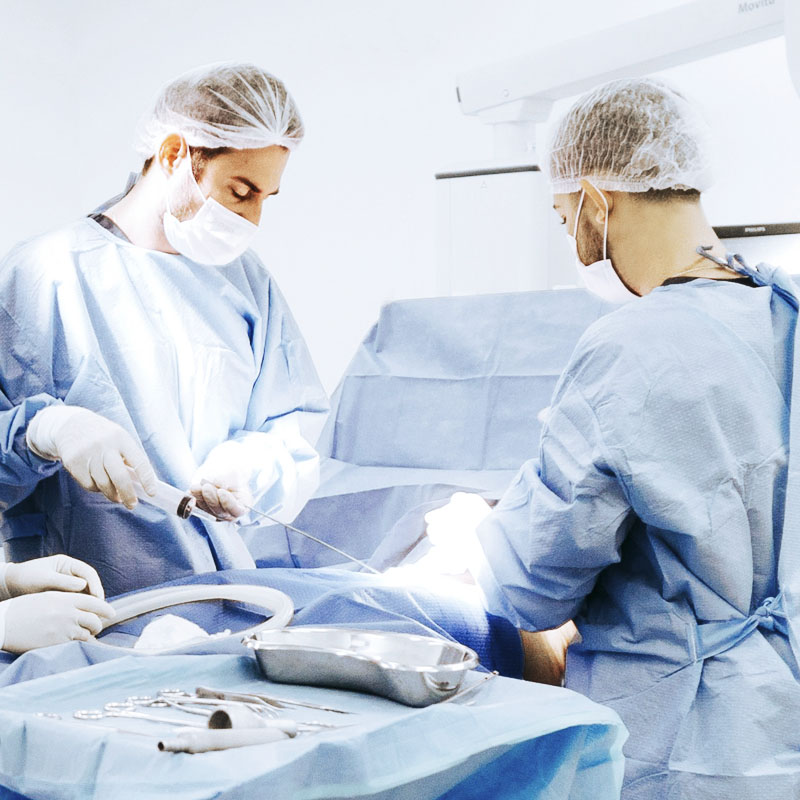
One of the most significant sectors for 3D printing applications is the healthcare field.According to an AM Research report, the 3D printed medical device market is estimated to reach $16.5 billion by 2034, and “has facilitated the production of personalized medical devices, reduced development costs, fostered innovation in advanced devices, and improved accessibility to prosthetics.” Medical and dental 3D printing were important tracks at our 2025 Additive Manufacturing Strategies event, and will be again for the 2026 conference.So as we prepare for a new year, I wanted to highlight some of the many ways additive technology was used to make the world a better place in 2025, with a specific focus on healthcare.
3D Printing for Breast Cancer A breast cancer patient rings the victory bell after completing treatment, surrounded by her care team.Image courtesy of MicroQuin/Scott Robinson.According to the Mayo Clinic, breast cancer is the second most common cancer diagnosed in women in the United States.
In honor of Breast Cancer Awareness Month this past October, we shared how 3D printing and bioprinting are being used to combat this, and improve breast cancer care.One of its most important uses is in the preclinical stage, helping researchers better understand how the disease grows and responds to treatment.For instance, researchers from the Institute for Bioengineering of Catalonia (IBEC) and the Universidade de Santiago de Compostela used a bioink derived from decellularized mammary tissue to make a bioprinted breast cancer model for testing drug responses and invasion behaviors.
A study from the Royal College of Surgeons focused on tiny bioprinted tumor models to study treatment resistance, and a company called MicroQuin grew 3D clusters of breast and prostate cancer cells on the International Space Station, which resulted in the identification of a key protein that could become a new drug target for future therapies.Many mastectomy patients face physical as well as emotional challenges during the breast reconstruction journey, but 3D printing is helping to usher in more natural, personalized, and empowering solutions, like researchers at the Carle Illinois College of Medicine developing affordable custom-fit breast prostheses.BellaSeno is leading a clinical trial for 3D printed, bioresorbable breast scaffolds made from polycaprolactone (PCL), and researchers in China designed a 3D printed PCL-based scaffold enhanced with cobalt orthosilicate (CoSi).
The next step in reconstruction is regenerative medicine, like Wyss Institute spinout ReConstruct Bio working to bioprint living, vascularized fat tissue that can connect to a patient’s blood supply.Lattice Medical designed a 3D printed, bioresorbable implant for mastectomy patients, which acts as a temporary scaffold filled with the patient’s own fat.3D printed implants by CollPlant Biotechnologies and Stratasys use a bioink made from recombinant human collagen, and reported promising results from animal studies.
Stanford’s $250 Accessible Bioprinter Stanford’s open source bioprinter, the Printess.Image courtesy of Stanford’s Skylar-Scott Lab.Professional-grade bioprinters can cost anywhere from $10,000 to over $200,000, and some machines are even more.
This can be a major barrier for research labs, which is why the low-cost, modular, open source Printess bioprinter from Stanford University’s Skylar-Scott Lab is so important.It was developed under the leadership of Mark Skylar-Scott, one of the most renowned names in bioprinting, and makes it possible for almost any lab to integrate bioprinting into their workflows.The design is open source, and built entirely from 3D printed and off-the-shelf components.
Plus, due to its modular design, researchers can tailor the system to fit their own needs, and it’s compact enough to fit easily in a biosafety cabinet for sterile printing.The Printess supports advanced direct ink writing (DIW) techniques, including multimaterial DIW for printing complex, functional structures, and enables multimaterial active mixing DIW and multimaterial multinozzle 3D (MM3D) printing.“The implications of the Printess are vast.
By lowering the entry cost for bioprinting, this innovation opens doors for researchers in underfunded labs, educators in developing countries, and even hobbyists exploring bioprinting at home.It removes the cost barrier that has limited who can participate in bioprinting research and development for a long time,” 3DPrint.com co-Managing Editor Vanesa Listek wrote.“What’s more, the Printess is a great example of how open-source hardware can drive scientific progress, which is part of the Skylar-Scott Lab’s commitment to the open-source movement.” 3D Printed Wall-Mounted Narcan Dispensers Newly designed 3D printed Narcan vending machines offer free doses of naloxone.
The compact wall-mounted models are part of an expanding overdose prevention effort led by North Texas nonprofits.Image courtesy of Anthony Delabano.A collaborative team in North Texas is making smaller, low-cost Narcan vending machines with 3D printing, in order to make this life-saving medication easier to find, faster to install, and more affordable to distribute.
The initiative comes from community organization Conscience Conduit, led by Anthony Delabano, in partnership with 501(c)(3) non-profit Livegy and other local organizations.These 3D printed dispensers are easy to mount, and can each hold up to 70 doses of Narcan nasal spray, also known by its generic name naloxone, which can reverse the effects of an opioid overdose within minutes.According to Delabano, for the cost of one large electronic vending machine, around 50 of these wall-mounted dispensers can be placed around the community in places like libraries, schools, and shelters.
3D printing helps the team keep fabrication costs down, and makes the dispensers durable, yet lightweight.“This is about breaking barriers, including economic barriers to get as much Narcan in places and to those that need it,” Conscience Conduit said in a statement posted to its official Facebook page.“Many people do not know that fentanyl overdoses are the number one leading cause of death for those 18 to 45; and that’s above cancer.
This is a new number one cause of death that can be prevented.” Triastek Starting Clinical Trials for 3D Printed Anticoagulant Pill Image courtesy of Triastek The world’s first 3D printed pill was approved back in 2015, and even though the idea of 3D printed pharmaceuticals isn’t yet mainstream, the possibilities are growing.Chinese regulators authorized pharmaceutical company Triastek to begin clinical trials of a new 3D printed blood thinner pill in 2024, and in 2025, the Chinese company was granted Investigational New Drug (IND) clearance from the FDA to start clinical trials in the U.S.T20G is a once-a-day anticoagulant pill that could make life easier for millions of people living with atrial fibrillation (AFib), which affects the rhythm of the heart and increases the risk of stroke.
T20G is part of a newer, safer class of blood thinners called NOACs (non-vitamin K antagonist oral anticoagulants), and 3D printing the pill enables it to be released slowly in the stomach over an entire day, which is different from other blood thinners.Triastek’s Melt Extrusion Deposition with Micro-Injection Molding (MED&MIM) process prints with melted pharmaceutical materials, enabling complex internal structures not possible with standard pill-making techniques.“With T20G receiving IND clearance in both China and the U.S., Triastek has achieved a new milestone in the field of gastric retention drug delivery.
Building on this dual regulatory recognition, we will accelerate the development of T20G to provide high-quality pharmaceutical products to patients worldwide,” said Feihuang Deng, VP of Technology at Triastek.3D Printed Pen Could Help Detect Parkinson’s Disease In the U.S., 90,000 people a year are diagnosed with Parkinson’s disease, a neurodegenerative disorder that’s poorly understood, has no cure, and is difficult to diagnose.But a 3D printed pen developed by a research team at UCLA Samueli School of Engineering could help.
It’s thought that from a very early stage of the disease, a person will exhibit preliminary tremors or other movements.The pen uses a ferrofluid, which is a combination of oil and iron shavings, to track motions when a person is writing, and also when moving from word to word.While it doesn’t actually write, the pen basically evaluates your handwriting, accurately tracking the motion of the ferrofluid and a magnetic coil in the pen.
A study with 16 participants, three of whom had Parkinson’s, showed that the test was over 96% accurate, and an AI model compared their motions to known motions of people with Parkinson’s.It’s a quick, low-cost diagnostic tool that, if adopted widely, could help people start treatment earlier.“Detection of subtle motor symptoms unnoticeable to the naked eye is critical for early intervention in Parkinson’s disease.
Our diagnostic pen presents an affordable, reliable and accessible tool that is sensitive enough to pick up subtle movements and can be used across large populations and in resource-limited areas,” said Associate Professor of Bioengineering Jun Chen.3D Printing Could Make More Effective Asthma Inhalers Asthma inhaler.Rendering courtesy of 3DPrint.com.
Inhalers are an essential tool for the millions of people with asthma, delivering medicine straight to the lungs.But, many struggle with using them correctly, so they don’t always receive the proper dosage.Mistakes in technique, like not inhaling deeply, can lead to increased symptoms, more flare-ups, and even hospital visits.
That’s why researchers at Kiel University in Germany are using ultra-precise 3D printing to redesign the tiny carriers inside dry-powder inhalers, aiming to make asthma drug delivery more effective.They used multi-photon 3D printing to make millions of identical, “hair-thin carrier particles” with different shapes, and these geometries affected drug release.One design with star-like protrusions delivered four times more of the medicine into the lungs compared to the other shapes; according to the researchers, its sharp angles likely caused particles to bump and rotate more, which resulted in more effective drug release.
This work is still theoretical at the moment, but definitely has major potential.“The influence of carrier particle’s geometry on its performance as a drug carrier remains a challenge.Here, tailored and additively manufactured microparticles as carriers in interactive powder mixtures for inhalation are investigated.
The crucial step of production of 50 µm sized complex microparticles is accomplished by multi-photon 3D laser printing.The produced powder is mixed with a model drug.Four different potential carrier geometries are printed, as well as three different surface roughnesses, created by altering the printing settings,” the researchers wrote in their paper.
3D Printed Hydrogels Create Water Shields to Protect from Space Radiation 3D printed hydrogel space shuttle and astronaut on the Moon.Image courtesy of ESA/Johan Dubruel.In outer space, astronauts can receive nearly as much hazardous cosmic radiation in one day as the average person on Earth accumulates over a whole year.
This can result in serious medical issues, like causing cataracts and increasing cancer risk.With support from the European Space Agency (ESA), a team of Ghent University researchers are investigating the use of 3D printed water-absorbing hydrogels as a kind of shield to protect astronauts from this radiation.Water is dense and full of hydrogen atoms, which are great at interacting with high-energy particles, slowing them down, and reducing their harmful effects.
Hydrogels are formed when superabsorbent polymers (SAPs) soak up water and swell into a gel-like substance, and 3D printing can fabricate these materials into almost any shape.Hydrogels also hold water in place, instead of letting it flow freely, so the water inside these 3D printed shields would spread out, offering consistent protection against harmful space radiation.“The superabsorbent polymer that we are using can be processed using multiple different techniques, which is a rare and advantageous quality amongst polymers.
Our method of choice is 3D printing, which allows us to create a hydrogel in almost any shape we want,” said Manon Minsart, a postdoctoral assistant at Ghent University.3D Printed Pediatric Prosthetics in Kenya Delivering prostheses to children in Kenya.Image courtesy of HP.
We’ll head back to Earth for this final example; Kenya, specifically.In a pilot project this year, U.S.-based nonprofit Limb Kind Foundation collaborated with HP Additive Manufacturing Solutions, ABCorp, and Macy O&P to see how 3D printing and digital workflows could scale the impact of its work.Thousands of children with limb loss live in low-resource settings, which means very limited access to proper prosthetic care.
This spring, the team delivered 53 prosthetic sockets to children in Kenya, and five of them were 3D printed with HP’s Multi Jet Fusion (MJF) technology.Not only did the sockets fit and perform well, but it took far less time to make them in comparison to traditional manufacturing…just 36 hours.Volunteers scanned the young patients’ limbs using iPhones, and converted the data to 3D models in minutes.
The scans were uploaded to the cloud, so a certified prosthetist in Connecticut could design them digitally.The files were sent to ABCorp, where they were printed overnight.After post-processing, the custom sockets were delivered to the children in Kenya for a final fitting.
The team’s goal was to prove that 3D printing, even across an ocean, could deliver functional, scalable, high-quality prosthetic care, and I’d say they reached it.“This is more than just about delivering devices.It’s about dignity, inclusion, and giving kids the chance to thrive,” added Rob Schulman, the founder of Limb Kind and a certified prosthetist.
“If we can train local staff to scan, design, and print on-site, we can make this kind of care available 52 weeks a year—not just during one-week missions.”
Featured image courtesy of BellaSeno
Subscribe to Our Email Newsletter
Stay up-to-date on all the latest news from the 3D printing industry and receive information and offers from third party vendors.Print Services
Upload your 3D Models and get them printed quickly and efficiently.Powered by FacFox
Powered by 3D Systems
Powered by Craftcloud
Powered by Xometry
3DPrinting Business Directory
3DPrinting Business Directory


