If you've been on Android since its early days, you probably remember just how sluggish it felt compared to iOS and how Google gradually managed to make it smoother and more responsive.Sure, part of that was the rise of faster phone hardware, but software optimizations also played a major role.The situation with Windows has been almost the polar opposite.
Windows XP was a lean, mean example of just how optimized a desktop operating system could be at the time.On top of that, XP had become impressively stable over its lifetime and had quite modest hardware requirements.The same can be said about Windows 7, which was a breath of fresh air after the disastrous Vista.
But with Windows 10 and Windows 11, Microsoft has been on a downward path, making its desktop operating system less stable while steadily raising its hardware requirements without delivering any meaningful improvement in performance in return.I had hoped Microsoft would change its course, but I've now realized that Windows will never return to its lean, mean Windows XP and Windows 7 days.Here's why.
Microsoft will never build a new version of Windows "from the ground up" There's too much reliance on legacy code Many large organizations around the world have been using Windows for decades.Since a good chunk of them still rely on old software (and hardware) that, in some cases, hasn't been updated in quite some time, Microsoft has kept Windows' core architecture more or less the same since the early 1990s for the sake of backward compatibility.Windows 11, for instance, still uses the Windows NT kernel, which dates back to 1993.
In other words, modern Windows runs on top of the NT foundation, which allows all that legacy software and hardware that's still in active use to keep working.This is arguably the main reason why Microsoft likely won't ever build a new version of Windows "from the ground up," releasing it from its ancient shackles and making it optimized for newer hardware.But the fact of the matter is that this isn't the crux of the issue.
All those legacy lines of code don't actually slow down Windows and aren't the reason why Windows 11 can feel sluggish and unresponsive.They're here for legacy compatibility, and their mere presence isn't what makes Windows 11 so demanding of modern hardware.The real issue with modern Windows is bloat, not legacy code.
Related I went ghost hunting in Windows and uncovered these 6 forgotten tools A walk through memory lane.Posts By Goran Damnjanovic Windows' biggest problem isn't that it's old—it's that it's getting bigger The feature creep and bloat are real issues Close Copilot, OneDrive, a bunch of bloatware, a basic weather app that can use more than 1GB of RAM when idle, updates that can do more harm than good, and the fact that the OS includes a ton of superfluous features most of us won't ever look at, let alone use, are the reasons why Windows has been getting more sluggish over time.Add to that web browsers, most of which like to take a hold of every megabyte of free memory you've got, lots of third-party web-based apps that are also quite memory-hungry, the annoying tendency of freshly installed apps to make themselves automatically launch with Windows, and you've got a perfect storm that's very hungry for your PC's memory and other resources.
I shouldn't waste time removing Copilot and OneDrive each time I reinstall Windows; I shouldn't have to manually disable ads, delete bloatware, and deactivate a bunch of startup apps.I flinch each time I have to set up Windows 11 on a new handheld PC I'm reviewing because I always spend hours deleting unnecessary apps, most of which have no reason to be present on a device that's made for gaming, as well as adjusting settings and disabling features.Bloat, not legacy code or ancient (but quite stable) foundation, is a big reason why Windows has only been getting more sluggish ever since Windows 11 got released.
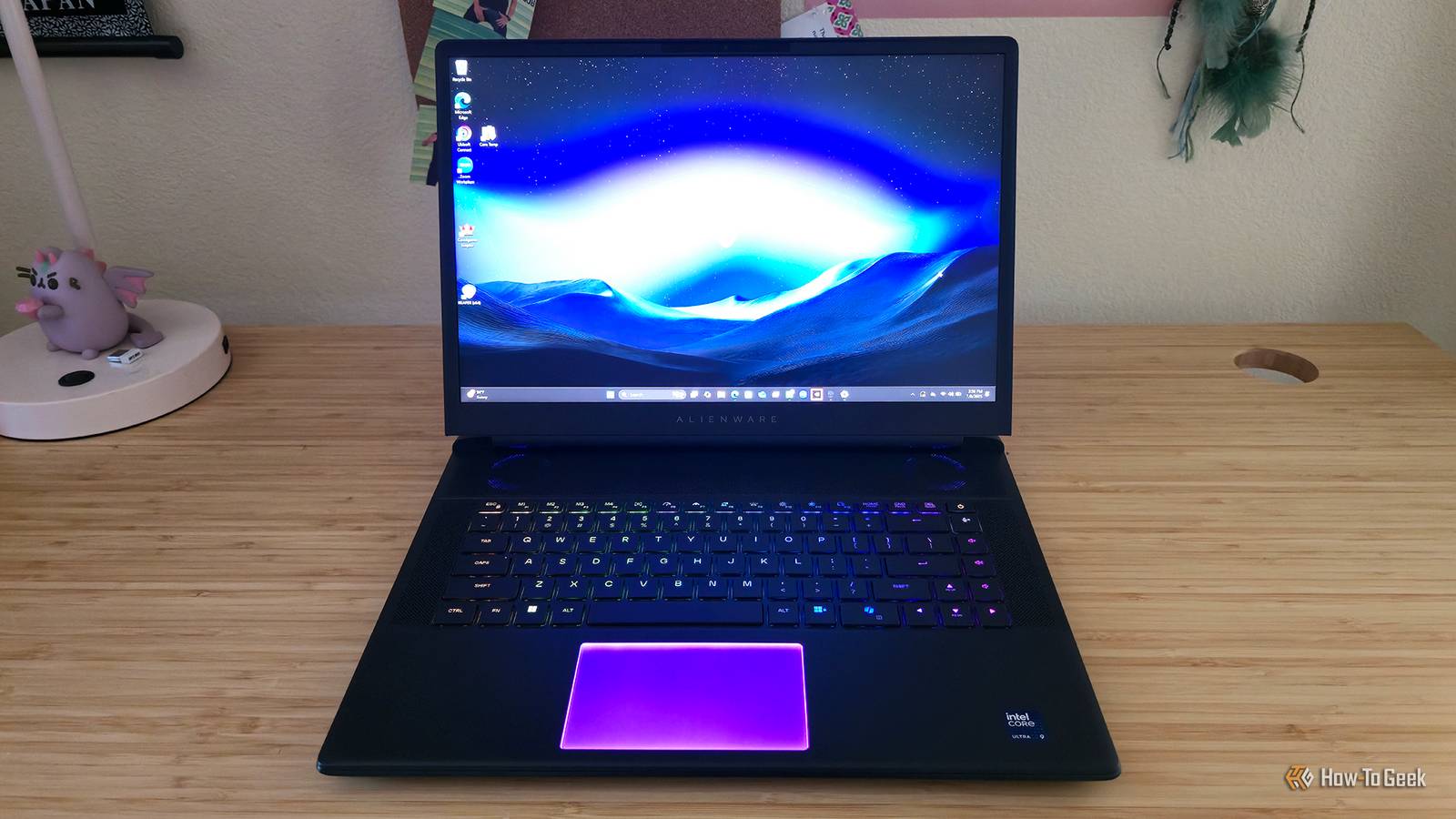
While Microsoft has made certain improvements to the overall experience, the company doesn't have much incentive to do so because, for Microsoft, Windows 11 is increasingly a vessel for showing you ads, even in built-in apps (like in that bloated weather app, which is just a desktop reskin of the MSN Weather website), making you install bloatware, and goading you into spending your cash on subscriptions such as Microsoft 365.Windows 11 can be pretty fast on the right hardware The real issue is performance on budget PCs With all that said, Windows 11 can perform quite well if you've got a fast enough PC.For example, even a vanilla Windows 11 runs fine on my relatively powerful desktop equipped with 32GB of RAM, multiple terabytes of SSD storage, an eight-core Ryzen 5700X3D gaming CPU, and a high-end AMD RX 9070 XT GPU.
I debloat and optimize Windows mostly to get rid of stuff I don't want, even though I have to admit that removing Copilot and disabling startup apps, among other things, does make the OS feel more responsive and boot faster.But the real problem is performance on budget PCs that don't have heaps of RAM or a high-end desktop CPU and GPU, where Windows 11 crawls if you want to do more than open a few browser tabs while listening to music on Spotify and having one or two other desktop apps open.This matters a lot because plenty of Windows users rely on such PCs, and will continue to use them because global memory shortages have resulted in 8GB laptops making a return and because PC hardware is getting more expensive by the day due to AI infrastructure using up every piece of silicon available, and then some.
Windows 11 chokes on such systems, and it looks like that could continue to be the case.Microsoft's efforts to optimize Windows can make a difference, but they won't pull off miracles The silver lining here is that Microsoft has promised to optimize Windows and make it use less memory, a sound move in this day and age, when RAM prices have gone through the roof.I also like the introduction of the Low Latency Profile that can make the system more responsive even on slower CPUs.
But the underlying issue of unoptimized built-in apps, the introduction of more and more AI features, tons of preinstalled bloatware, updates that have been introducing bugs, third-party apps that occupy memory like it's free real estate, and Microsoft's insistence on using Windows to sell you its subscriptions make me doubt that Windows will ever return to its glory days, when you could run it on a toaster and when it flew even on then-budget machines.
Read More