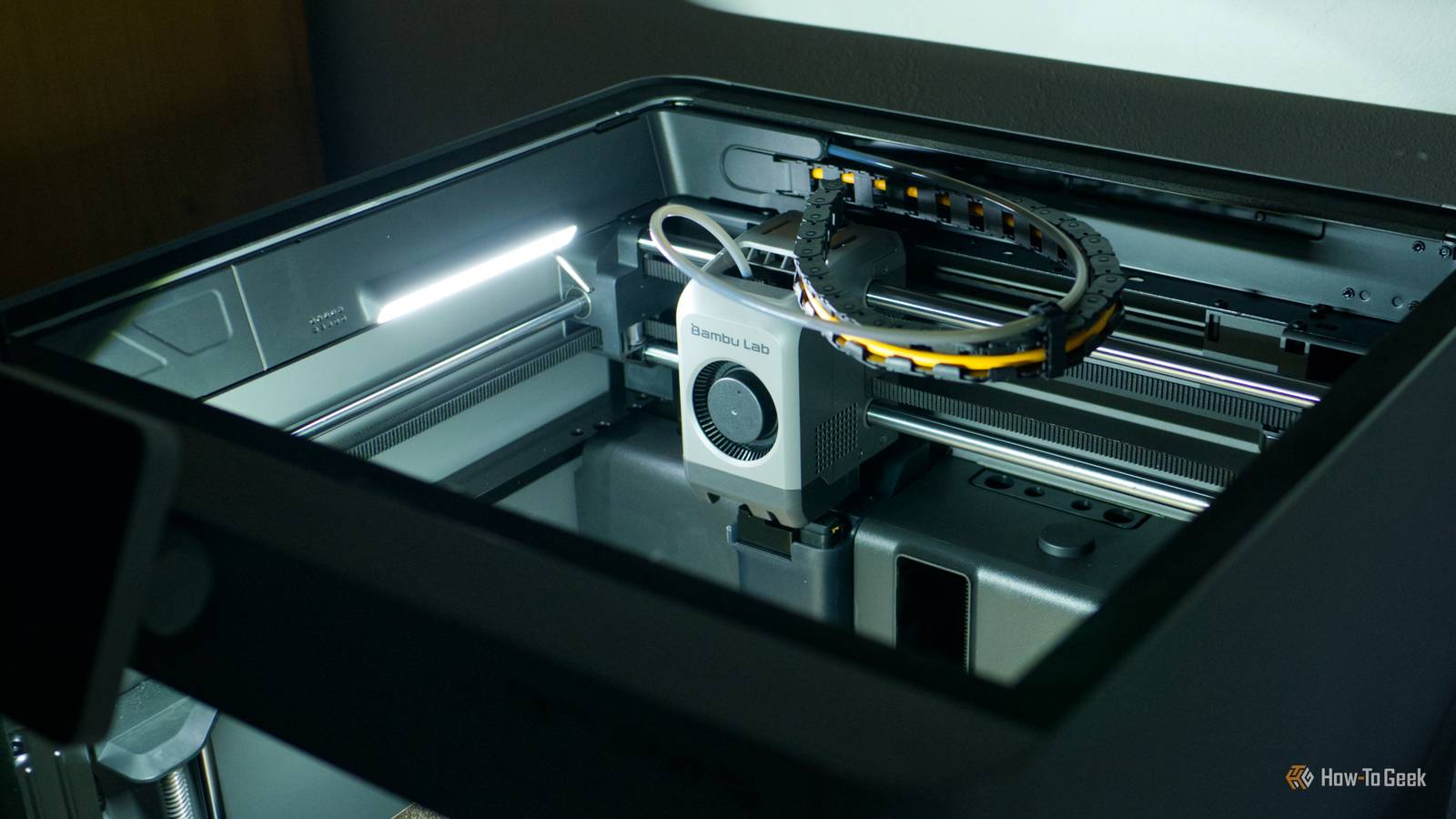
Bambu Lab represents both ends of the 3D printing spectrum.On the one hand, it’s an incredibly successful company that took the world by storm by making 3D printing easy, accessible, and relatively cheap.On the other hand, it’s a brand that’s taken pages from the Apple and Nintendo corporate playbooks, locking down its ecosystem and throwing its legal weight around.
Get used to it, because the company isn’t going anywhere anytime soon.Bambu Lab is on fire right now The printer brand is everywhere Close A few weeks ago, a colleague who lives in the U.S.remarked how surprised they were to see 3D printers and filament available in their local Target store.
I don’t live in the States, but I conceded that I too was taken aback when I saw them on the shelves of an office supply store here in Australia.I actually bought my printer from one of these stores, since a short car ride worked out considerably cheaper than paying for shipping.By now, you’ve probably figured out that these were Bambu Lab printers and the company’s own-brand filament.
It says a lot about how well a company is doing when what was once seen as a relatively niche product is now readily available alongside toilet paper and USB cables—especially when you consider that it’s the only brand being stocked.When you stop and look at what the company has achieved, this rise to prominence starts to make a little more sense.Bambu Lab wasn’t the first printer brand to try and revolutionize 3D printing at home; it was the first to make a real success of it.
This was achieved by rounding some of the hobby’s more uncomfortable edges.Printer calibration was a barrier to many for years.Those who owned 3D printers hated it, and those who were curious about the hobby were put off by it.
Bambu Lab made automatic bed leveling a priority, and the company’s subsequent printers continued the trend with advancements like tool-free nozzle swaps and touchscreens that guide you through maintenance procedures.The company has come a long way since 2022, when its debut X1 smashed its Kickstarter goals.The latest printers offer professional-level features like dual-nozzle printing and heated chambers at enthusiast-level pricing.
Bambu Lab charges a little more than competitors like Elegoo and Creality, but the value proposition has been unmatched for a while now.Such is the company’s success that 2026 saw it claim the title of top-selling budget 3D printer brand from Creality, an uptick in sales that has been credited with pulling the consumer end of the market out of a two-year slump.Sales are booming despite several controversies Closed ecosystem, closed source Bambu Lab has jealously guarded its corner of the market, for better or worse.
Best described as a “plug-and-print” ecosystem, the company operates almost as a platform unto itself rather than as a cog in the broader 3D printing machine.The development of infrastructure alongside hardware was key to this success.Take the company’s MakerWorld model repository, the largest of its kind.
This resource heavily promotes Bambu Lab printers, even though MakerWorld deals with the same STL, 3MF, and OBJ files as Printables or Thingiverse.The site is dotted with print profiles tailored to the company’s printers, like those tailored to smaller models like the A1 mini.Also fundamental to Bambu Lab’s approach is its mobile app, which works about as well as one could hope.
You can send models to your printer directly from MakerWorld, monitor prints, and check on the status of your filament.If you stayed with this app, you would have a perfectly acceptable 3D printer experience, no computer necessary.But this has come at a cost.
Bambu Lab has slowly been putting up walls, first forcing any slicers that want to interact with its printers over a remote cloud connection to use its own Bambu Connect plugin, and then coming down hard on an open-source project that attempted to circumvent the requirement.Such a heavy-handed approach has led some to question whether or not the company will further tighten the vise in the future.Bambu Lab was in the right place at the right time to cultivate a massive audience.
It could be argued that the emphasis on approachability has benefitted the industry and those interested in it as a whole.3D printing has never been more approachable, whether or not you buy a Bambu Lab printer.Can Bambu Lab’s rivals catch up? It’s happened before Close In the late 2000s, 3D printing at home was just beginning to break through.
This was a time when dedicated hobbyists made up the bulk of the audience, which led to the formation of brands like MakerBot.The company was true to its open-source roots and sold kits that were designed to make 3D printing more accessible.MakerBot was the Bambu Lab of its time in many ways, despite its massively different licensing model and production output.
But MakerBot disappeared in a matter of years as a result of a botched acquisition and awkward transition to a closed-source model.Bambu Lab doesn’t have that problem.Its printers are already locked down, its source closed, and its cloud infrastructure well-guarded.
The company will never have to turn its back on hacking or tweaking your way to a better model.As Bambu Lab branches out in the maker space with its first model of dedicated laser engraver and cutter, it looks set to utilize the same approach that led to past success in new areas.If you’ve got a Bambu Lab printer that just works, and you’re using MakerWorld to download and share models, don’t you want to add another toy to your collection that fits in nicely? The upside is that Bambu Lab is likely to introduce more products that prioritize ease of use and value for money.
The downside is that this sort of market consolidation rarely works out well for us—the customer—in the long term.Time will tell.Don’t let Bambu Lab’s success put you off looking at other brands.
Both Prusa and Creality make for compelling alternatives.
Read More