Many gamers don’t mind spending hundreds of dollars on a new graphics card the moment they notice a performance drop in their favorite games, while the CPU remains untouched for years.While this upgrade pattern can work to some extent, since most games are GPU-bound, that strategy only holds for so long.CPUs aren’t immune to time, and modern games are starting to demand more from them than ever before.
Some people believe you can skip upgrading your CPU for a decade if you just buy the best one on the market, but that doesn’t reflect how fast technology advances.What was a strong gaming CPU only a few years ago can quickly become a bottleneck in newer titles, and eventually, it becomes the limiting factor.The Intel Core i7-4790K is a legendary processor that's officially earned its retirement The king is dead, long live the king It’s hard to overstate just how iconic the Intel Core i7-4790K is in the community, even to this day.
It was released when Intel was at its peak as part of the Haswell lineup, or more specifically, the Haswell Refresh (which itself is better known by its codename Devil’s Canyon).This CPU wasn’t just one of the best of its era; it was able to outperform many processors that came out years later.Despite launching in 2014, it could still trade blows and even outperform many early AMD Ryzen chips, like the AMD Ryzen 7 1700X, which arrived three years later in 2017 and marked the beginning of AMD’s modern resurgence.
Quiz 8 Questions · Test Your KnowledgeFrom Intel to AMD: The evolution of CPUsTrivia challengeFrom the 8086 to Ryzen — how well do you know the chips that power your PC?HistoryIntelAMDArchitecturePerformanceBegin 01 / 8HistoryWhich Intel processor, released in 1978, is widely considered the ancestor of the modern x86 CPU architecture?AIntel 4004BIntel 8080CIntel 8086DIntel 80286Correct! The Intel 8086, launched in 1978, established the x86 instruction set architecture that almost every modern desktop and laptop CPU still uses today.Its 16-bit design was a massive leap forward and created a legacy that has lasted over four decades.Not quite — the answer is the Intel 8086.While the 4004 was Intel's first commercial microprocessor and the 8080 was influential in its own right, it was the 8086 that introduced the x86 instruction set in 1978, forming the direct foundation of modern PC processors.Continue 02 / 8AMDWhat was the name of AMD's microarchitecture, introduced in 2017, that dramatically closed the performance gap with Intel after years of falling behind?ABulldozerBPiledriverCZenDSteamrollerCorrect! AMD's Zen architecture, which debuted with the Ryzen processor family in 2017, was a massive generational leap.
It nearly doubled AMD's instructions-per-clock performance compared to the struggling Bulldozer architecture, making AMD genuinely competitive with Intel for the first time in years.Not quite — the answer is Zen.Bulldozer, Piledriver, and Steamroller were all AMD architectures that disappointed critics and fell well short of Intel's performance.It was the ground-up Zen redesign in 2017 that finally gave AMD CPUs the competitive edge they had been missing for nearly a decade.Continue 03 / 8IntelIntel's 'Tick-Tock' strategy, used for many years, referred to what development pattern?AAlternating between desktop and mobile CPU releases each yearBAlternating between shrinking the manufacturing process and refining the architectureCReleasing a budget chip followed by a high-end chip every cycleDAlternating between single-core and multi-core performance optimizationsCorrect! Intel's Tick-Tock model meant that one year they would shrink the chip to a new, smaller manufacturing node (the 'Tick'), and the following year they would refine and improve the architecture on that same node (the 'Tock').
This gave Intel a predictable, efficient cadence for years — until it began to break down around 2016.Not quite — Tick-Tock referred to alternating between a manufacturing node shrink and an architectural refinement.The 'Tick' was a die shrink to a smaller process node, while the 'Tock' brought a new microarchitecture on that node.When Intel struggled to move beyond 14nm, this reliable cadence collapsed into the so-called 'Process-Architecture-Optimization' model.Continue 04 / 8PerformanceWhich AMD CPU generation was the first to use a chiplet design, combining multiple smaller dies on a single package instead of one monolithic die?ARyzen 1000 (Zen)BRyzen 2000 (Zen+)CRyzen 3000 (Zen 2)DRyzen 5000 (Zen 3)Correct! Ryzen 3000 (Zen 2), launched in 2019, was the first AMD consumer desktop lineup to use a chiplet architecture.
It paired CPU core chiplets built on TSMC's 7nm process with a separate I/O die on a 12nm node, allowing AMD to improve yields, reduce costs, and scale core counts more efficiently.Not quite — it was Ryzen 3000 (Zen 2) in 2019 that introduced chiplets to AMD's consumer desktop lineup.Earlier Ryzen generations used a more traditional design.The chiplet approach, connecting CPU core dies and an I/O die via AMD's Infinity Fabric interconnect, proved so successful that AMD has continued refining it through Zen 4 and beyond.Continue 05 / 8HistoryWhich company manufactured early AMD processors under a manufacturing agreement that AMD later had to legally fight to escape from?ATexas InstrumentsBMotorolaCIntelDIBMCorrect! In the early days, AMD actually had a cross-licensing agreement with Intel to produce x86-compatible chips.
Intel later tried to terminate this arrangement, leading to a lengthy legal battle that AMD ultimately won in 1994, securing its right to independently produce x86-compatible processors — a ruling that shaped PC competition for decades.Not quite — the answer is Intel.AMD and Intel had a historic cross-licensing and second-source manufacturing agreement dating back to the early 1980s.When Intel tried to cut AMD off, AMD sued and won in 1994, cementing its legal right to build x86-compatible CPUs independently.
Without that legal victory, the competitive CPU market we know today might never have existed.Continue 06 / 8ArchitectureIntel's 12th-generation Alder Lake CPUs introduced a hybrid architecture to mainstream desktop PCs.What were the two types of cores it combined?ATurbo cores and efficiency coresBPerformance cores and efficiency coresCPower cores and background coresDHyper cores and nano coresCorrect! Alder Lake, launched in late 2021, introduced a hybrid design mixing large Performance cores (P-cores) for demanding workloads with smaller Efficiency cores (E-cores) for background tasks.This approach, inspired by ARM's big.LITTLE design, required updates to Windows 11's scheduler to work optimally and signaled a major shift in how Intel thinks about CPU design.Not quite — Intel calls them Performance cores (P-cores) and Efficiency cores (E-cores).
Introduced with the 12th-gen Alder Lake in 2021, this hybrid approach put high-performance cores alongside power-efficient smaller cores on the same chip.It was Intel's biggest architectural shift in years and helped it reclaim competitive ground against AMD's Zen 3 processors.Continue 07 / 8IntelWhat was the name of Intel's ill-fated CPU architecture, released in 2010, that was primarily designed to combine a CPU and GPU on the same die for high performance?ALarrabeeBItaniumCSandy BridgeDHaswellCorrect! Larrabee was Intel's ambitious project to build a many-core processor combining CPU and GPU-like functionality.It was ultimately cancelled as a consumer product before launch after failing to compete with Nvidia and AMD's dedicated GPUs.
Elements of its design did eventually live on in Intel's Xeon Phi line of high-performance computing accelerators.Not quite — the answer is Larrabee.Sandy Bridge and Haswell were both highly successful conventional CPU architectures, while Itanium was Intel's failed 64-bit enterprise chip.Larrabee was the ill-fated project aimed at disrupting the GPU market, but poor performance relative to dedicated graphics cards from Nvidia and AMD caused Intel to cancel it before it ever reached consumers.Continue 08 / 8AMDAs of 2024, AMD's high-end desktop Ryzen 9000 series CPUs are built on which manufacturing process node?ATSMC 5nmBTSMC 4nmCTSMC 3nmDSamsung 4nmCorrect! AMD's Ryzen 9000 series, based on the Zen 5 architecture, uses TSMC's 4nm process for the compute chiplets — though AMD and TSMC market some variants of this node under different naming conventions, the consumer Ryzen 9000 desktop CPUs are built on TSMC's 4nm class process.
This continues AMD's long partnership with TSMC that began with Zen 2.Not quite — AMD's Ryzen 9000 series (Zen 5) desktop CPUs use TSMC's 4nm process node for their compute chiplets, paired with a 6nm I/O die.AMD has relied exclusively on TSMC for its leading-edge CPU fabrication since the Zen 2 generation in 2019, having exited the chip manufacturing business itself when it spun off its fabs to form GlobalFoundries back in 2009.See My Score Challenge CompleteYour Score/ 8Thanks for playing!Try Again Unfortunately, as strong as it was at launch, the i7-4790K simply isn’t up to the task of running modern games today.While its four cores with hyper-threading can technically push around 60 FPS in some titles with the right GPU and an overclock, it’s ultimately held back by its aging architecture and DDR3 memory, resulting in inconsistent frame times and stutter in newer games.
The Intel Core i5-8400 is seriously undermined by its lack of hyper-threading Six cores without hyper-threading is a serious bottleneck in newer titles Intel enjoyed a long period of dominance that started in the mid-2000s and lasted until 2017, when AMD Ryzen 5 1600 helped kick off AMD’s Ryzen era.One of the earliest and most heated “battles” during this shift happened in the mid-range segment between the Ryzen 5 1600 and the Intel Core i5-8400.AMD offered 6 physical cores and 12 threads in its chip, forcing Intel to respond by moving the i5-8400 up to 6 physical cores instead of the 4 found in the i5-7400 and earlier i5 models, but it still stubbornly avoided hyper-threading at the time.
It’s worth noting that many games from that era didn’t really benefit from extra threads, which is why the i5-8400 delivered strong performance at launch.However, as years passed and more modern engines began scaling across additional threads, its limitations became more obvious.While it can still hold around 60 FPS in many modern titles, the lack of logical cores often hurts 1% lows, leading to noticeable stutter in more demanding titles.
The AMD Ryzen 5 3600 was amazing for its time, but its aging architecture is now the weak link Even good processors need to be replaced eventually By the time AMD released its Zen 2 architecture, the now re-established CPU brand was starting to turn the market in its favor.The PlayStation 5 uses a custom Zen 2 chip, so you could argue that any processor from the Ryzen 3000 series is still a capable gaming CPU.And while that’s mostly true, the budget darling 6-core AMD Ryzen 5 3600 is finally starting to show its age.
It was widely used in everything from gaming PCs and workstations to office systems thanks to its strong price-to-performance value, but if you’re even slightly serious about gaming, it’s no longer the best or even a good choice.Part of the reason isn’t just raw performance—it’s also internal competition.It launched on the AM4 platform, which later received much faster CPUs.
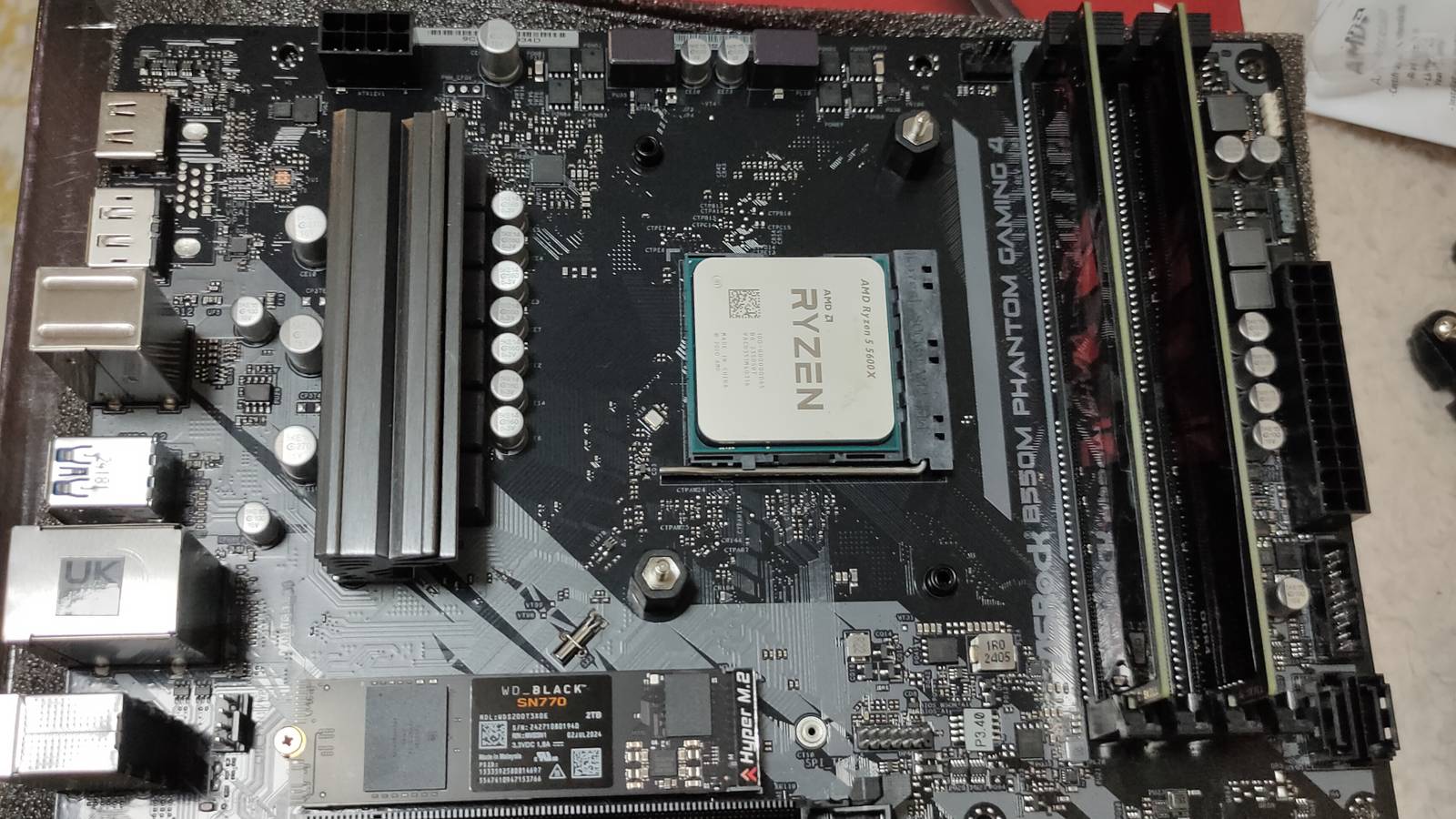
The Ryzen 5 5600 and 5600X are notably stronger, thanks to Zen 3 improvements, such as unified L3 cache, higher IPC, and higher clock speeds, which translate into smoother 1% lows and better gaming consistency.If you’re still on a Ryzen 5 3600 or building around it today, upgrading to a newer generation will deliver a clear uplift in modern games.The Intel Core i3-10100 was bad when it was released, and it's still bad today A budget processor with nothing to show for it The Intel Core i3-10100 was released at the same time as the Ryzen 3 3300X.
While both of these 4-core, 8-thread CPUs aren't great today, the i3-10100 still manages to win the race to the bottom.It was limited to just 2666MHz RAM compared to the 3300X's 3200MHz, and it wasn't overclockable like the Ryzen, either.The i3-10100's tiny 6MB of cache, low core count, and old architecture aren't a great combo for playing modern games.
Even if you get decent FPS, the constant hiccups and stutter will make you want to tear your hair out.The biggest problem with the i3-10100, though, is its dead platform.If you bought a Ryzen 3 3300X years ago, you could upgrade to a number of more powerful CPUs on the AM4 socket, but the i3-10100 is stuck on the LGA 1200 socket that can only run 10th and 11th-gen Intel CPUs.
Frankly, I'm not even sure if you should consider upgrading to a better LGA 1200 processor or just upgrading to a newer platform altogether.The AMD Ryzen 5 5500 isn't that old, but it hides several fatal flaws under the hood On paper, it's modern, but the compromises show up fast You might be surprised to see a CPU from 2022 on a list of old CPUs, but with many gamers still buying last-gen hardware to save money during the ongoing RAM shortage, it’s worth pointing out a few issues that make the AMD Ryzen 5 5500 a poor pick for gaming in 2026.Subscribe to the newsletter for CPU upgrade guidance Make smarter upgrade choices: subscribe to the newsletter for clear, actionable CPU and PC hardware insight that helps you spot aging processors, avoid bottlenecks, and pick upgrades that deliver smoother gaming.
Get Updates By subscribing, you agree to receive newsletter and marketing emails, and accept our Terms of Use and Privacy Policy.You can unsubscribe anytime.First and foremost, unlike its pricier sibling, the Ryzen 5 5600, the Ryzen 5 5500 only supports PCIe 3.0.
Aside from not being able to take advantage of faster PCIe 4.0 and 5.0 NVMe SSDs, it can also be a limitation with budget graphics cards that only use 8 PCIe lanes instead of 16 (which is likely what you're aiming for in a budget build).In some cases, this can lead to a noticeable performance dip.Examples of graphics cards that use 8 PCIe 4.0 lanes and can suffer from performance loss include the RTX 4060, RTX 5060, and RX 7600.
And that’s without even getting into GPUs that only have four PCIe lanes.Related Hey PC Gamers, Don't Blow Your Budget on This Component The Ryzen 9800X3D isn't the only cool gaming CPU on the block.Posts By Goran Damnjanovic Another major downgrade compared to other Zen 3 CPUs is its 16MB of L3 cache, which results in noticeably worse performance.
The reason the Ryzen 5 5500 is so much weaker than other Zen 3 CPUs lies in the fact that it's not a "true" desktop Zen 3 chip, but rather an APU with the integrated GPU disabled, effectively giving you a cut-down design.The other two CPUs from this "Cezanne" family you should avoid are the Ryzen 7 5700 and the Ryzen 3 5100.The point is simple: literally buy any other Zen 3 CPU, and you'll be fine.
If your CPU is on the list, it's time to move on The hard truth is that CPUs don’t always age gracefully, especially when it comes to demanding workloads like gaming.A budget CPU that ran games just fine a few years ago can struggle to deliver consistent, stable performance in modern titles due to a lack of cores, threads, cache, and other limitations that can’t be fixed with a simple overclock.The good news is that powerful processors have never been more affordable.
A sub-$200 mid-range CPU like the AMD Ryzen 5 9600X can easily last through multiple GPU upgrades and hold up for years of modern gaming.AMD Ryzen 5 9600X $183 $279 Save $96 CPU Model Ryzen 9 The Ryzen 9600X is one of the best budget gaming CPUs you can get.It's blazing-fast, power-efficient, easy to keep cool, and just a tad slower in games than the beastly 9800X3D.
CPU Speed 3.9 GHz CPU Socket Socket AM5 Cores 6 Threads 12 Cache 38 MB $183 at Amazon Expand Collapse
Read More