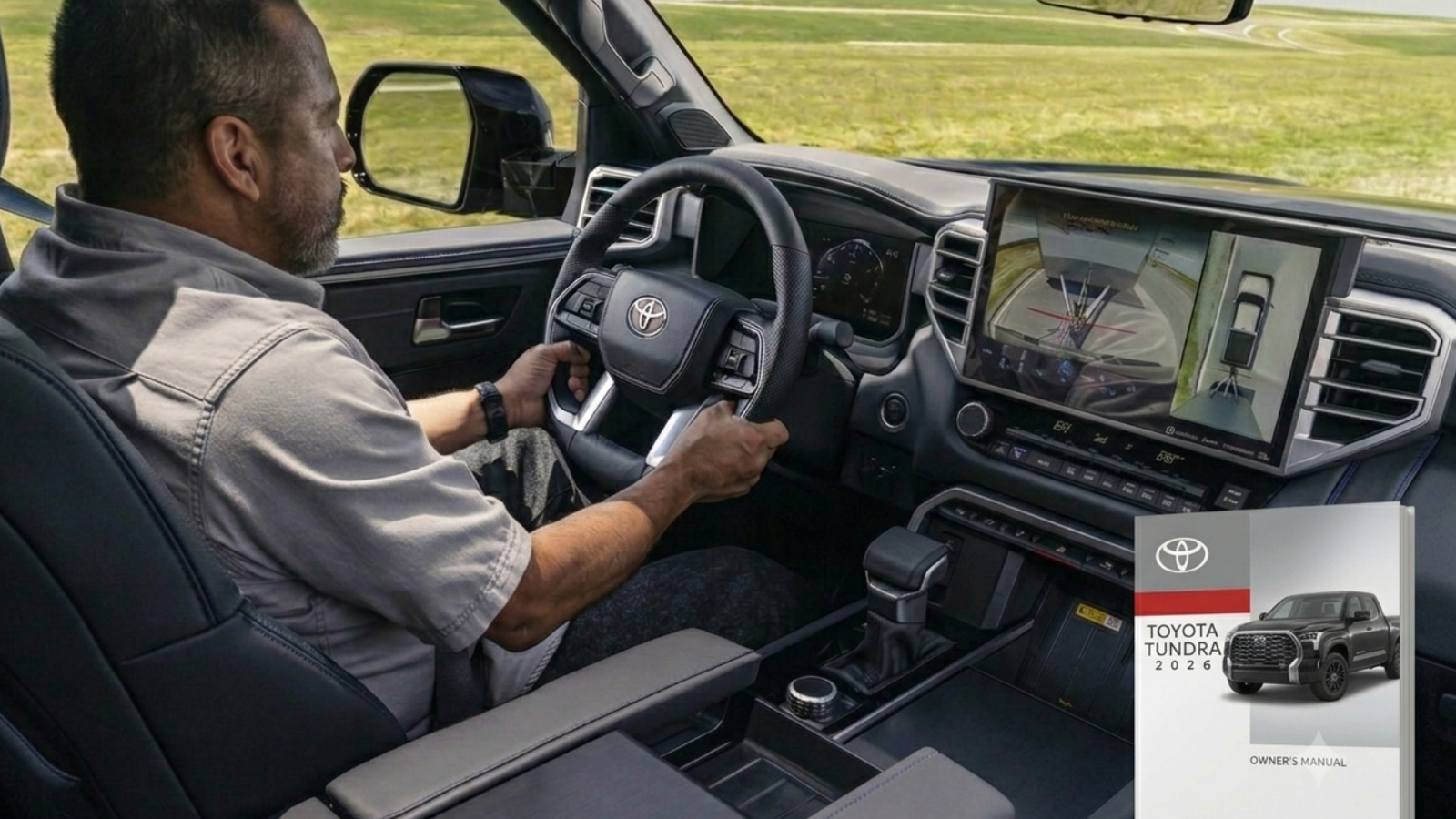
The owner's manual is one of the most useful documents you have and one of the most underutilized aspects of car ownership.Tucked in the glovebox from the day you drive off the lot, it covers maintenance schedules, tire inflation specs, fuel requirements, and warranty terms that can directly affect what you spend over time.Thumbing through your owner’s manual and spending a little time with it can go a long way.
You don’t have to read the entire thing by any means.Instead, flip to the four sections listed below as they will provide some of the most long-term benefits.The screenshots are from the owner's manual of a 2026 Toyota Tundra pickup.
4 Normal vs.severe service intervals Find out which one applies to you Every owner's manual includes a maintenance schedule, and most will outline two different intervals: normal service intervals and severe service intervals.Severe service applies to vehicles operated under conditions such as frequent short trips, extended idling, extreme heat or cold, trailer towing, or heavy stop-and-go traffic.
Normal service covers everything else.If you are operating under normal conditions but inadvertently servicing on a severe schedule, you may be visiting the shop more often than your vehicle requires.The reverse is also true.
If you tow regularly or drive mostly shorter distances in cold weather, and are following the normal schedule, you may be stretching your service intervals beyond what your driving profile demands.Whether you track oil changes by a sticker on your windshield or your vehicle's oil life monitoring system, the manual defines what your specific vehicle needs under your specific conditions.Related Transmission flushes: When they help and when they hurt your car It isn't always a "one-size-fits-all" solution.
Posts By Carl Anthony 3 Proper tire pressures An easy way to boost your fuel economy Your owner's manual lists the manufacturer's recommended PSI for your specific vehicle, which takes into account your vehicle's weight distribution, suspension tuning, and load rating.Running tires at the wrong pressure can affect fuel economy, handling, and braking, in addition to causing premature tire wear.In the screenshot gallery above from the owner's manual for a 2026 Toyota Tundra, you can see a page dedicated to tire symbols and section names, DOT quality grades, and a glossary of common terms.
These pages in your owner's manual can help you better understand the tires that came on your vehicle from the factory.When it comes to everyday driving, underinflation is a common and more expensive problem in the long run.When tires are set below the recommended PSI, the sidewalls flex more than they should, which increases rolling resistance.
As a result, your engine works harder and wear on the outer edges of the tread happens more quickly.Spending a few minutes with a high-quality portable tire inflator and the correct pressures from your manual are among the lowest-effort, highest-return items on this list.Properly inflated tires will help with fuel economy and prolong the tread life.
Note that the number printed on the tire sidewall is the maximum pressure the tire is rated to handle, not the recommended inflation level for your vehicle.The best place to find the recommended pressures for your vehicle is in the owner’s manual or on a placard on the driver’s side door jamb.2 Trip computer and fuel economy display Another practical way to increase your fuel economy Most vehicles built in the last 15 years include a trip computer with a real-time or average fuel economy display.
Your owner's manual explains what the display shows, how to reset it, and what the various readouts represent (if your vehicle has the latter option).The practical value comes from being able to keep a watchful eye on the display.Watching your instantaneous fuel economy respond to throttle inputs, following distance, and highway speed trains you to drive more efficiently.
For example, smooth acceleration, gentle braking, and moderate acceleration yield measurable improvements in fuel economy, which will be reflected on your driver’s display.The owner’s manual also lists the fuel grade specification for your engine.The word “Required” means the engine needs that octane rating to operate at its peak, whereas the word "Recommended" means the engine is optimized for that grade but is designed to run on regular unleaded, often with some reduction in output.
Most vehicles carry a recommended grade rather than a required one.However, if you own a sporty SUV or performance car and premium is recommended, it’s best to fill up with that each time.Related I ran a dealership express lube—these 4 services help your car last 200,000 miles With new car prices at an all-time high, I’ve resolved to keep my current vehicle as long as possible.
Posts By Carl Anthony 1 Warranty coverage details A quick look helps you understand how to use the coverage you have The warranty section of the owner's manual is one of the more useful reads, especially after you have just purchased your vehicle.Deals Save on car accessories: deals on inflators, gauges Find discounts on essential car tech and accessories — portable tire inflators, digital tire gauges, OBD-II scanners, dash cams, and portable jump starters.Shop deals to cut maintenance costs, boost fuel economy, and keep tools on hand for everyday savings.
Deals Explore Accessories & Everyday Tech Deals Most new vehicles come with multiple overlapping warranties: a basic bumper-to-bumper term, a longer powertrain term, corrosion coverage, hybrid component coverages (if applicable), and emissions-related coverage with federally mandated minimums.Each carries different mileage lengths, time limits, and specific conditions tied to coverage.Knowing what is covered also helps you make the most of your warranty.
For example, even minor fit-and-finish issues, rattles, and noises fall within the bumper-to-bumper term and are worth addressing while that coverage is active.How to get started Spending an hour with your owner's manual, specifically the maintenance and warranty sections, is one of the few things in car ownership that is genuinely free and almost never done.It does not require an appointment, a subscription, or anything of the sort.
You can also try uploading a PDF copy of your owner’s manual to something like Gemini, ChatGPT, or Claude and asking it specific questions about your vehicle.Doing so can help you better understand what features you have and how they work, or in some cases, you may find features you didn’t even know you had.
Read More