Does it matter what brand or model of GPU you buy? Regardless of who the board partner is, the GPU on the card still comes from AMD, NVIDIA, or Intel, right? So why are you paying more for a "premium" card? As someone who has had to buy the cheapest, most bare-bones versions of a GPU many times before, I can tell you that there's absolutely nothing wrong with doing this.At the very least, you should be getting the minimum reference performance the chip maker promised, and in some cases a surprisingly higher ceiling than you might think.Still, there are genuine trade-offs when you opt for the budget side of the board spectrum.
While some brands are more focused on budget cards and others tend towards more premium card designs, these days most brands have budget and premium boards with the same lineup of GPUs.So this applies within a given brand as much as it does between brands.What matters is the individual card design, price, and compromises.
The savings can follow you home as fan noise Sometimes a cheaper card really blows While the GPU and memory might be the same performance and quality in two cards, all the other furniture can be wildly different.Premium cards tend to have better-engineered, higher-quality cooling solutions.If both cards reach their rated boost clock levels, then this makes no difference to performance.
But a better cooling solution can give you that same performance at much lower noise levels.Cheap fans with noisy bearings, too much frugality with copper, and a lack of heat pipes or vapor chamber technology can all lead to a noisier card that may also suffer a cooling system failure earlier than more expensive models.If you were going to replace the cooling anyway, or you have a PC case or setup that negates the potential noise issues, maybe this doesn't matter that much.
However, when Tweakers.net (translated from Dutch) tested a bunch of RTX 5070 cards, they found that the Inno3D Twin X2 card was louder than every other 5070 model tested, except for the NVIDIA Founder's Edition, while being the cheapest card in that specific lineup.You're probably giving up some ports We like a lot of monitors Close How much do you think about the ports on your GPU? If you have your PC hooked up to a single monitor, probably not much.That said, it's becoming normal to connect your PC's graphics card to a variety of displays.
You might have a multi-monitor setup, or have a secondary connection to a TV, VR headset, or projector.If you're using HDMI-only displays, you may end up having to buy a bunch of DisplayPort to HDMI adapters, which might end up wiping out some of the money you saved by opting for a cheaper card.Taking the 5070 as an example again, some models have two HDMI 2.1B connectors, while others have just one.
You can give up years of warranty coverage Read the fine print! Fair or not, I don't expect a budget board partner card to have as long a lifespan as a more premium model.I expect the components to be of a lower quality, and less R&D time put into things like cooler design and eliminating hotspots on the board.It's not just me, though; the actual card manufacturers seem to reflect this differing level of confidence based on their warranties.
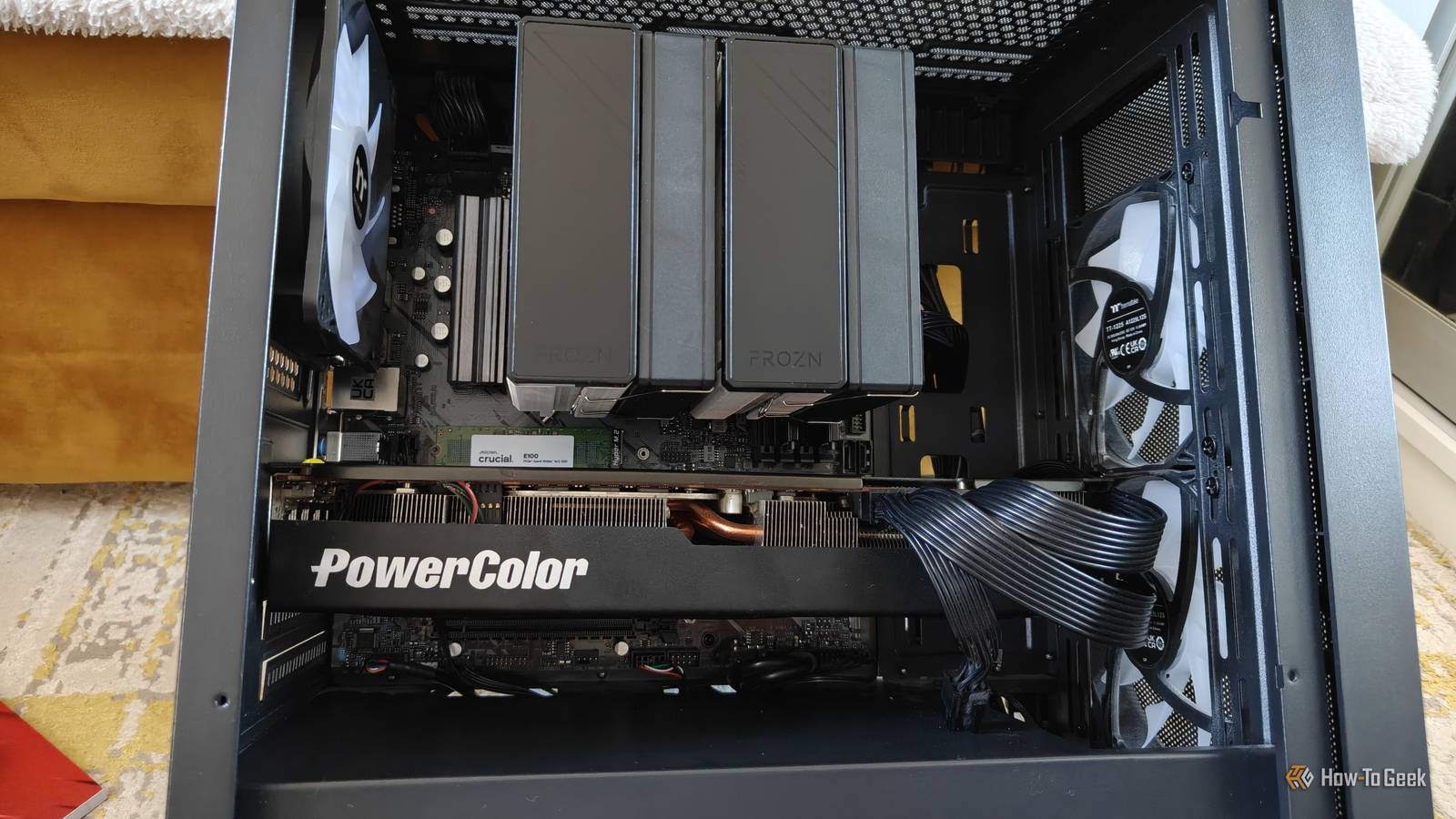
For example, PowerColor's warranty page shows a strict 2-year warranty, while Gigabyte offers a 4-year warranty with online registration.Peak performance can suffer You have to pay for the fastest speeds Let's be honest, most of us just really care about how performant the cards are.The good news is that a budget card should perform pretty much the same as a premium card at stock settings.
A card with a better cooler will get closer to the maximum factory boost clock levels, so it's worth checking benchmarks before buying.However, giving up something like 50MHz while saving a decent chunk of change is probably worth it.Besides, you might win the silicon lottery with your cheaper card and get one that undervolts and overclocks beautifully.
It's half the fun of being a budget PC builder.Assuming you can stand the even higher levels of noise from the stock cooler.I'd still do it if the price is right A cheap version of a given GPU isn't a free lunch by any means.
Corners have to be cut in order to hit that lower price point.Whether it's worse quality control, less durable components, or lower boost or overclocking potential, you're giving something up.Is it worth the extra money? That's debatable, and depends on your personal situation.
If I know I'm going to be upgrading to a new GPU in two or three years anyway, who cares about the warranty being no longer than that? Also, I'd rather buy the cheap board partner version of the next GPU tier than the premium version of a lower GPU tier.No amount of boost or overclocking is going to turn a 5060 into a 5070, after all.In other words, buy the card you want, but be aware of what you gain or lose by choosing the budget or premium versions of the same GPU.
Read More