Every major technology wave comes with big predictions about how it will change the world.Today, many of those predictions center on artificial intelligence (AI).Futurists like Ray Kurzweil and Michio Kaku argue that AI and future technologies will put very powerful tools into the hands of individuals.
Most of today’s AI headlines are about chatbots, coding assistants, or the future of work.Manufacturing is rarely part of the story.So what happens when AI meets manufacturing? Well, the answer could have less to do with futuristic robots and more to do with an idea proposed more than four decades ago by futurist and author Alvin Toffler.
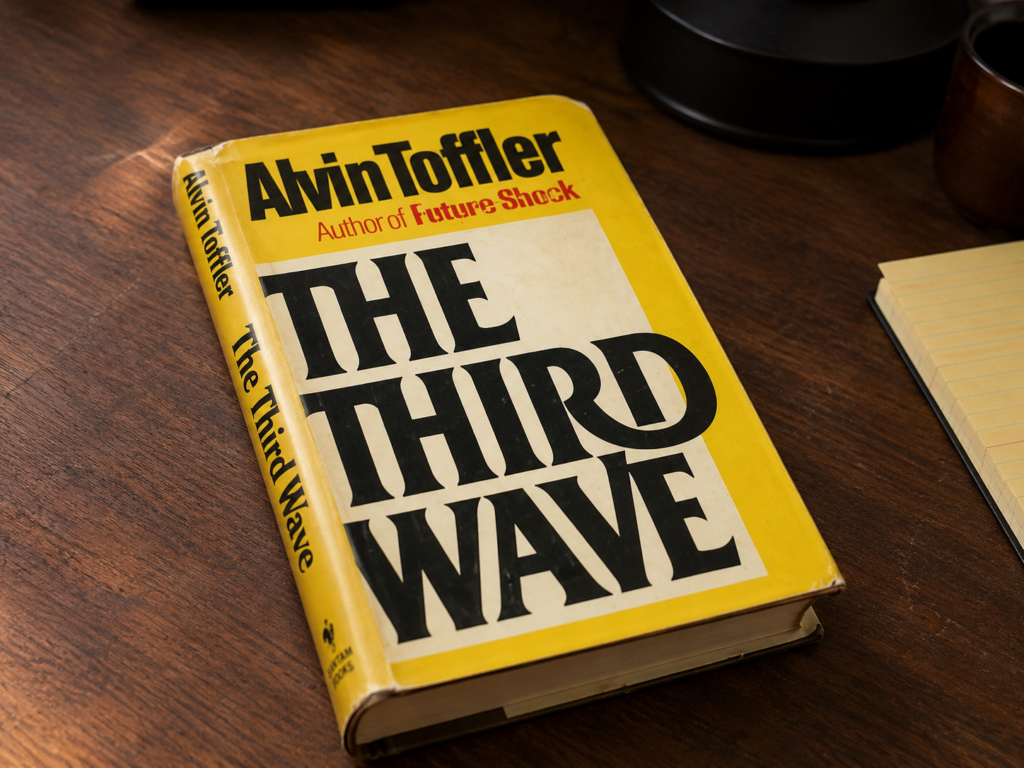
In his 1980 book The Third Wave (Chapter 20, The Rise of the Prosumer), Toffler introduced the idea of the “prosumer,” a blend of producer and consumer.He believed society would gradually move away from centralized mass production and toward a future in which individuals would participate in creating the products and services they consume.Alvin Toffler.
Image courtesy of Toffler Associates.At that time, Toffler’s idea sounded pretty ambitious.Making products required factories, expensive machinery, and engineering know-how.
Most people were consumers who bought products designed and manufactured by companies.Forty-five years later, the combination of AI and additive manufacturing (AM) may be bringing Toffler’s vision closer to reality.But not because factories are disappearing.
And not because AI is replacing engineers.Instead, AI is making it much easier to design products in the first place.The Promise of AM In the late 2000s, desktop 3D printers became more common, and so did the idea that manufacturing could move beyond factories.
Instead of buying everything from large companies, people could print some products themselves.That possibility helped fuel the maker movement and projects like RepRap.For a while, it looked like 3D printing might change manufacturing.
It changed a lot, though not in the way many people expected.Desktop printers became popular among hobbyists, educators, and makers, but few people began designing and manufacturing their own printers.Most people downloaded files that someone else had already created, and most consumer products continued to come from the same factories and production lines as before.
For many people, one of the biggest barriers was knowing how to design a product.Creating a part isn’t just about its shape.It also has to work, so engineers have to think about materials, making sure it holds up to everyday use, and designing the part so it can actually be made.
Clearly, turning an idea into a production-ready part isn’t easy, even for experienced designers.AI Enters the Design Process AI has quickly found its way into engineering and product design.At first, it was used mainly for generative design, with software creating multiple design options based on goals set by the engineer.
Companies like Autodesk helped popularize the technology, giving engineers new ways to explore and refine designs instead of starting from scratch.MJK Performance used generative design technology to create a set of lighter and stronger triple clamps for a drag bike.Image courtesy of Autodesk.
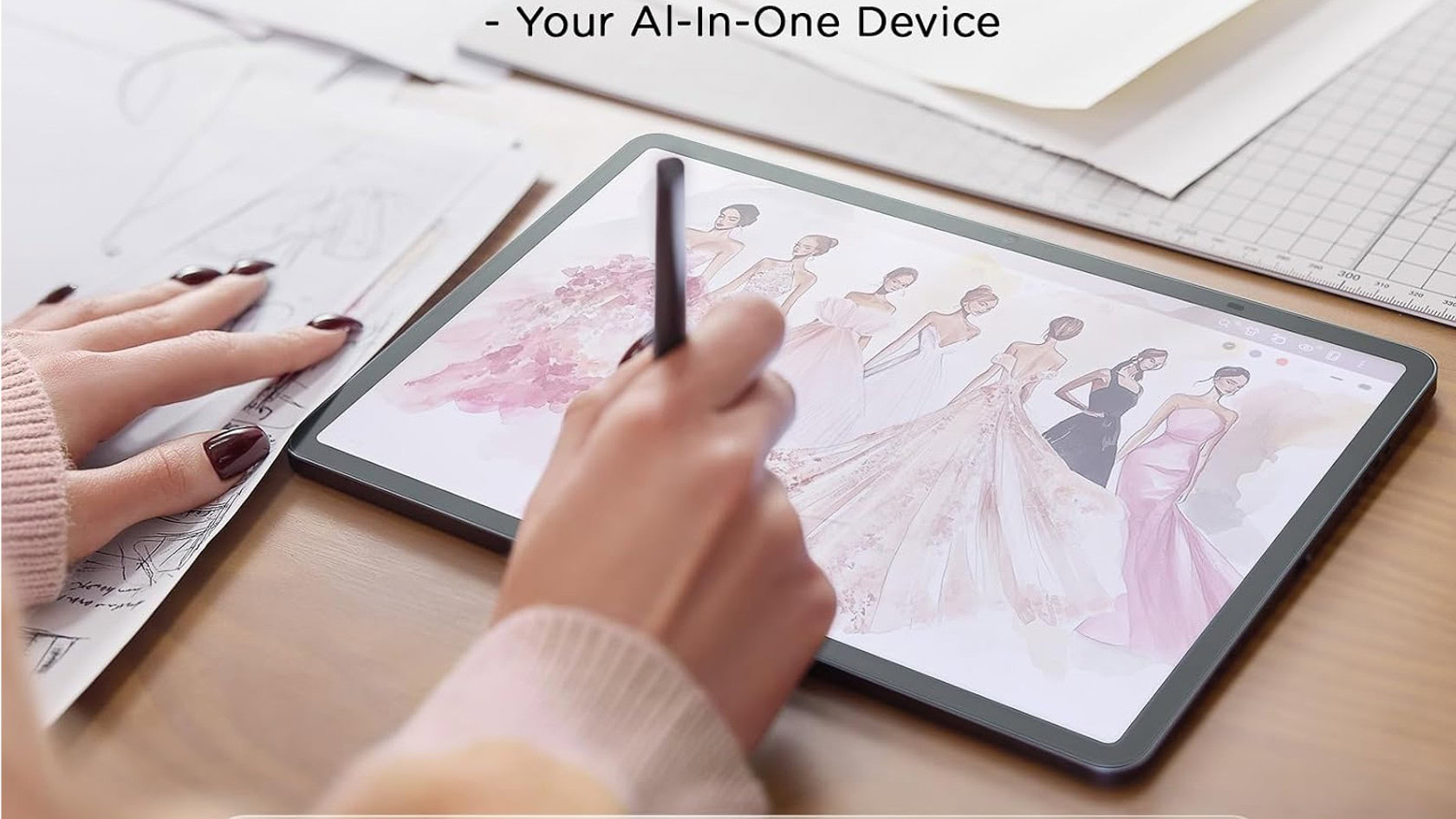
Recently, AI-powered engineering platforms have expanded into topology optimization, simulation, materials selection, and workflow automation.Perhaps more important is the rise of text-to-CAD systems.Although the technology is still evolving, users can describe a product in natural language and have AI generate an initial 3D model.
Of course, the technology is not yet perfect.Engineering oversight is still important.But the way people interact with design software is becoming much simpler.
The same thing happened with computers in the 1980s and 1990s.Back then, computers required users to type commands to get anything done, making them difficult for most people to use.Graphical interfaces changed that by replacing lines of code with windows, icons, and menus.
Suddenly, computers became accessible to millions more people.AI could have a similar effect on engineering.Instead of learning complex CAD software from the ground up, users can simply describe what they want to create in plain language and let AI handle much of the initial work.
The Missing Piece of Toffler’s Vision This is where Toffler’s idea starts to make sense.His vision was never just about giving people access to manufacturing.It was about giving them the power to create.
For consumers to become producers, they needed access to both production and design capabilities.3D printing made manufacturing more accessible.AI is now starting to do the same for design.
Take 3D printed prosthetic hands, for example.Not long ago, getting a prosthetic usually meant relying on a manufacturer to produce a standard device.Today, people can download open-source designs, adjust them to fit the user, and print many of the plastic components on a desktop 3D printer.
The result is a more personalized, lower-cost device.E-Nable Uses 3D Printing to Give Prosthetic Hands Traditional manufacturing is built to produce millions of identical products as efficiently as possible.Meanwhile, one of 3D printing’s biggest strengths has always been customization.
Whether it’s one part or one thousand, every print can be different without the need for new molds or tooling.AI could make that advantage even more useful.Instead of spending hours creating each new variation, designers can use AI to adapt existing models or generate new ones much more quickly.
That could make personalized products easier to produce across industries where every customer is different.Dental aligners are one of the earliest examples, because every patient receives a unique treatment plan done with digital workflows and AM.Other consumer products doing this already include eyewear, footwear, sporting goods, ergonomic tools, gaming accessories, and home products, designed around individual users instead of the average customer.
Together, they could make large-scale customization much easier.The Rise of the Manufacturing Agent Another idea getting plenty of attention is the AI agent.In manufacturing, it could become more than just a chatbot or digital assistant.
Instead of moving between CAD software, simulation tools, optimization programs, and slicers, users could eventually depend on a single AI system to deal with much of that work.A user could simply describe what they need.And since drones have been on our minds lately (following our recent drone report and webcast), they’re a good example.
Imagine typing something like: “I need a lightweight drone bracket that can withstand vibration and outdoor use.” An AI system could then generate several design concepts, optimize the geometry, suggest ideal materials, run simulations, prepare the manufacturing files, and recommend the best production method.So instead of replacing engineers, these systems can boost productivity and extend engineering capabilities to a much bigger group of people, not to mention the impact this could have for small businesses, entrepreneurs, educators, and hobbyists.Why Factories Are Not Going Away It’s all very exciting really, but it’s still important to keep things in context.
AI can make designing products much easier, but that doesn’t mean traditional manufacturing is going away.As MIT manufacturing expert Dr.John Hart has argued, high-volume manufacturing will remain the most efficient and cost-effective option for many products.
“Additive manufacturing will not make everything in the future.It won’t make close to everything.But it will touch the life cycle of nearly every product that’s designed and made.
That can be prototyping, tooling, service parts, or volume production of at least some of its components,” Dr.Hart predicted.Cost is another factor.
Injection molding remains the cheapest way to produce millions of identical parts.Many consumer electronics, cars, packaged goods, and other high-volume products still depend on large factories and established supply chains.For those industries, traditional manufacturing will continue to make the most sense, as Hart described.
Regulations are another reason.Medical devices, aerospace parts, and other safety-critical products must meet strict certification requirements.As AI becomes part of the design process, companies and regulators will also have to answer new questions about validation, liability, and who is ultimately responsible for the final product.
And yet another challenge is intellectual property.If AI creates a replacement part for an existing product, who owns the design? The answer isn’t always clear, and manufacturers, software developers, and regulators are still trying to figure it out.Quality is another concern.
An AI-generated design isn’t automatically safe or ready to manufacture.It still needs to be tested, reviewed, and, in many cases, approved before it can be used.Of course, none of this means AI and 3D printing won’t change manufacturing.
They certainly will.But they’re more likely to expand where and how products are made than replace traditional manufacturing altogether.A Future That Looks Familiar For years, the AM industry has talked about distributed production, digital inventories, and on-demand manufacturing.
Those ideas haven’t changed.What has changed is how much easier it may become for people to participate.3D printing made manufacturing more accessible.
AI is beginning to do the same for design.That doesn’t mean factories are going away or that everyone will become an engineer.But it could mean that many more people, from entrepreneurs and small businesses to hobbyists and makers, can turn an idea into a product.
More than 40 years ago, Toffler imagined a future where the line between producers and consumers would begin to blur.AI and AM could one day deliver that vision.Subscribe to Our Email Newsletter Stay up-to-date on all the latest news from the 3D printing industry and receive information and offers from third party vendors.
Print Services Upload your 3D Models and get them printed quickly and efficiently.Powered by FacFox Powered by 3D Systems Powered by Craftcloud Powered by First Mold Powered by Xometry 3DPrinting Business Directory 3DPrinting Business Directory
Read More