Smart home technology is meant to save you time and effort, and it can definitely do so when used well.However, it's all too easy to fall into habits that can end up wasting time rather than saving it.Focusing on control, not automation There are two key things that a smart home allows you to do.
The first is that you can use it to control your devices remotely.You don't have to turn on a light by flipping the switch that's in the same room.You can turn it on from your phone, even if you're on the other side of the world.
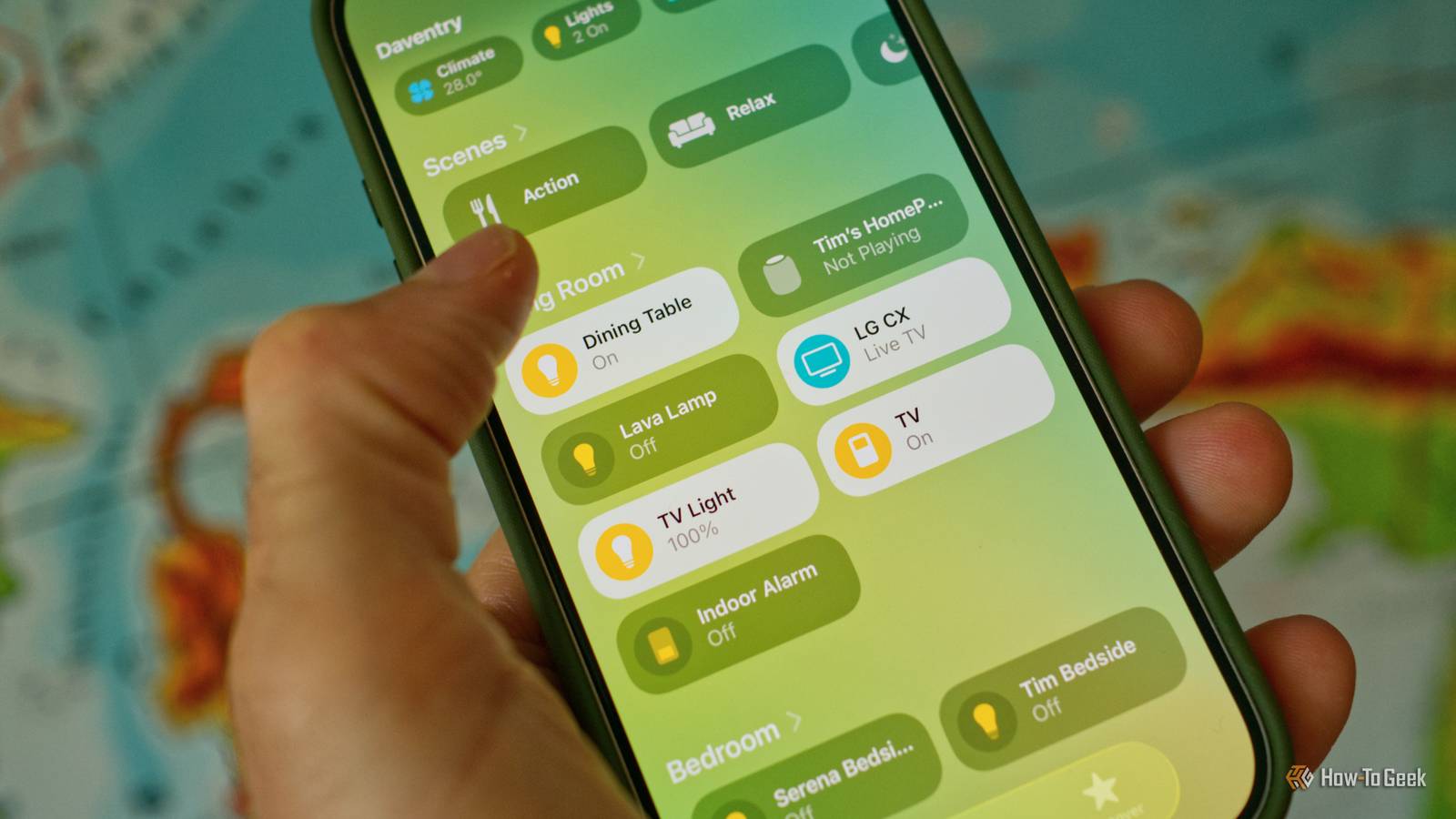
The second is that you can use it to automate your devices.Instead of having to use your phone to turn on a light, you can use a motion sensor to turn it on automatically when motion is detected.Paulus Schoutsen, the founder of Home Assistant, wrote a blog article laying out his vision for the smart home software in which he states that "the perfect app is no app" and that "there are hardly any valid use cases for being able to control lights from your phone except for showing off." It's certainly true that turning on a light from the dumb light switch is faster than having to fish out your phone, open the right app, and tap the appropriate button.
Schoutsen was writing about Home Assistant, but the same applies to any smart home ecosystem.Wall-mounted control panels can have their uses, but if you're still turning on your lights by walking over to a panel and tapping a button, it's not really any quicker than a traditional light switch.Try focusing on automation rather than control, so that your lights turn on by themselves, exactly when and where you want them to.
Related Building a smart home? Here’s one design principle you shouldn’t ignore ”Guest mode” is a sign that you’ve missed the brief.Posts 4 By Tim Brookes Complicating what should be simple This is something I'm incredibly guilty of.Some automations are complex by necessity.
This isn't the case for everything, however.There are many instances where a simple automation will do the job perfectly well.The trouble with complicated automations is that the more complex the automation is, the more that can go wrong.
It also makes it much harder to figure out why the automation went wrong when you're not even sure why you added parts of it in the first place.Instead of wasting hours having to fix overly complex automations, start simple and only add complexity when you find a situation where your simple automation doesn't work.Turning every idea into a notification Sometimes notifications from your smart home can be really useful.
If a person is detected at your front door, for example, a notification informing you of the fact is a useful thing.It's easy to fall into the habit of getting notifications for everything that happens in your smart home, however.You end up with constant interruptions that are more distracting than genuinely useful, and once you pick up your phone to check them, you can end up wasting even more time on social media or replying to messages.
You can save your sanity by only getting notifications for truly important or time-sensitive reasons.Neglecting the other people in your home Unless you live alone, the chances are that the other people in your home are going to have to use your smart home controls or automations.If you're not careful, this can cause frustration and waste time for everyone involved.
A classic example is smart light bulbs.They can only be controlled remotely when they have power, so if the light switch is off, you can't turn them on and off with an app or with automations.Trying to get your family to leave all the light switches untouched can be a thankless task, because they've spent their whole lives turning on lights using switches.
You end up having to waste time turning light switches back on while they continue to turn them on and off manually, trying to get them to work as expected.Getting the other people in your home on board and talking them through how your automations work and what they do can save you a lot of time.It also helps if your automations are genuinely useful for everyone in your home, rather than simply your own pet projects.
Including too much in routines and automations You've created the perfect morning routine.Each morning, it turns on the lights, opens the blinds, starts a relaxing playlist, turns on the coffee machine, reads your morning briefing, turns on the heating in the bathroom, and unlocks the front door.The trouble is that you may not want all of those things to happen every day or exactly at that time.
You then have to spend time turning off all the parts that you don't actually want each morning.Instead of saving you effort, you end up wasting more time stopping things from running.Subscribe to the newsletter for smarter home habits Make your smart home actually save time—subscribe to the newsletter for practical smart-home tips, simple automation patterns, and guidance on reducing unnecessary notifications and friction for everyone in your household, plus broader home-tech coverage.
Subscribe By subscribing, you agree to receive newsletter and marketing emails, and accept Valnet’s Terms of Use and Privacy Policy.You can unsubscribe anytime.It's very tempting to add as much as you can to routines and automations, just because you can.
However, you'll be better off only including the things you actually need.Smart home tech is a tool, and like any other tool, how effective it is depends on how well you use it.It's easy to think that because you're using smart home devices, you must be saving time.
However, if you fall into bad habits, your smart home may not be so smart after all.
Read More