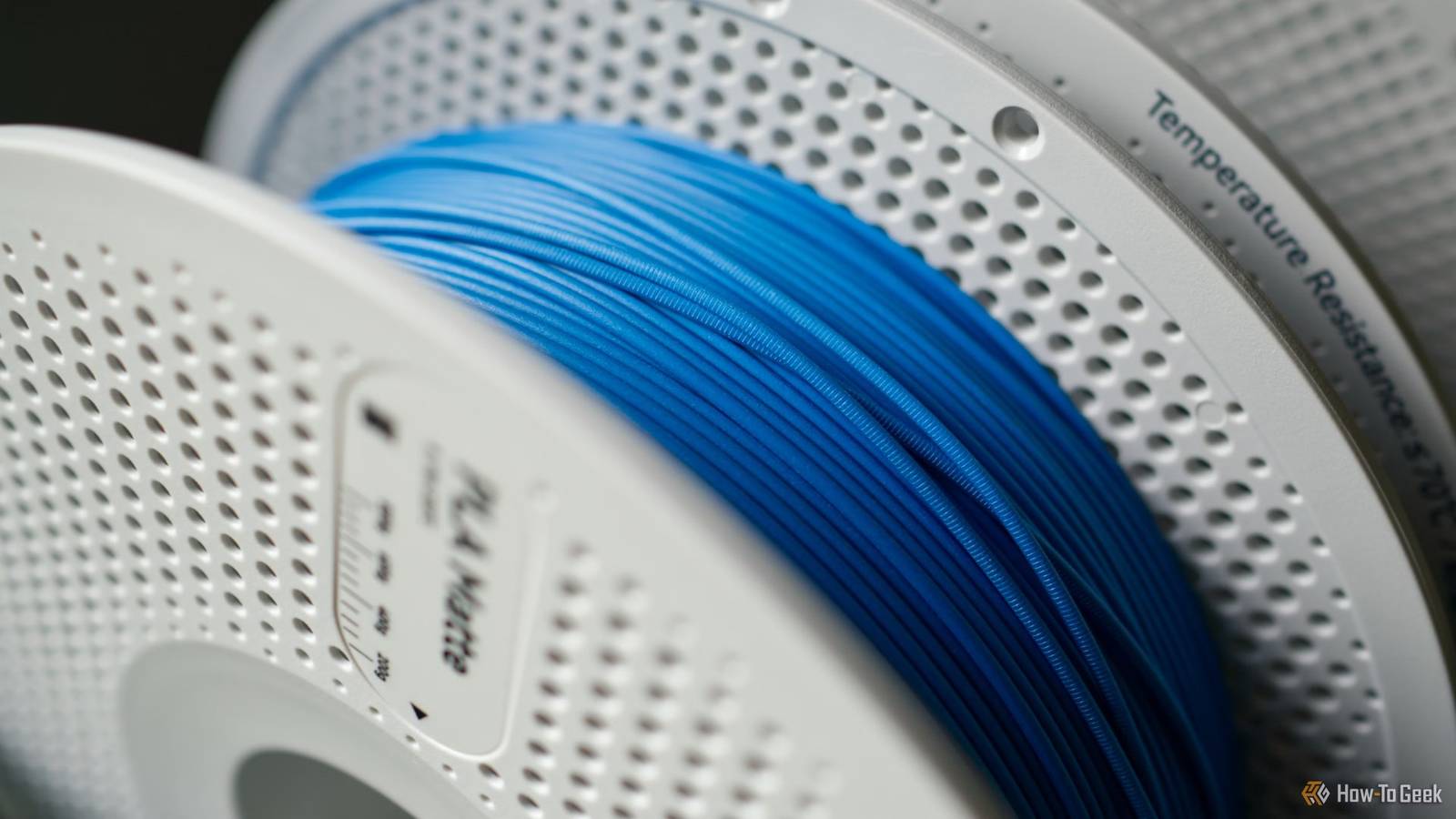
Not sure what to do with those odd spools of filament you have leftover? Don’t throw them away; there are plenty of ways to use them, and some are a little more obvious than others.Use them as you would any other spool Running out of filament isn’t enough to ruin a print, especially not on today’s modern printers.Most have filament detectors that know when you’ve run out and automatically pause the print before disaster strikes.
This gives you an opportunity to load a new spool and continue the job.Naturally, you’ll want to match the filament type closely.This means not mixing materials, though you can afford to be less fussy about color.
For many functionality print jobs, color isn’t that important.If it is, just swap the old spool for an identical one and carry on.If you have a modern printer with a material management system like Bambu Lab’s AMS or Prusa’s MMU, then this can be taken care of for you.
Just make sure the slicer knows which filament is in which slot before you start printing, and the switchover should happen automatically.Print something tiny Another option is to use up the spool by creating some very small items that don’t require much filament.You might normally consider these to not be worth printing since you can buy them in bulk and for cheap, but when it comes to putting your leftover filament to good use, exceptions like this make sense.
Printables had a contest called Last Meters in 2022, which focused on small prints designed to use that last meter of filament.There are more than 1000 submissions to browse through and inspire you.Ideas include clips (for filament, plants, or cables), zip ties, thumbscrew covers, keychains, tiny keyring whistles, labels, valve covers for car and bicycle tires, thin bookmarks, binders for paper, cable protectors, and more.
Attach it to a new spool with a filament connector The Sunlu filament connector is a $45 accessory that lets you splice two types of filament together.It heats to 185ºC in three minutes for PLA or up to 240ºC for PLA, ABS, and PETG.The connector precisely bonds two ends of filament by holding them in place.
You can then use this in your prints as one single strand.Not only is it a good way to prevent waste, but you could get creative and make your own multi-color filaments.The more filament you have, the more you might want to consider a filament spool winder like the Pastamatic.
SUNLU Official Splicer & Filament Joiner Brand Sunlu Max Print Temperature 240C This handy-dandy device lets you make long strands of filament from short pieces.It's easy to use and works with a wide variety of materials.$36 at Amazon Expand Collapse Calibrate and try new settings Let's be real—you shouldn’t be printing too many Benchy benchmarks.
Though the boat is cute and serves a purpose, most people aren’t using Benchy to actually benchmark anything.In particular, printing a Benchy for each different type of filament you have available feels like a colossal waste of filament.But there’s something to be said for using the model (and others) to test out various print settings.
You can do this by making changes to things like layer height, line width, ironing settings, speed, surface patterns, infill density, and more.Leftover filament could be a good excuse to test out some wildly different print settings, just remember that your results will be material-specific.Save it for cold pulls A cold pull is a maintenance technique that’s designed to clean inside a 3D printer’s nozzle by removing debris, leftover filament, and anything else that could compromise print quality or cause clogs over time.
Your 3D printer will have specific instructions on how to perform a cold pull, but the basic premise is the same across models.First, you heat the nozzle to printing temperature or just a bit higher and manually extrude some filament onto the print bed.Next, you cool the hotend down and slowly extrude filament until the resistance becomes too great, in order to bond the melted filament with any debris in the nozzle.
Finally, manually retract and gently pull up on the filament at the same time, which should cause it to come out of the nozzle and bring any unwanted debris with it.You don’t need much filament to perform a cold pull, and you can do it with many different filament types.Use it in a 3D pen 3D pens like the 3Doodler and SCRIB3D are often marketed as toys, but they can have real utility too.
These pens melt and extrude filament, which solidifies as it leaves the nib.Most use standard 1.75mm filament, which means they’re a great way to use up your leftover filament, particularly PLA (though some models advertise ABS compatibility, other filaments can be far more toxic).Subscribe to the newsletter for practical 3D-print tips Make subscribing count: get tested 3D-printing hacks, spool-saving project ideas, nozzle-maintenance steps, and tool recommendations to help you reuse leftover filament and improve prints with practical guidance.
Get Updates By subscribing, you agree to receive newsletter and marketing emails, and accept our Terms of Use and Privacy Policy.You can unsubscribe anytime.Though you can use them to create sculptures, these pens also have utility in 3D printing projects as a means of bonding items together.
Rather than use glue, you can use a 3D pen to form a filament bond between two pieces as long as you work quickly.Options range from $40 kids toys like the MYNT3D Super 3D Pen to prototyping tools that cost more than $160 like the 3Doodler Pro.3Doodler PRO A handheld 3D printing pen for design and prototyping, with support for a a wider range of materials than ever, including wood, copper, steel, Vibers, PLA, PHA, and CF10. Compatible with 1.75mm filament spools and popular spool sizes, making it a perfect companion for full-sized 3D printers or a space-saving alternative for creative professionals.
$161 at Amazon Expand Collapse MYNT3D Super 3D Pen Turn ordinary drawings into 3D works of art with a Super 3D from MYNT3D.A stepless speed slider lets you regulate flow for optimal control of material while you're drawing and the ultrasonic sealed nozzle is nearly clog-proof and provides market-leading durability.Great for kids, artists and engineers of all ages, compatible with 1.75mm PLA and ABS filament.
$40 at Amazon Expand Collapse Looking for more ways to save money when 3D printing? Stop making these silly mistakes.
Read More