Gaming is great, but it usually takes place in a virtual world on your gaming device of choice.I wondered if it would be possible to create a game that spilled over into the real world.With a cheap handheld and Home Assistant, I was able to do exactly that.
Add How-To Geek on Google Add as Preferred Source Follow on Google Discover The R36 Ultra started as just a way to play retro games I knew that I should be able to use it to do more I'd wanted an R36S for a long time, having first come across people posting about them on Reddit.It's an inexpensive Linux handheld that can run emulators for popular gaming systems of the past, built in a similar form to a classic Game Boy, but with the addition of analog sticks and shoulder buttons.It can play ROMs from classic 8-bit and 16-bit systems of the past and is even able to handle some 32-bit and 64-bit games.
When I finally bought one, I opted for the R36 Ultra because this model includes built-in Wi-Fi.I was pretty sure that I'd be able to do some cool stuff with this device beyond just playing games, and I knew that having onboard Wi-Fi would make a lot more things possible.Related 3 ways to turn your old Wii Remote into a Home Assistant controller Yes Wii can.
Posts By Adam Davidson My first project was building a smart home controller I could walk around I can control my smart home by navigating an 8-bit version of my house Close I'm a big fan of Home Assistant, so the first thing I decided to do was use the R36 Ultra to control my smart home.I didn't just want a dashboard that I could control with the handheld's buttons, however.I wanted something far cooler than that.
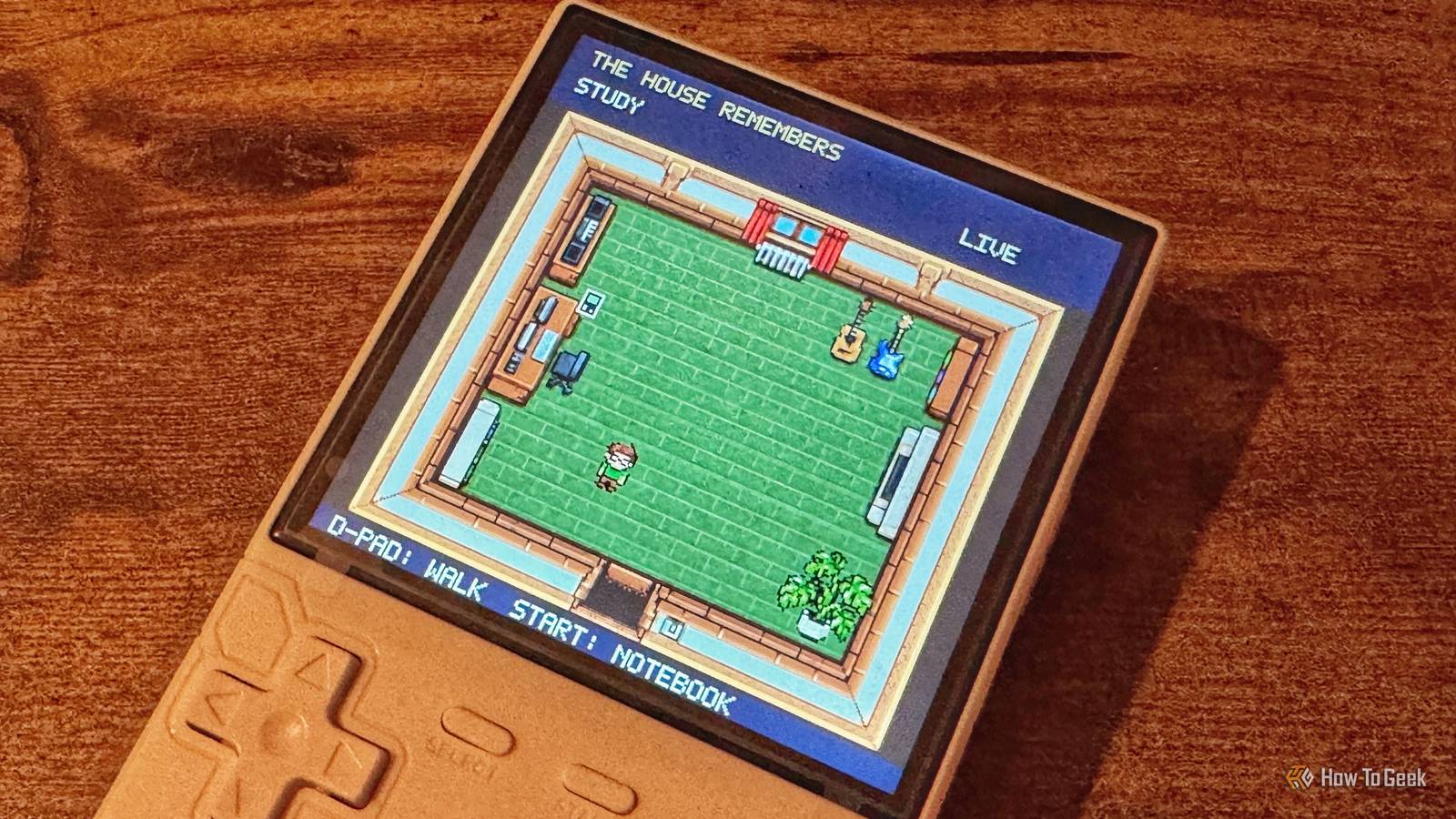
I used Codex to build an 8-bit recreation of my home, complete with many of the smart home devices that fill my house.The idea was that I'd be able to walk my character around the virtual house, interact with these devices, and see the response from the real devices in my home.It turned out even better than I'd imagined.
The game version of my home looks awesome, and it's incredibly satisfying to walk up to a light switch and interact with it to make the lights come on in real life.I can do things such as playing music from my stereo, controlling the TV, or turning on the electric blanket on our bed, all from within the game.It's by no means the most efficient way to control a smart home; if the character is in the bedroom and I want to turn on the TV, I need to walk all the way downstairs and into the living room before I can control it.
It feels a little like schlepping across Hyrule Field in the original , where the journey was half the fun (although I'm yet to add a horse).While it may not be practical to use, it's insanely cool.Home Boy was so good I wondered if it could become a real game Using real devices was a real lightbulb moment The virtual game (called Home Boy, obviously) was so good that I was hit by a moment of inspiration.
It looked like a real game, but made real things happen in my home.I was struck by the idea of turning it into a real game, with puzzles that could only be solved by interacting with my real home.I started to talk through the idea with Codex and thrashed out some ideas.
I didn't want to just tell Codex what to make the game do, because then it wouldn't be any fun for me to play.The final concept for the game was of someone mysterious trying to communicate with the main character (me) through the devices in my home.These devices provide clues that would help me progress in the game and uncover more clues.
After figuring out the basic concept, I asked Codex to build the first level without telling me exactly what it involved.I wanted to be able to play the game without knowing the puzzles in advance to see if they would actually be solvable using real smart home devices.It built the first level, and then I took it for a spin.
Home Assistant connects the puzzles to my real house The game on the handheld uses real physical devices for clues Close Unsurprisingly, the game was far from perfect, but it had some genuinely awesome moments.It started in my home office, where a desk drawer was locked with a three-digit combination.A note on the bookshelf gave me a code with colors corresponding to numbers, and when I hit the light switch, the real smart bulb in my home office turned red, then green, then blue, giving me the code for the drawer.
A clue in the drawer sent me to the living room and asked me to turn on the TV, and it opened a web page on my TV with another clue.Solving that clue took me back to my home office, where four tones played through my stereo to help me solve another clue.All of the real-world stuff was done with commands sent from the game to my devices via Home Assistant.
The story was a little weak in places, and the puzzles were fairly simple, but the concept really worked.The real devices in my home became part of the game, and I was genuinely impressed by what Codex had built.My plan is to work on a better version of the game with real puzzles and a real story that I will write myself, and then have the kids play it; it should blow their tiny minds.
Blending the virtual with the real is awesome The game may have been fairly basic, but I honestly really loved playing it.Having my choices in the game cause real things to happen in my home was genuinely thrilling.I can't wait to see what puzzles I can come up with for my kids to try to solve.
Read More