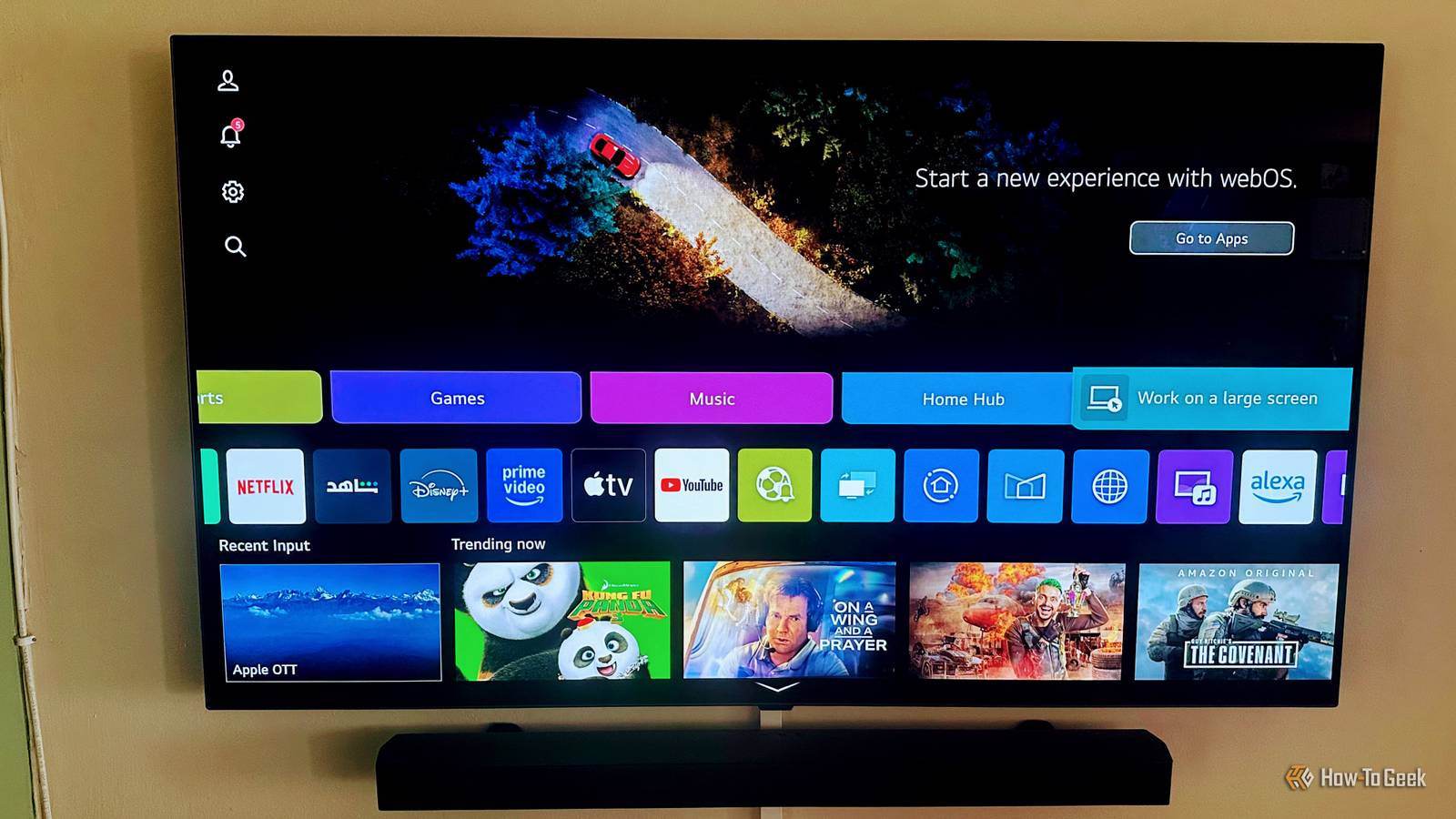
"What's going on at the top of the TV?" When my wife said that, it was the first time I realized that my OLED TV was dying.A wavy pattern of dead pixels had appeared along the top edge of the TV.A mere three years after purchase, and a full year after the warranty had expired.
Add How-To Geek on Google Add as Preferred Source Follow on Google Discover Did I do something wrong? Was this some form of burn-in or incorrect usage? It turns out my TV has OLED "edge rot," something RTINGS.com describes as a "plague," and LG doesn't seem very bothered unless it happens while the TV is withinwarranty.So, now I have a TV I expected to get 5–10 years of use from heading to the trash heap.What's going on? What is OLED edge rot? Creeping death Close Simply put, "edge rot" is the name used for dead pixels and other defects forming along the edge of an OLED panel.
You can see it as a wavy pattern on my set, but the exact pattern can vary.As far as anyone can tell, this is (possibly) caused by a failure of the seal on the affected edge or perhaps contamination at the factory.Once the seal is compromised, air and moisture can enter, damaging the pixels beyond repair.
Like a disease, this seems to be a progressive issue, but I have no idea how long the rot was happening before it was bad enough for us to notice from our usual viewing distance and position.Which TVs are affected? It's not good news According to the RTINGS.com investigation, 14 out of the 16 WOLED (White OLED) TVs it tested from 2020 to 2023 exhibit edge rot.The damage ranges from a few individual dead pixels you wouldn't easily spot, even with test patterns, to severe degradation, as with my own TV.
RTINGS.com did not test any WOLED TVs beyond 2023 models, but stated that its industry contacts suggest that newer models have had improved manufacturing that makes it less likely, but not impossible, to affect later sets.So, for now, if you have a WOLED from 2023 or earlier, it's a good idea to check it for rot as soon as possible.If it's still in the warranty period, you can still get a free panel replacement.
You can also pay for a panel replacement out of your own pocket, but the panel is the lion's share of the TV's cost, so it rarely makes any sense compared to just buying a new set.Also, RTINGS.com emphasizes that this is most likely a manufacturing issue with how these panels were encapsulated.In which case, replacing it with an identical panel might just leave you in the same boat again in a few years.
What can you do to prevent the rot? Not everything is in our control Unlike OLED burn-in, there is nothing you can do to prevent edge rot.If it is indeed a manufacturing defect, then it's only a matter of time.It doesn't matter if your TV gets lots of use or barely any use at all.
As the seal degrades, the rot sets in.This means the only real strategy is to avoid buying a TV with reports of edge rot or, at the very least, pay for that extended warranty soa pricey panel replacement isn't your problem.Here's what I'm going to do next The big question is what I'm going to do about my own TV and its rotting top edge.
While it is pretty annoying now that I know it's there, it's not like I can afford to spend thousands more replacing a TV I felt like I just bought.The "good" news is that apart from the dead pixels at the top edge of the screen, the TV seems to be in perfect working order otherwise.Ironically, most of the content we watch is wider than 16:9, which means the black bar at the top hides the edge rot completely, and the movie or show looks no different than it would on a healthy panel.
It's really only when playing PlayStation 5 video games that you can see the ingress.Even then, you quickly forget about it, and it doesn't have any functional impact on gameplay yet.If it does get significantly worse, I can even repurpose this TV as an ultra-wide monitor, leaving the top half blank.
That said, I've soured on OLED technology, especially since I've bought a mini-LED TV to use as my daily-driver PC monitor for work and play.While an OLED undoubtedly has better picture quality when you put them side-by-side, it's just not a difference that's worth the downsides.Burn-in was already something that gave me pause, but the idea that a TV maker can sell you a premium TV with what looks like a widespread defect and just shrug it off means that I'll use my new TV budget for a mini-LED (or other emerging tech) and put the price difference towards a larger panel instead.
Read More