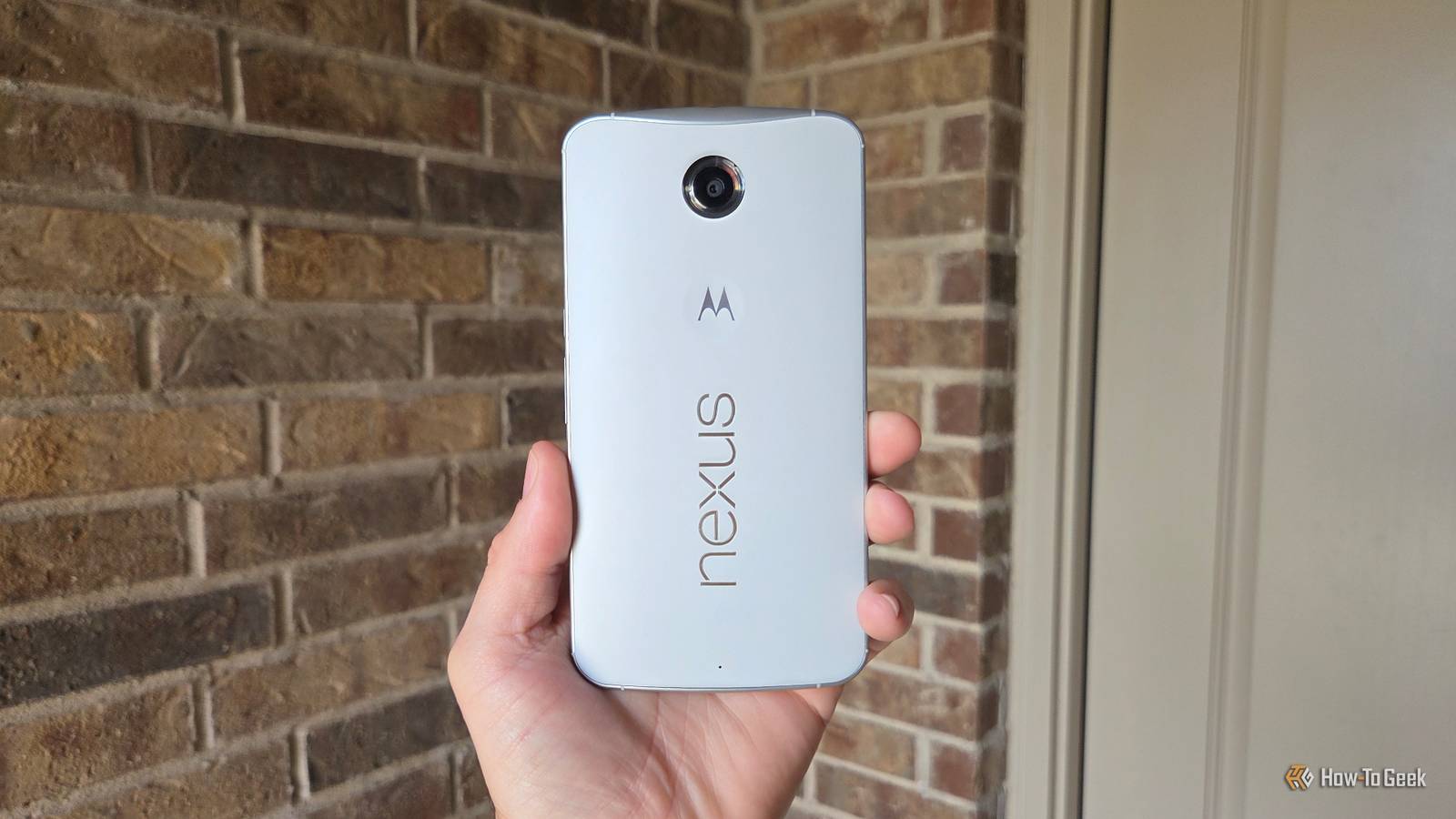
Many of you will remember that before Google had Pixel phones, there was the Nexus series.I was a huge Nexus fan and looked forward to every new release, but when Google killed the line in favor of Pixel, I gradually lost interest.I realize now it's never coming back.
Nexus phones were built by major Android brands like Samsung, LG, and Motorola, in collaboration with Google, and they offered a clean, stock version of Android.It was an exciting concept, but the eventual transition to Pixel devices erased it and pushed me to a point where I’d never buy one for myself.Allow me to elaborate.
Nexus phones were everything I wanted in a phone Great software and excellent value Close When Google first unveiled the Nexus One, it wasn't received all that well.The phone was built by HTC and released in 2010, but it sold rather poorly.It was expensive, sold only online, and was essentially a learning experience for Google.
Despite getting off to a rough start, Google tried again later in 2010 by partnering with Samsung for the Nexus S, which sold quite a bit better.But it's with the Galaxy Nexus that things really started to kick off.Samsung had already built a reputation for strong hardware and mediocre software, so when people tried Google's squeaky-clean version of Android on the Galaxy Nexus, it was hard to go back to anything else.
And this software experience is precisely why enthusiasts fell in love with the Nexus line.Instead of waiting forever to receive an update (if you even got one), Google rolled out new Android updates to Nexus phones from day one and delivered several years of support that other brands couldn't keep up with.If you wanted the fastest and most reliable version of Android while also being first in line to receive major new features and design overhauls, Nexus was hard to beat.
Value was another major factor.The LG-built Nexus 4, which was the only Nexus I had the privilege to own, was a huge commercial hit thanks to its impressive combination of hardware and software for the price.It offered flagship specs, 2GB of RAM when most phones only had 1GB, and was priced at half the cost of other unlocked flagships at just $299.
From there, things got even better with the legendary Nexus 5, though the Nexus 6 and other Nexus phones that followed fumbled it a bit.The Nexus 6 was too expensive, the Nexus 5X lacked RAM, and the Nexus 6P had some structural (bendgate) and battery-drain issues.But no phone was without its issues, and overall, Google's Nexus lineup is remembered fondly for its best-in-class software and good hardware at a reasonable price.
These days, Google cares more about AI than building a great phone The priorities have flipped upside down When Google announced in 2016 that it was moving from its collaborative Nexus phones to its own in-house-designed Pixel devices, I was extremely excited.In theory, this pivot from enthusiast-focused devices to the mainstream meant Google could finally compete with Samsung and Apple by having complete control over its devices and investing more in marketing.For the first couple of generations, things looked bright for Google, despite the relatively high pricing compared to established brands.
Unfortunately, that pricing had already ruled me out as a buyer.I was still in high school and then college, with very limited disposable income.Buying anything other than an ultra-high-value Chinese phone was out of the question.
(If you're curious, I had the OnePlus 3 for years.) I'm not particularly brand loyal, so I always kept Pixel as a potential option.But by the time I started earning enough to buy a new phone outright, the Pixel line didn't look all that compelling compared to other Android brands.Google has since heavily pivoted toward on-device AI, Gemini, and various other Google services.
It's a far cry from the clean, stock Android I've grown to love.Instead, Pixel phones are packed with features, some good and others not so much.Every year at Google's keynote, representatives spend much of their time talking about AI and all the "exciting" new features that are supposedly going to change how we use our phones.
Maybe they do for a small percentage of users, but every time I see the new announcements, I just don't find anything particularly compelling.Pixel's OS is a far cry from the stock Android that Nexus phones ran, which placed more focus on the core functions of the phone.If you wanted to do something specific, you could simply pick one of a dozen different apps to do it.
Unfortunately, on-device AI isn't just a benefit of Pixel phones; it's the core experience Google envisions for Pixel owners.And I just don't want any part of it.Google’s Tensor chips are still holding Pixel phones back They still can't quite keep up with Qualcomm's chips The shift in software focus is only part of the reason why Pixel phones aren't all that compelling to me.
I'm a huge fan of hardware and love getting a good deal, and the old Nexus phones offered incredible flagship specs at reasonable prices, which was a key part of their appeal.While the early Pixels followed that same formula, things changed with the Pixel 6.That's when Google switched from the mainstream Qualcomm Snapdragon processors used by many Android brands to its own Tensor chips.
Five generations later, the latest Tensor G6 still lags far behind the Snapdragon 8 Elite Gen 5 (and many weaker Snapdragon chips), as well as MediaTek processors, in raw processing, graphics, and gaming benchmarks.A brand-new Pixel performs perfectly fine in everyday use, but with seven years of major OS updates and apps and games consistently becoming more demanding over time, things can slow down significantly—something that extra raw performance can help overcome.Now, it's not that the Pixel 10 or latest Pixel 11 lineup are necessarily bad.
I just don't think the pricing makes sense for the hardware you get.I'm not a fan of Samsung, but on paper, its phones blow the Pixels out of the water simply because of the significantly better processors at similar price points.The OnePlus 15 offers even more value, particularly when it comes to battery capacity and charging, which is why I opted to spend my hard-earned money on that instead.
Pixel phones are good, but a few changes would make them great The current state of Google Pixel phones isn't horrible, but it's far from what Google achieved during the Nexus era.If Google wants to continue focusing on AI and Tensor chips, and there's a large enough market for it, that's fine.But if Google wants to win me back, I'd like to see those AI features made optional, with more emphasis on the raw silicon and the rest of the hardware (except the cameras—they're great), while keeping prices the same or, ideally, cutting them a bit.
And more than anything, please bring back stock Android.Related Stop settling for "stock" Android: 6 things LineageOS does better LineageOS is the best custom Android ROM for a reason.Posts By Goran Damnjanovic
Read More