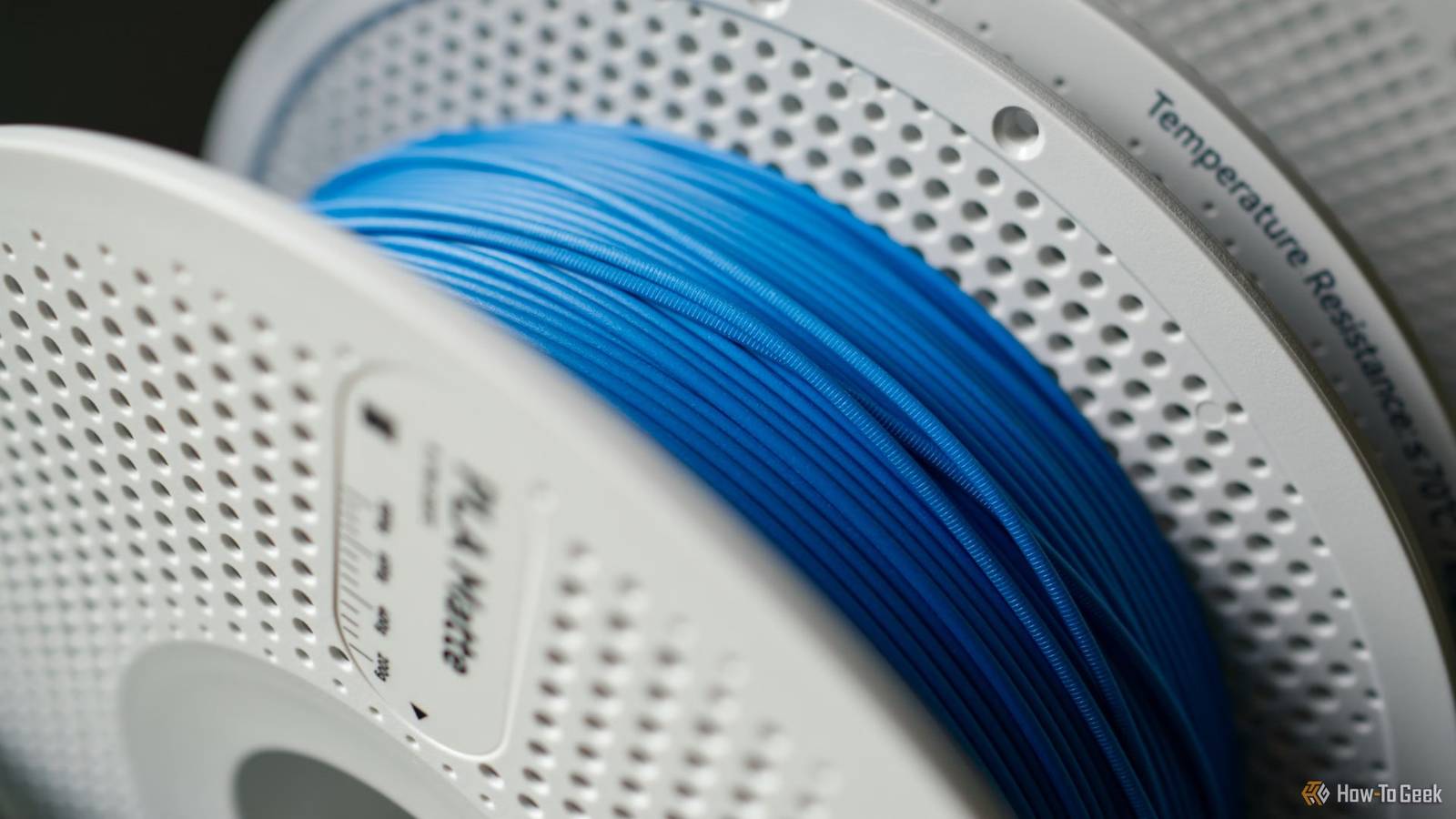
Bambu Lab has launched a new PLA Pure filament that carries a variety of certifications in terms of air quality and material purity.It costs a little more than standard PLA, and it’s only available in a limited number of colors for now.So what does Pure PLA do differently, and is it worth it? Bambu Lab launches “Pure” filament Designed for 3D printing in your home PLA Pure is a new type of filament from market-leading Bambu Lab that contains only five ingredients.
The company claims that indoor printing emissions are low, that the filament is safe for kids, and that it even satisfies EU standards for food safety.At $25 per roll, it’s available in five colors: pale pink, pale blue, orange, white, and black.Bambu Lab is keen to point out that the filament has been certified to meet standards like UL GREENGUARD 2904 and EN 71 for toy safety.
It’s the first of its kind on the market, at least in terms of this specific set of certifications.The five ingredients that Bambu Lab mentions include polylactic acid (PLA, the main plant-based ingredient in all such filaments), an acrylic copolymer, pigments for color, ethylene bis-stearamamide (EBS), and “asbestos-free” talc.These ingredients are commonly used in the manufacturing of everything from children’s toys to kitchen wrap.
The company has also published some print emission data, which shows low levels of formaldehyde, volatile organic compounds (VOCs), and particulate matter (PM2.5).While Bambu Lab claims to have observed these results in an accredited laboratory, it’s always worth taking any numbers featured in marketing materials with a pinch of salt.Ultimately, Bambu Lab is heavily implying that items printed with PLA Pure are safe for kids to handle, ideal for items that come into contact with dry foods, and better in terms of harmful emissions on an open printer than burning a candle or sitting inside a car.
Bambu Lab PLA Pure Available in five colors, with only five ingredients, every one EU food-contact certified. Low indoor printing emissions, certified to UL GREENGUARD 2904. Safe for kids to play with, certified to EU toy-safety standards (EN 71).$25 at Bambu Lab Expand Collapse PLA is generally considered safe Especially compared to other filament types PLA is the 3D printing world’s “default” filament for a reason.It’s cheap, easy to print with, available in a huge variety of colors and finishes, and is generally seen as safe.
While the primary ingredient in PLA is polylactic acid, derived from plant sources like corn, concerns remain about the process under which it is manufactured.Contaminants can be introduced during the manufacture of PLA, as evidenced by the existence of a filament like PLA Pure.The question of whether it’s safe to share your living space with a 3D printer primarily concerns these emissions.
One study found that PLA contained nickel and released a higher concentration of smaller particulate matter (PM2.5) compared to ABS.By contrast, a filament like ABS is known to be harmful in that it releases styrene gas while printing.This can affect the nervous system and cause all manner of undesirable effects.
You do not want to breathe it in, and should only ever print with ABS in a properly ventilated environment.Whether or not PLA Pure is worth the extra $5 per roll is just one question of many.You’ll also be limited in terms of colors, and there are no fancy finishes or blends to choose from.
Precautions are never a bad thing Even “safe” filaments have their issues Questions remain about the food safety of 3D printed items, even those made with so-called “Pure” filament types.While Bambu Lab claims the ingredients are “food contact certified,” the idea that 3D printing can ever be truly food safe is up for debate.In its defense, Bambu Lab states that the food contact certification applies only to the filament.
Since this filament must be melted and extruded from a nozzle before it is formed into objects, residue from every other type of filament you’ve used could jeopardize its food safety rating.The filament deposition modeling (FDM) 3D printing technique of producing items layer-by-layer is also of concern.Small gaps can occur in printed items, which means they’re not watertight.
These gaps can trap even dry food and bacteria in a way that injection-molded plastic, glass, and metal items do not.It’s these characteristics that have prompted the company to add a disclaimer that PLA Pure’s benefits apply only to the raw material.Printing objects with it comes with no guarantee.
Finally, 3D printing anything involves melting plastic.I’ve not got my hands on PLA Pure yet, but I’d not be surprised if the room still smells like melted plastic while a print is in progress.This can be irritating enough to make you want to open a window, especially on an open printer.
Bambu Lab AMS 2 Pro A multi-material system for Bambu Lab printers with active air vent 65°C filament drying, air-tight filament storage, a brushless servo feeding motor, Bambu's signature RFID filament sync, and compatibility with up to up 24-color/material printing by connecting more AMS 2 Pro units.$359 at Bambu Lab Expand Collapse Bambu Lab PLA Basic Filament Bambu Lab's PLA Basic filament comes in a wide range of colors and ships on a reusable plastic spool.With embedded RFID chips in each spool, you simply place the filament in the AMS and your 3D printer knows exactly what it's working with—down to the color.
$23 at Bambu Lab $23 at Best Buy Expand Collapse If PLA Pure appeals to you, I’d recommend grabbing a spare nozzle to use with the filament to ensure that you aren’t contaminating any prints created with it.It also can’t hurt to clean your print bed thoroughly to remove contaminants and avoid adhesion issues.
Read More