With a seemingly endless selection available, it might feel overwhelming to pick the right Linux distro.However, you don't need to fret over every single detail before making your choice.As long as you know what makes one Linux distribution different from another, there are only three things you need to consider.
What makes Linux distros different Technically speaking, what people usually refer to as Linux should be called GNU/Linux.Linux is the "kernel" or the core of the operating system, which interacts with the hardware.There's a "shell" (for example, the Bash shell) built around this kernel which becomes the interface for the user.
The shell and similar utilities for the Linux kernel were originally developed by the GNU project.Together, the GNU utilities and the Linux kernel make a functional operating system called GNU/Linux or a GNU/Linux distribution (distro, for short).Distro fragmentation comes from the Unix philosophy The modular approach is a result of Unix philosophy.
The idea is that each program should do just one thing well, and it should work well with other programs.That's what Linux is built around.There are teams of developers dedicated to writing and maintaining the Linux kernel, the command-line tools, and desktop interfaces.
All this software is free and open-source, meaning anyone can "fork" any of these community projects and modify them to their liking.The community approach to building these blocks of software means that GNU/Linux systems are almost endlessly customizable.There are all kinds of Linux kernels too The main Linux kernel is maintained by Linus Torvalds (the original creator), but the community modifies this mainline kernel, creating different versions.
Different Linux distributions configure and customize the kernel differently.For example, CachyOS uses the "Zen" kernel, which is optimized for gaming.Then there are LTS or long-term support versions of the Linux kernel, meant for legacy hardware.
The bleeding edge versions of the kernel won't have drivers for old printers, but those LTS versions might.The big three Just as there are many flavors of the Linux kernel, there is also an endless variation of desktop packages.Since all the software is free, the packages can be assembled in different combinations to suit particular user needs.
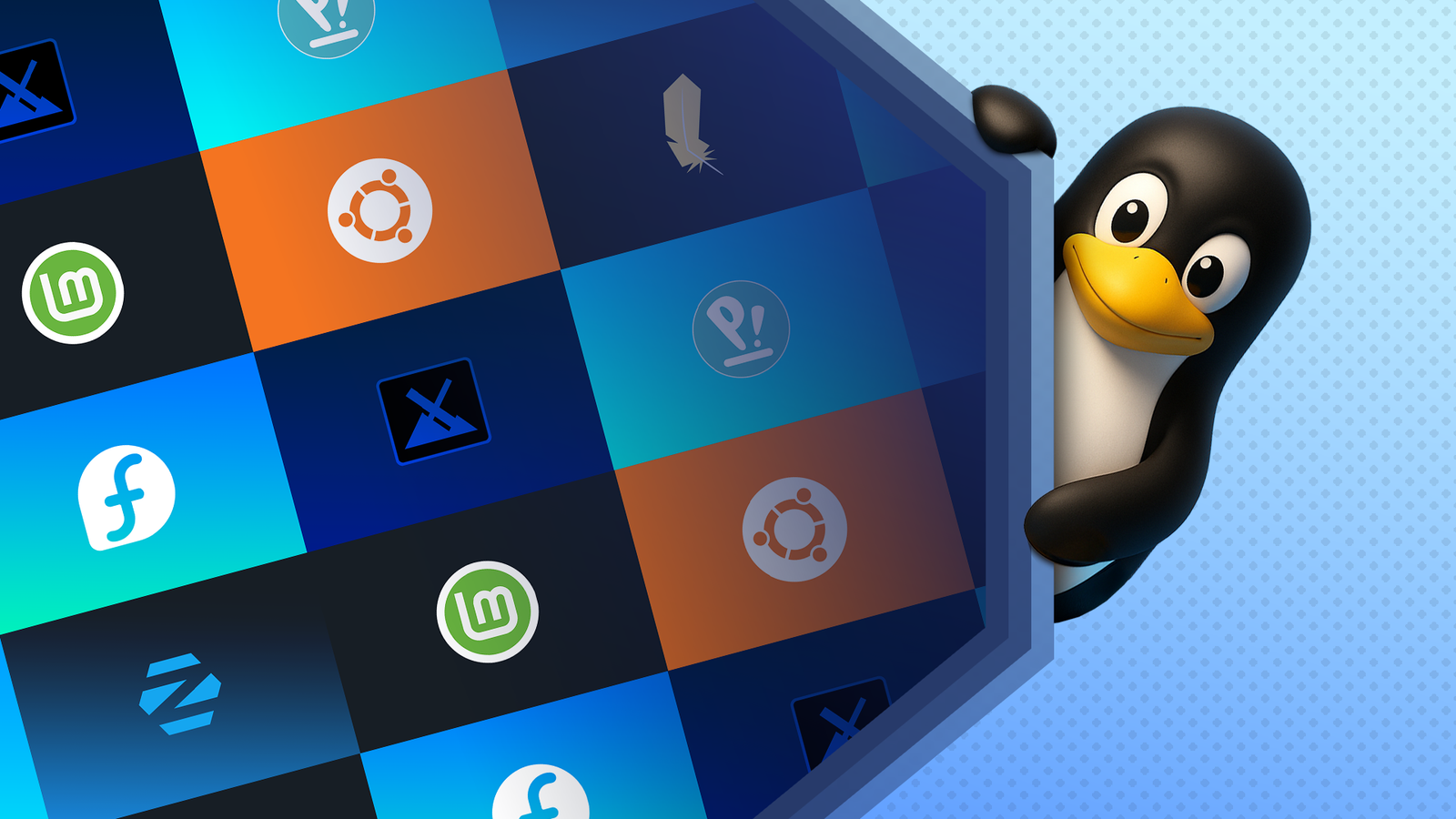
The distro bundle usually includes a desktop environment (the graphical user interface you see), which decides the look-and-feel of a distro.Also included is a package manager used for installing and removing software.There are three Linux distributions which the most popular distributions are derived from: Debian, Arch, and Fedora.
Ubuntu, Pop_OS!, and Linux Mint are based on Debian while CachyOS and SteamOS are based on Arch.Debian is an extremely stable Linux distro, so other distros which prioritize stability and legacy support use Debian as a foundation.Arch doesn't use the "point release" system.
There's just one version of Arch and it's always the latest version.It is bleeding edge, supporting the newest features and packages.Alongside Debian and Arch, Fedora is also a big independent distro.
Bazzite, a beloved gaming distro, is based on it.Fedora combines the stability of Debian with the modern features and hardware support of Arch.It's also incredibly easy to install and use.
This is what the difference in distros boils down to: the kernel version, the desktop environment, and the base (either Debian, Fedora or Arch).Pick the update style The choice of distro comes down to what you want out of your operating system, giving you a neat little flowchart.Want a stable system that will just work for the next 5 years? Choose Debian or a Debian-based distro.
Want the latest features and support for the newest hardware? Pick Arch.Want a more stable system, but Debian is too old for your device? Try Fedora.You can typically hotswap the default desktop environments with ease.
Technically, you can even swap out the kernel with another version.What you can't change is the package manager and how updates are handled.Debian and Debian-based systems get major updates every 2 years.
So once every two years, you're supposed to upgrade your computer to the latest point release.Arch is constantly updated because it uses a "rolling release" model.There is just one version of Arch and it's always the newest version.
You're supposed to manually run updates on a regular basis, and everything (the kernel, the desktop, and all apps) is upgraded to their latest version as soon as it's released.Using the latest software seems like a no-brainer, but rolling release models create stability problems.Unlike Debian updates, which are battle-hardened and rock solid, the cutting-edge releases can be buggy.
If you don't mind maintaining regular backups and troubleshooting, Arch and its derivatives are a delight to use.For most people, Debian or Fedora (or a distro based on them) will be their first brush with Linux.These distros are more stable and just work out of the box, lending themselves to a beginner-friendly experience.
Choose the package manager You can always replace the desktop environment if you don't like it, but you cannot just as easily replace the package manager.You can choose from 3 package managers (shipped with the 3 big distros): apt, pacman, and dnf.Subscribe to our newsletter for distro clarity By subscribing to the newsletter, gain clear, hands-on guidance on choosing a GNU/Linux distro—comparisons of kernels, package managers, update models, and hardware recommendations to help you pick the right base and setup.
Subscribe By subscribing, you agree to receive newsletter and marketing emails, and accept our Terms of Use and Privacy Policy.You can unsubscribe anytime.Arch uses pacman, which I'm fond of.
It is much, much faster and more feature-rich than the apt package manager used by Ubuntu and Debian.That's not to say that apt is slow.I only noticed a difference when I switched from apt to pacman last year.
Fedora uses the dnf package manager.I haven't personally used it much, but on the few occasions I have, it performed slower than apt and pacman.Consider your hardware I do not recommend running Arch or Arch-based distros on older hardware.
If the newest update isn't compatible with an older hardware component, it'll bork the system.This happened to me when I was using the Arch-based CachyOS and I could not recover it.If you are a tinkerer, and you're on new-ish hardware, give Arch a try.
You might like it.If you don't mind using older software and just want a computer that always works, consider Debian, Ubuntu, or a distro based on the two.For PCs that use the newest CPUs and GPUs, Fedora offers better hardware support and newer software.
Plus, it's just as easy to install and use as Debian systems.Fedora is a decent all-rounder.You shouldn't focus on the look and feel of a distro when making your decision.
Linux is infinitely customizable, so you can always swap out one desktop environment for another.You should instead focus on how it handles packages and updates.Also, try running the distro in live mode to make sure it plays nice with your hardware.
Read More