Most people treat AI model comparisons like a horse race where one comes out ahead and the other becomes unusable or slow.That thinking falls apart quickly once you spend real time with models that were never competing for the same job.Gemma 4’s quantized models and Qwen 3.6 are good examples of this.
One is built to run quietly on your own hardware without sending a single keystroke to an outside server.The other is built to sit inside a cloud environment and work through problems at a scale that would make a local machine sweat.Knowing which one you actually need changes everything about how useful each ends up being.
Gemma 4 and Qwen 3.6 are built for completely different jobs One runs on your device while the other lives in the cloud Close Most people assume that any modern AI can handle whatever you throw at it and that these models are more or less interchangeable.Open-weight models aren't general-purpose tools you can swap in and out.AI like Google DeepMind's Gemma 4 and Alibaba's Qwen 3.6 are two very different programs.
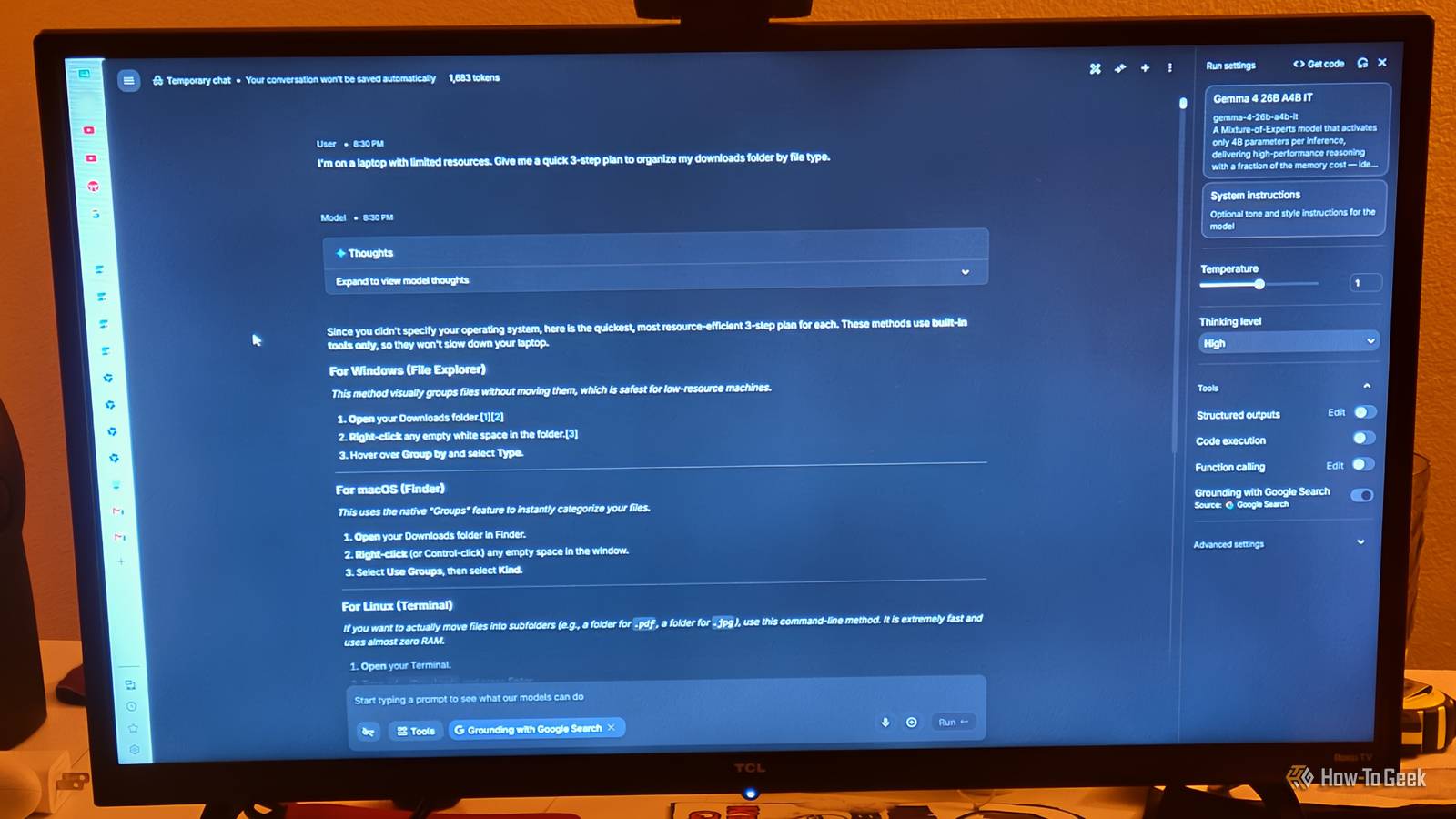
They're built differently, for different things, and you find them differently, and those differences matter when you use them.AI Studio is ideal for the former, while Ollama is the best for the latter.Gemma 4 is built to run efficiently on a lot of different devices like phones, laptops, and desktop computers.
Its 12B variant takes in raw audio and image data directly, without needing separate encoder models bolted on.Qwen 3.6 is built for cloud infrastructure and long, complex analytical tasks.It uses a hybrid attention setup that lets it handle huge amounts of text without running out of memory.
One model wants to be a fast, private, on-device assistant.The other wants to be a cloud-based engineer that can sit with a hard problem for as long as it takes.The licensing side of things matters more than it might seem.
Some local Qwen 3.6 variants come from Alibaba under a free, open license that businesses can self-host without asking permission, though the higher-end cloud version runs on paid, rented infrastructure instead of being self-hosted.Gemma 4 used to come with more strings attached, but that's changed.Now a small business or solo developer can pick up either model and start building without needing a lawyer in the room.
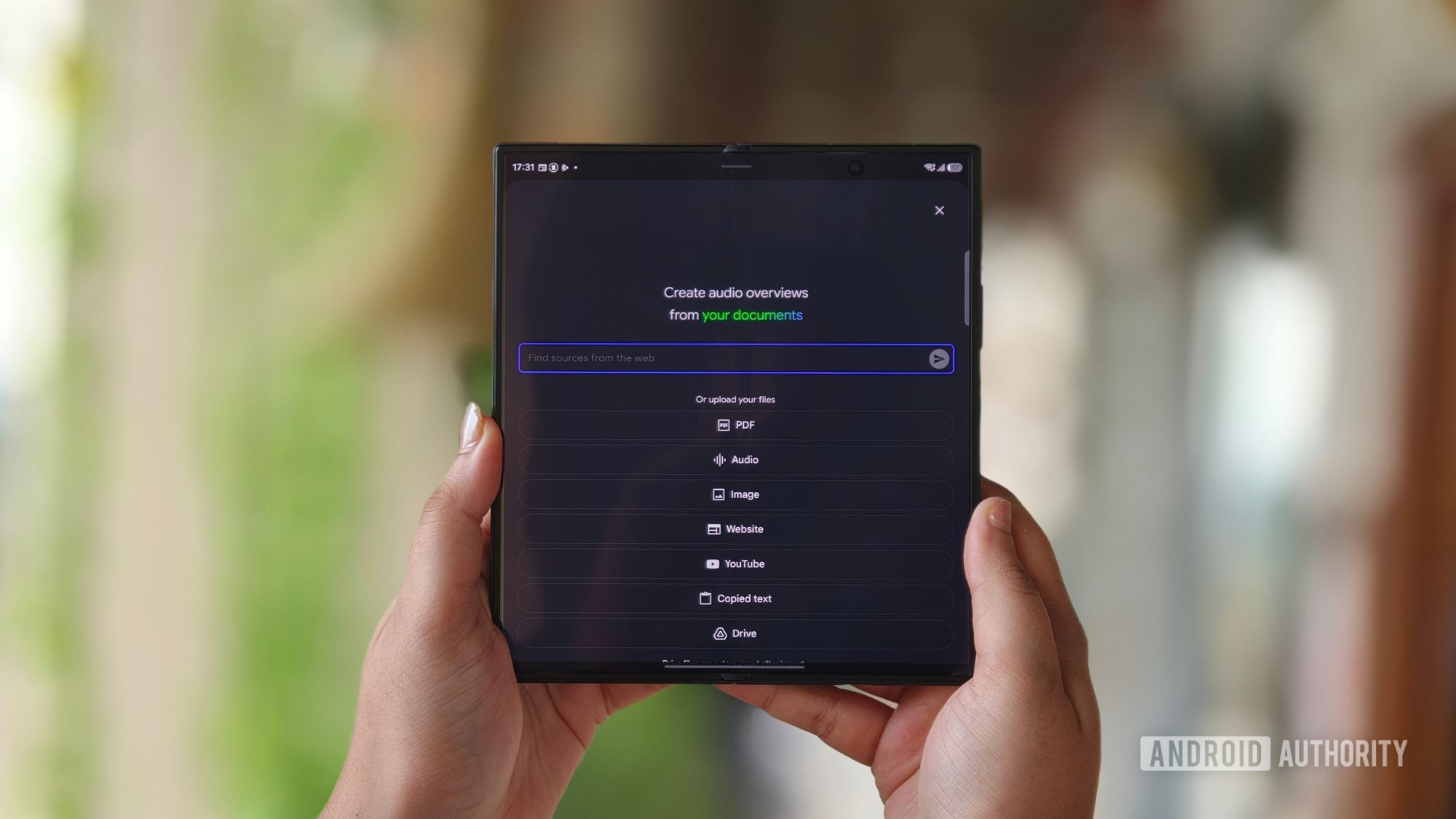
Qwen 3.6 is built to run on rented cloud servers, so you're paying for computing time every time you use it, and that bill grows the more you push it.Gemma 4 works the other way, because you get a copy that runs on your own hardware, and once it's set up, there's no ongoing cost.If you want to use Gemma 4, you can also try it out on AI Studio.
That also means nothing you type ever has to leave your machine, which matters a lot for privacy.How both models handle your everyday work Big projects need more memory than your computer has When you actually put these two models to work, the difference becomes clear pretty fast.Qwen 3.6 Plus lives in the cloud and is built around a completely different set of priorities.
It has a one-million-token context window, and it pairs that with a reasoning mode that's always running, so the model actually thinks through every prompt before responding.In some conversations, it uses preserve thinking mode so that it remembers what happened earlier in the chat.That means it can look back at how it looked over a problem two exchanges ago and build on it, instead of starting fresh and making the same mistakes again.
That matters a lot depending on what you're trying to do.If you're debugging a big codebase, Qwen 3.6's million-token window will handle whole repositories, API docs, and error logs all at once.It can trace a bug across hundreds of files without losing the thread.
Gemma 4 has a context window that tops out somewhere between 128K and 256K depending on the variant, meaning it can't hold that much at once.In longer sessions, it also tends to lose track of its assigned role and can fall into repetition loops that need a full restart.You cannot replace two different tools with just one One big model will not solve every problem for you What you have to keep in mind is that these models need to be treated as different tools built for different jobs.
You can't swap them around based on whatever's trending or which company made them.Comparing Gemma 4 and Qwen 3.6 like they're going head-to-head for the same crown misses the point entirely.Picking one over the other based on a leader board ranking or brand recognition will set you up to fail, because they were built to solve completely different problems.
That goes for the models powering other AIs like ChatGPT and DeepSeek, too.There is an argument that this could be temporary.It isn't a wild idea that eventually one big enough model will come along and handle everything, from edge tasks to deep repository analysis, all at once.
As long as models keep scaling up, they'll absorb every niche use case into a single all-purpose AI.Still, I don't think that will be anytime soon.A model that can reason through a million tokens of code will always be too heavy to run locally without noticeable lag.
Cloud models that handle that kind of context window need serious server infrastructure.There are also issues with network latency, privacy concerns, and operational overhead that make it seem impossible for a regular user to afford or have it.I'd say comparing these two feels like comparing apples and oranges.
Stop picking one as the all-time best There is no better model; there's just the wrong one for your task.Choosing one because you think it's faster can make both look bad.These two occupy genuinely different territory, and the sooner you treat them that way, the more useful either one becomes.
Read More