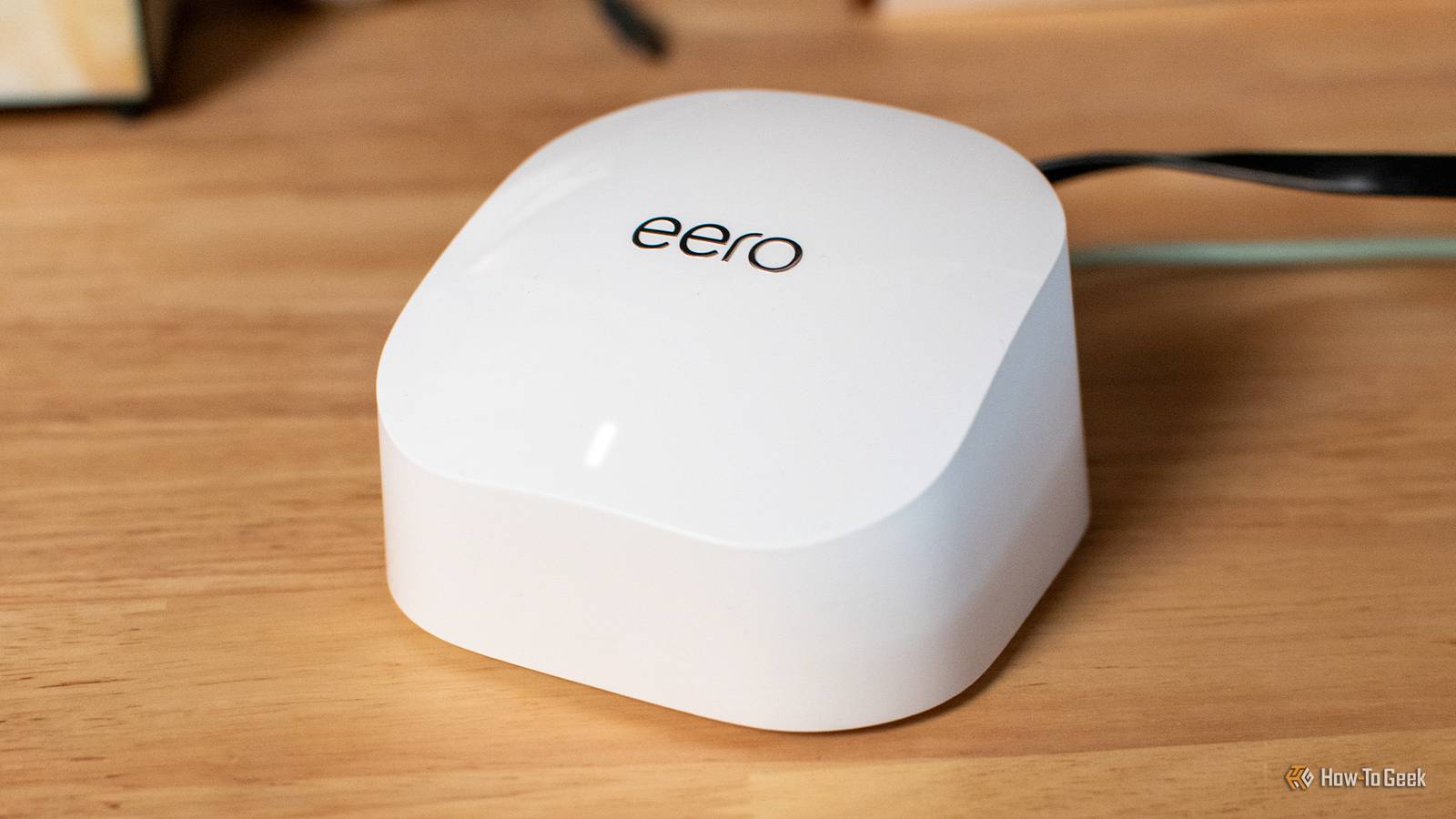
Your internet router has a very specific job, and it's perfectly reasonable to assume that all it's doing is that job and nothing else.The reality, however, is never that simple.Although it's no secret that your Eero mesh system is a cloud-based product in constant communication with the company's servers, changes in ownership have turned this from a non-problem to a major privacy concern.
Because who owns those servers now? Oh, just Amazon, one of the biggest advertising and data companies in the world—no biggie.Your Eero is a very chatty guy "Set-and-forget" actually means "always reporting back" Close Eero mesh systems have been around for a while now, and their cloud-dependent design has been there since the very beginning.All of the features that make it easy to use, like the in-app management, automatic updates, and seamless device routing, rely on a cloud control plane that stays "in near constant communication" with the company's cloud servers.
The company has always been transparent about this, and paired it with a decent privacy policy.But this cloud-dependent design goes deep—even features you'd expect to run locally, like seeing real-time data usage per device, are routed through Eero's cloud rather than served from your local network.This isn't something that needs to be cloud-based, though Eero says it chose to do it this way to prevent misuse from an unsecured local server.
Not every feature is cloud-based, however.Eero has also taken steps toward local independence with its "mesh of trust" public key infrastructure, a feature that has been around since 2018 and lets nodes communicate securely over your local network without relying on the wider internet.The point is, there's a lot of data collection going on, and there are no announcements when it happens.
Whether your app is open or not, diagnostics, device lists, and telemetry flow continuously in the background.It's easy to forget this kind of thing, and Eero is hardly the only one, since some routers ship with settings that leave your network controls exposed to the wider internet.Related 5 networking upgrades under $30 to try before replacing your router Routers are expensive, but these upgrades are not Posts By Monica J.
White What it collects (and what it swears it doesn't) It won't collect your browsing data, but it collects plenty of other stuff When the average user hears that their Wi-Fi router is collecting data, the first place their mind will probably go is browsing history.Your router definitely should not be collecting this data—but since it is collecting something, it's a fair question to ask.In Eero's case, the company has told CNET it "does not have the capability to track customer internet browsing activity." This is a good thing, of course, but just because Eero isn't collecting the worst-case-scenario data doesn't mean it isn't collecting anything problematic at all.
To be precise, they collect performance statistics, device temperatures, MAC addresses, IP addresses, and the types of devices connected to your network.These things might sound a bit like meaningless numbers that have no tangible connection to you as a person—but when you put it all together, it becomes part of a detailed behavioral fingerprint of the devices you use and how you use them.It can even reveal pretty personal things like when you tend to be home, when you sleep, or when you buy a new device.
This is a clear reminder that your router has a privileged view of everything on your network, and it's one of the reasons privacy-minded users split their smart-home gadgets onto a separate network segment to limit what any single device can see.This is why ownership matters so much—when Eero was a small independent company, that mass of data was more likely to stay (from a user's perspective) a garbled mess of numbers only used for diagnostics "or whatever." But Amazon, on the other hand, is one of the most experienced companies out there at building detailed behavioral profiles of its users to fuel advertising, purchases, and various other things.Of course, when Amazon bought Eero, there was an obligatory "don't worry, we won't change the privacy policy" promise.
How reassuring that promise sounds to you depends on what you think of Amazon.As for precedents, there are other companies that have made the promise and sneakily gone back on it a couple of years later.A prominent example would be Facebook (now Meta) changing the policy for WhatsApp a few years after acquisition.
In this case, however, it's been around seven years since the acquisition, and there haven't been any doomsday-level changes yet.Users do now have the option to link their Amazon account to their Eero device, however, and this opens a data pathway that didn't exist before.Can you opt out of the data collection? Nope Accept your fate, or unplug the mesh system As mentioned already, the cloud-dependent design of Eero mesh systems is purposeful and fundamental.
It's basically a no cloud = no product situation, and if you trusted the company with your data, that was okay.If you still trust the company now, it's still okay.Technically, nothing has changed yet.
However, you might be wondering if you can limit the data collection a bit.Unfortunately, the answer to that question is a pretty flat "no." Per Eero's own privacy policy, the only way to completely halt collection is to uninstall the app and unplug every Eero device.If you're choosing to stop using your Eero device, you can email the company to request data deletion, but if you do that while still using it, the company warns that it can render the devices inoperable.
If that all-or-nothing bargain rubs you the wrong way, it's worth remembering you can always own and control your own router hardware instead of leaning entirely on a cloud-managed ecosystem.So, should you rip your Eero out of the wall? Well, it depends on your stance on data privacy.There's a reason the headline reads "yet another tracking device"—our homes are already full of them.
If you're the type to purge any that you don't trust, you probably need to keep a close eye on Eero's privacy policy going forward.On the other hand, if you already own plenty of Amazon home devices and other similar products, you probably won't be bothered by another—even if the privacy policy changes.
Read More