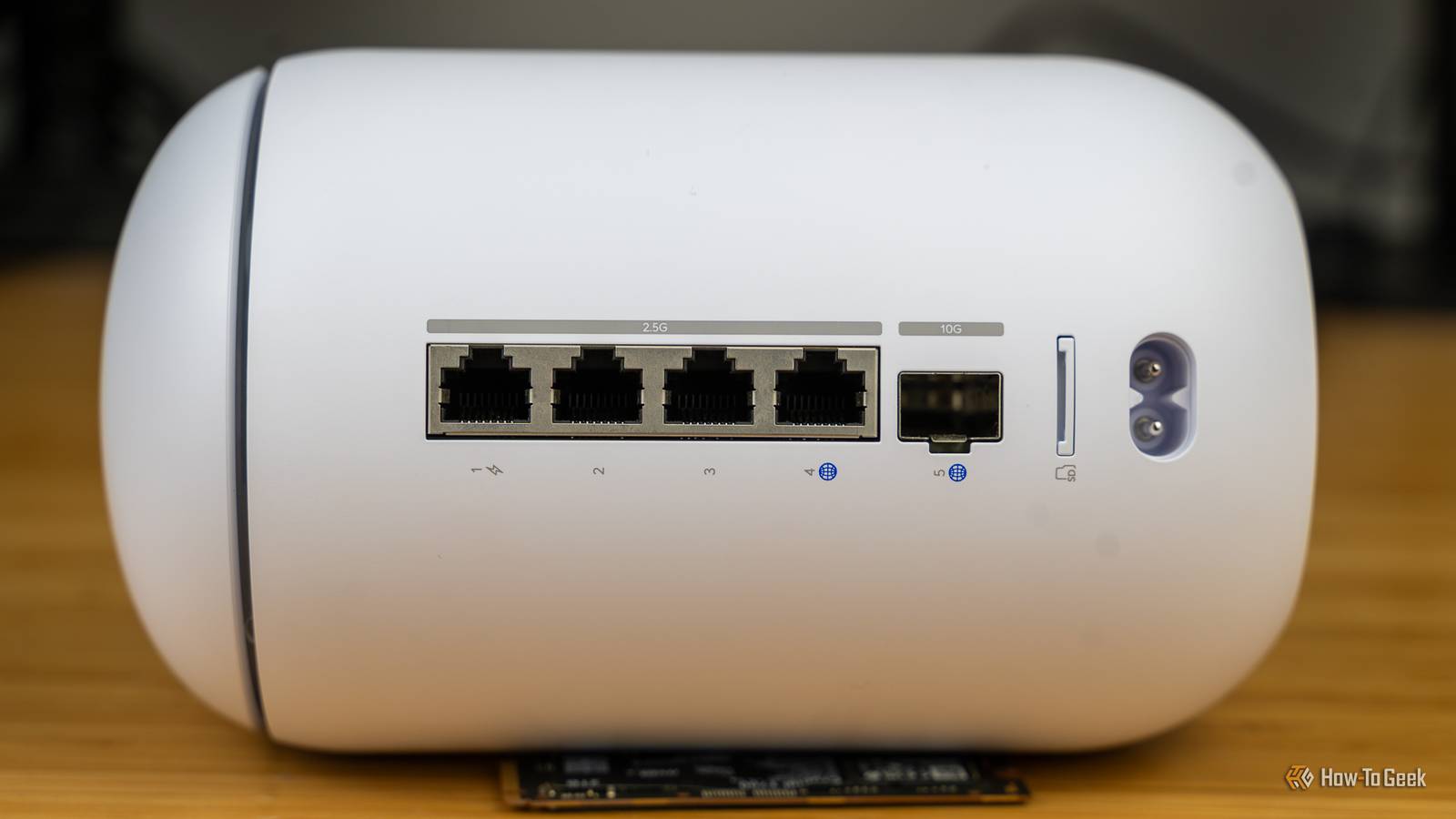
Are you port forwarding tons of ports on your home network? Well, you shouldn't be.It's a risk just to have one port forwarded, let alone dozens.Instead, you should use Cloudflare Tunnels or Tailscale—here's why.
Port forwarding seems like the simplest solution for external access But it also comes with the most risk If you're trying to host a website or service at home, and want to access it outside of your network, then forwarding a port seems like the simplest solution at first.It's easy to do, natively supported on most routers, and only takes a second or two to set up.What harm could there be? Actually, there's a good bit of potential harm that could come from forwarding ports.
Some people do port forwarding for years, if not decades without having any harm come to their network.Others can be hacked within a few days of opening their ports.It's all a guessing game on which you'll be.
When you forward ports, you're opening up portions of your network for someone outside of the network to gain access.That's kind of the point, right? Well, if you don't properly secure the services in your home, or your router, then there's a chance a bad actor could utilize that forwarded port in a nefarious way.The safest network has zero ports open to the outside world, and leaves it that way.
However, sometimes you really do need access to services (or servers) when you're not at home, so what do you do? Well, that's where unique tools like Tailscale and Cloudflare Tunnels come in.Tailscale offers external access without the security risks Though it's not quite the same as port forwarding The most secure way to access your network is with a VPN platform like Tailscale.While traditional VPN protocols like WireGuard or OpenVPN still require port forwarding to work, Tailscale is different.
Tailscale offers a unique approach.You install the Tailscale client on your device (like a laptop) and on the server.Then, whenever you want to connect the two devices, it passes through Tailscale's cloud network to make the connection possible.
This requires zero port forwarding as it all happens in the cloud, and is a great solution if you want private access to your home network.Technically, Tailscale is more of a VPN than anything else.The problem with Tailscale is you have to have an account with it, and there's not really a way to limit that account's access.
By default, granting an account access to a Tailscale server gives them broad access to that machine, meaning you have to configure complex Access Control Lists (ACLs) if you want to restrict them to a single website.So, if you're trying to self-host a website for your personal microblog, Tailscale won't work.The website won't be accessible by Google, and it's simply best as a private way to share server access—or, just a way for to access outside of your house.
Cloudflare Tunnels lets you self-host websites without port forwarding It's the best solution if you can't forward ports on your router If your goal isn't necessarily to access your entire network outside of your home, but, instead, to just access a single website or two, Cloudflare Tunnels could be the perfect solution.Essentially, Cloudflare Tunnels works in the same way that Tailscale does.You install the Cloudflare Tunnels client on your server, and then link it to a domain on Cloudflare.
From there, you're able to set up the IP address of the local system as well as the port on that system you want a domain to forward to.With Cloudflare Tunnels, you could create myawesomedomain.com on your server at 192.168.0.54 on port 80.Then, just insert those numbers (IP address and port) into Cloudflare Tunnel, and when someone goes to myawesomedomain.com it routes it internally for you.
Cloudflare Tunnels replaces more than just port forwarding, it replaces your reverse proxy, too.So, you can handle your entire domain configuration within Cloudflare's interface—including SSL generation.While Tailscale lets you SSH into a server or access LAN IPs, Cloudflare Tunnels is a way to let the entire world have access to your website.
This means Google can properly crawl the website, and nobody needs a user account to access it.For hosting a website, service, or anything else that you want people outside of your home to have access to, Cloudflare Tunnels is the best solution outside of port forwarding.Just make sure that you read the licensing agreement, because Cloudflare does specifically prohibit running services like Jellyfin and Plex through Cloudflare Tunnels.
GEEKOM A7 2026 Mini PC Brand GEEKOM CPU AMD Ryzen 5 7545U Graphics AMD Radeon 740M Memory 16GB Storage 500GB Operating System Windows 11 Pro The GEEKOM A7 Mini PC's 2026 refresh comes with a lot of nice features.For starters, it ships with Windows 11 Pro pre-installed and activated.It also features a 40Gb/s USB4 port on the back, alongside 2.5 Gigabit Networking built-in.
Add to that the ultra-compact size and plethora of ports, and this mini PC is ready for whatever you need.$600 at Amazon Expand Collapse UGREEN NASync DXP2800 GT Brand Ugreen Memory 8GB (Upgradalble to 64GB) Drive Bays 2x 3.5-inch, 2x M.2 NVMe LAN Ports 10GbE The Ugreen DXP2800 GT NAS is the perfect starter system for anyone looking to get started in homelabbing.With two 3.5-inch drive bays and two NVMe slots, this NAS also supports user-upgradable RAM and has 10-gigabit networking.
$430 at Ugreen $390 at Amazon Expand Collapse Just because something is the standard doesn't mean it's the best Port forwarding has always been the traditional way to open up your network to outside access, and it works great for that.The problem is, it's simply not the best solution in every scenario.Sometimes, it's your only option.
For example, Cloudflare's terms of service prohibit routing heavy media streaming like Plex or Jellyfin through its Tunnels, though Tailscale remains a great private alternative for that.However, in instances where you use something besides port forwarding, it's definitely the best case to do so.It's just simply more secure to leave the ports on your network closed.
Read More