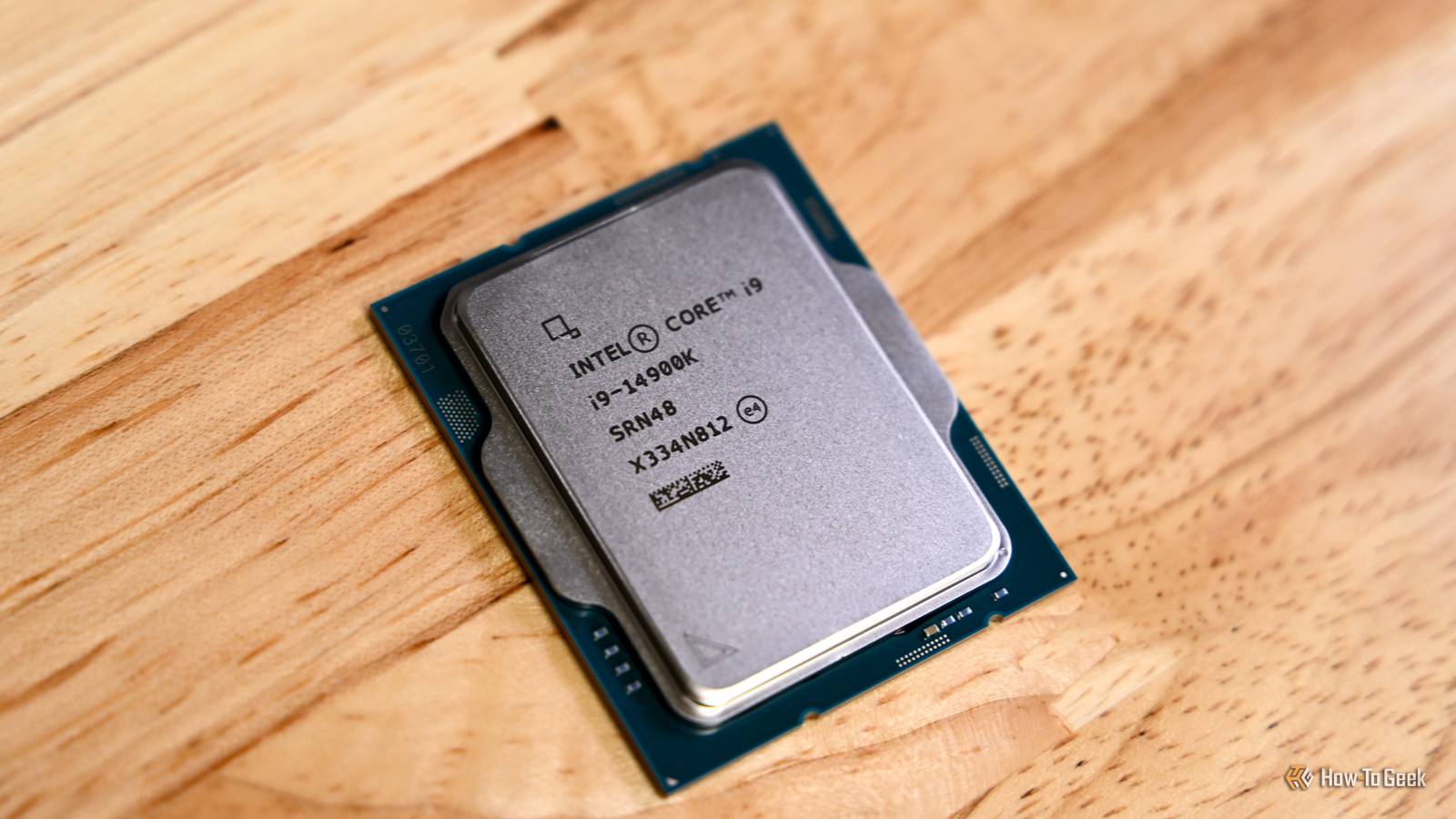
These days, when you're buying an x86 CPU, you're buying Intel or AMD.(Probably AMD, actually, as even used Ryzen 5000 chips are a good deal right now.) That just wasn't the case in the mid-1990s, though.There used to be more players in the CPU market, and we had all the freedom of choice we could've ever asked for.
Those CPUs from a few different brands actually shared the same platform.It wasn't like it is now.But then, one bold move from Intel turned the entire market on its head.
Before the socket war, no one brand owned the whole platform Socket 7 was unusually open by modern standards Close The idea of multiple CPU brands sharing the same socket, or platform, is bizarre when thinking in today's terms.After all, Intel and AMD have their own sockets, so it's not like you can pop your CPU out of the motherboard and swap it for a different brand with ease.Brand loyalty, and not wanting a whole platform swap, are both reasons to just buy one mobo, buy one CPU, and stick with it for years.
Socket 7 was something else entirely, though.In the mid-1990s, the same basic motherboard platform could support processors from Intel, AMD, Cyrix, and even smaller players, such as IDT.This type of cross-brand flexibility is unheard of in this day and age.
Back then, these platform-related nuisances we deal with now just weren't a thing.That was important to companies like Cyrix.Being able to hop onto the existing Socket 7 meant that it didn't need to convince motherboard makers to build an entire new ecosystem around its CPUs; it could just slot straight into hardware that already existed.
The Cyrix 6x86 made particularly good use of that opportunity, staying price-competitive.That ability to compete on price helped cover up for some of its shortcomings, such as weaker floating-point performance.Long story short, having one Socket 7 made it much easier to shop around for a CPU.
Intel was the biggest player, but it didn't control where the rest of the market had to go.That balance only lasted until Intel decided to leave Socket 7 behind with its next CPU lineup.Related RAM is $400 and GPUs are $3,700: The PC market has officially crashed The next PC crash is already here, and none of us are prepared Posts 3 By Monica J.
White But then, Intel walked away from Socket 7 Pentium II came with a door the competition couldn't follow through Yup, that idyllic state of "do what you want" for PC builders was but a fleeting moment when compared to the grand scheme of things.In 1997, Intel introduced the Pentium II, and it left Socket 7 behind for Slot 1.Slot 1 was a proprietary cartridge-style interface, built for Intel's P6 platform.
The unusual design allowed early Pentium II chips to put the processor and separate L2 cache chips together in one cartridge.But for consumers, this meant one thing: you had to declare allegiance, as Intel's competitors couldn't drop their own CPUs into Intel's proprietary platform.Cyrix and AMD were left to scramble for solutions.
Supporting Socket 7 sounds like a logical choice, but Intel, with its commanding presence in the CPU market, wanted motherboard makers and OEMs to follow it onto this new platform.The flexibility started melting.While Intel's competitors could still make CPUs for any socket they wished, including Socket 7, it was an aging platform.
The time came to make the decision: stay with Socket 7 or move on.Cyrix tried to keep Socket 7 alive instead Super Socket 7 only bought some time When faced with that challenge, Cyrix chose to keep pushing Socket 7.It wasn't alone.
The platform actually evolved into Super Socket 7, keeping the same connector, but adding things like (woah) 100MHz front-side bus and AGP support.These additions gave Cyrix and AMD a bit of an edge without doing a whole shake-up the way Intel did.For users, this was certainly the more economical choice.
But, as I'm sure we all know by now (given the state of the CPU market), Intel remained highly relevant, turning Super Socket 7 into more of a stay of execution than a long-term solution.Motherboard makers had every reason to follow Intel, which was the bigger player when compared to Cyrix.AMD eventually chose to let go of the once-shared platform, too.
Athlon CPUs moved on to Slot A, which was AMD's very own next-gen socket.Cyrix never managed to make that same escape, so every year it stayed with Socket 7 made the gap harder to close.Then Intel brought the fight to Cyrix's last safe market Celeron was much harder to fight than Pentium II Doing a whole platform swap is expensive.
While some chips, like my favorite budget CPU, don't cost a whole lot, you're also getting rid of a motherboard, and that's at the very minimum.So, those who chose to follow Intel or AMD had to pay extra, and that gave Cyrix the slightest hint of an edge.On the budget side, it made sense for Cyrix to stick to Socket 7; after all, anyone who wanted to save money wasn't looking for Pentium II-level performance, anyway.
Of course, things didn't stay peachy for too long.Intel eventually decided it wanted the budget market, too, and its solution were Celeron CPUs.Fairly underwhelming at first, Celerons became harder to dismiss with the addition of the on-die L2 cache.
Cyrix was backed against the wall at that point.With no platform of its own, no way to compete at the high-end, and now losing its weak hold on the budget market, the company was stuck between Intel's and AMD's evolving proprietary options.By 1999, its retail share had fallen sharply.
The socket war didn't kill Cyrix by itself But it sure didn't help We can't blame Intel for Cyrix's disappearance, not entirely.The company had its own struggles beyond the socket war, including manufacturing delays, floating-point performance concerns, and, most importantly, fierce competition.As gaming became more important, the weak FPU became more of an issue, too.
Although National Semiconductor acquired Cyrix, the company was retreating from the mainstream PC processor business by the end of the 90s.Intel changed all the rules Intel's move to break the mold and start its own platform absolutely changed the conditions all other CPU manufacturers had to compete under.Smaller CPU makers were left with no safe haven to retreat to, and when left with the difficult choice of making their own platform or sticking to what used to be safe, they eventually crashed and burned.
AMD, as we all know, survived, and it even went on to make some of the best CPUs of all time.
Read More