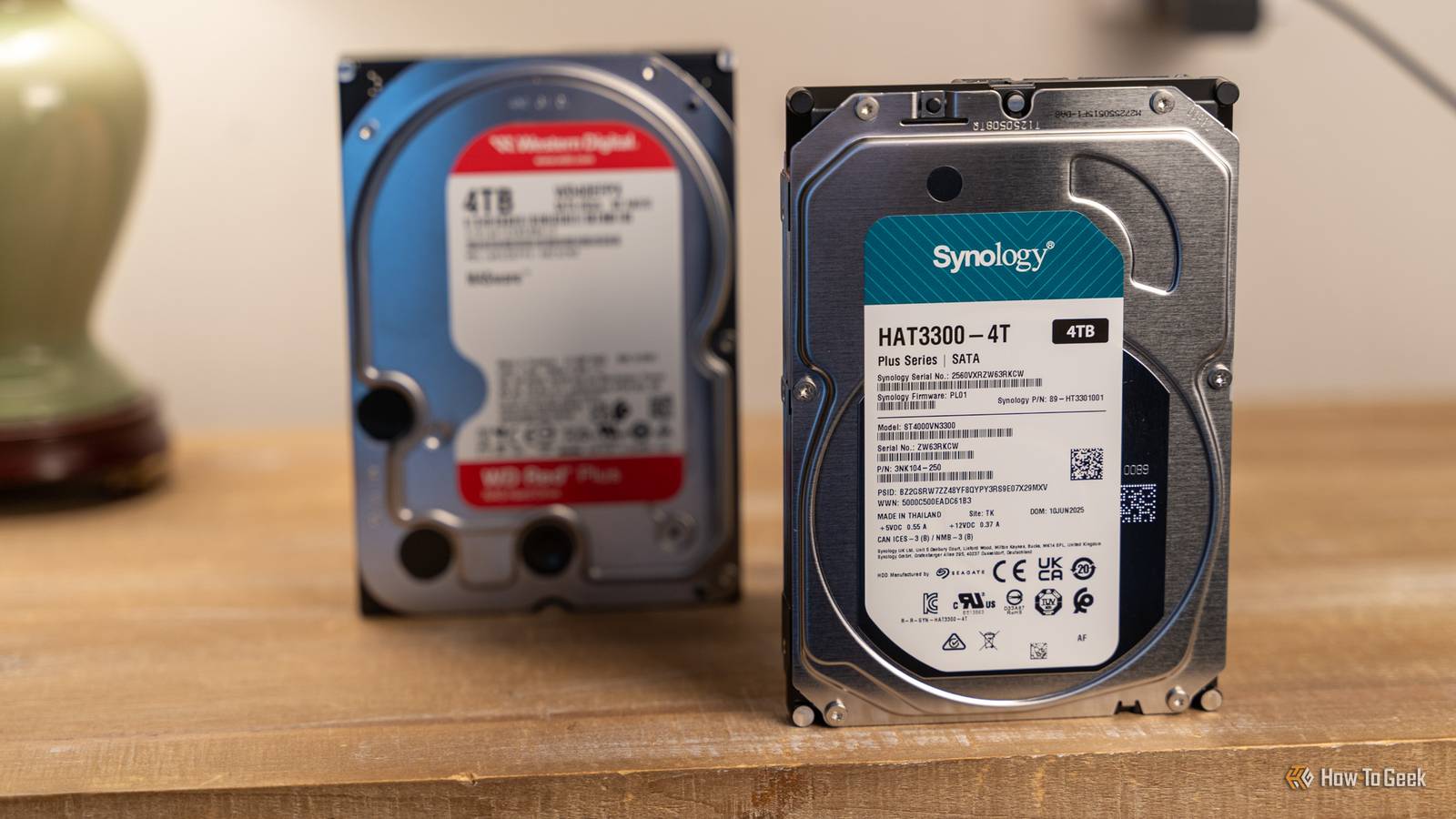
When shopping for HDDs, it's all too easy to focus on the price and nothing else.Sure, the biggest drives tend to have eye-watering price tags, and not everyone needs 20+ terabytes of storage anyway ...but a recent study, based on a sample size, reveals that those drives might be well worth the added cost.
In fact, Backblaze found that some of its largest HDDs failed the least out of its entire fleet.Backblaze's biggest HDDs are currently failing less And the sample size is huge Close Backblaze regularly reports on how its massive fleet of HDDs is doing, but one of its most recent reports reveals some interesting insights.Namely, that larger capacity may translate to better longevity for hard drives.
The company analyzed more than 341,000 production hard drives in the first quarter of 2026.A huge chunk of those drives are of the enormous kind, with capacities of 20TB and more.The sample size is crucial here, because if, out of 86,000 drives, Backblaze is seeing encouraging trends, that has to mean something.
While these 20+TB drives don't make up the majority of the fleet, Backblaze seems to be betting on them right now, as out of the 10,220 drives it deployed in Q1 2026, over 9,400 were above 20TB.That's roughly 92%.The most important finding comes down to the reliability of these humongous drives: Backblaze says that their AFR, or annualized failure rate, is just 0.85%.
That's well under the average across the entire fleet, which sits at 1.24%.The way AFR works is that it accounts for how many days the drives were actually in service and annualizes the resulting failure rate, so it's more revealing than just comparing raw numbers of how many drives died vs.how many made it out unscathed.
Backblaze also reported that its overall AFR improved from the first quarter of 2025, when it was at 1.42%.Related Your unpowered SSD is a ticking time bomb Long-term cold storage on an SSD could be a risky business.There are better options.
Posts By Monica J.White There's one enormous catch: these drives are still very young Drives you buy on the cheap are probably not Trusting an old HDD can end poorly for many reasons, and that's one important caveat we have to discuss to not make these 20TB+ HDDs look too exciting.The 20TB-and-larger models in the Q1 2026 report range from just a couple of months old to around 16 months on average.
Compared to some of the smaller drives, some of which have been running for over five years, these new 20TB+ HDDs are basically babies.That gives them an advantage that might taper off when we look at these same figures in 10 years.A brand new HDD and an older drive don't exactly have the same odds of failing, especially when they're running 24/7 (as is the case here).
On the other hand, a more recent Secure Data Recovery study revealed that roughly half of all failed drives sent to the company died in their first year of operation, but even this data has an important caveat: it only talks about drives that actually failed.Those that don't fail never reach the company, and thus aren't accounted for the way they are in Backblaze's data.I digress.
Despite the potential age difference between Backblaze's chonky drives and those less capacious, the data is sound, because this isn't the only instance of it.Backblaze has previously compared its 20TB+ drives against older 14TB to 16TB models at similar points in their lives, and the newer, higher-capacity drives still looked competitive, if not slightly better.One 22TB drive is doing a lot of heavy lifting here Bigger doesn't automatically mean better Fun fact: The company seems to have a favorite drive.
The WDC WUH722222ALE6L4 (22TB) now accounts for over 45,000 of Backblaze's units, and it only has a 0.38% AFR, which might have something to do with that preference.It also accounts for more than half of Backblaze's entire 20TB+ fleet.The data isn't a fluke, it seems.
The drives averaged 16.1 months old, and the model's lifetime AFR was still only 0.58% across more than 22 million drive days; an impressive result when compared with the overall data.Still, there's a model that has an even better failure rate, although the sample size is much smaller, too.Toshiba's 24TB drives posted an excellent 0.22% AFR that quarter, measured across 7,203 HDDs.
A cheap hard drive can still end up being the expensive choice Price per drive isn't the number I'd optimize for Going through these numbers does make me rethink my storage strategy a little bit.Most of my own strategy boils down to using what I already own.For instance, I've harvested HDDs from old consoles and laptops.
I also tend to think that even tiny drives, such as a 120GB SATA, can have some use, provided you take good care of them and back up your files (those drives tend to be old, bordering on ancient, after all).When it comes to buying new drives, though, it's just not a good time to buy any, so when I did buy, I settled for 8TB.But looking at the prices now, as well as Backblaze's data, it does seem that those bigger drives might be the play.
Of course, an important caveat: Do you even need 20TB+ of storage? Many people don't, and if you can't see yourself ever filling such a drive to, say, 70%, there's no need to spend more.These AFRs are low, no matter how you spin it, so it's not like a pricier drive is bound to live a longer life.The biggest drives are far from a gamble, they're just pricey I've heard people say that big HDDs are more prone to failure.
I can't tell you based on my own experience, as I've been lucky enough to see very few drive failures in the last 20 years, and they've all been way smaller than 20TB.But Backblaze's data is just about the best sample size you can officially find, and it does reveal that 20TB+ HDDs are doing exceptionally well for now—so, at the very least, don't be afraid to buy them if you actually need them.Seagate Exos 22TB Buying a refurbished/recertified drive is a good way to get yourself lots of terabytes for cheap (well, relatively).
The only issue is that those drives might not last as long as a brand-new drive would, so check and make sure they're in good condition.See at Amazon Expand Collapse
Read More